Best Pokies Sites in New Zealand: How to Compare
 Available in US
A practical look at RNG outcomes, RTP settings, offshore-play rules and checks that help distinguish site claims from guarantees.

Table of Contents
- How Online Pokies Work Over Time
- The New Zealand Rules Behind Offshore Play
- Pokie Websites and Sister-Site Claims
- Online Pokies: RTP Settings and What They Mean
- Casino Sister Sites and Shared Licensing Checks
- Winning Potential Is Not a Site Guarantee
- What Changes When a Pokie Site Is Brand New
- Free Pokies and the Limits of Practice Play
- Real-Money Play: Age, Tax and Legal Access
- Comparing Pokie Formats Before Choosing a Site
How Online Pokies Work Over Time
An online pokie produces outcomes through a random number generator (RNG). Each spin is an independent event: the result of an earlier spin does not affect the next one. A run of losses does not make a win due, and a recent win does not make another win less likely. The sequence can look as though it is building towards something; the underlying mechanism does not keep a balance sheet of what a player has won or lost.
That distinction matters when comparing pokie sites or assessing claims about a game. A short session reveals what happened during that session, not what the game is designed to return over time. A result may be striking, but it is still one observation from a process whose outcomes vary. The sequence itself provides no reliable evidence that the next spin will continue or reverse the pattern.
What an independent spin means
Independence does not mean every spin produces the same result. It means earlier results do not determine later ones. A pokie can produce consecutive wins, consecutive losses or a mixture, without any of those sequences changing the next spin’s result. Random outcomes can form patterns that look meaningful to a person reviewing them afterwards. A pattern in past results is not, by itself, a signal about what comes next.
Choosing a pokies site is easier when you can check the details available for each option. This list gives you a concise starting point for reviewing operators featured for New Zealand players in 2026.
License: Tobique Gaming Commission, licence no. 0000064 Neospin lists a licence from the Tobique Gaming Commission, number 0000064.
License: Malta Gaming Authority, licence no. MGA/B2C/370/2017 Play Grand lists a Malta Gaming Authority licence, number MGA/B2C/370/2017.
License: Tobique Gaming Commission, licence no. 0000091 7Bit Casino lists a licence from the Tobique Gaming Commission, number 0000091.
Payout speed: 1-3 business days Wintino lists a payout speed of 1–3 business days.
Payout speed: 1-3 business days Lamabet lists a payout speed of 1–3 business days.
License: Tobique Gaming Commission, licence no. 0000002 Ricky Casino lists a licence from the Tobique Gaming Commission, number 0000002.
License: Malta Gaming Authority, licence no. MGA/B2C/394/2017 N1 Casino lists a Malta Gaming Authority licence, number MGA/B2C/394/2017.
License: 07017519840 · Payout speed: 1-3 business days Zotabet lists the licence identifier 07017519840 and a payout speed of 1–3 business days.
License: Curaçao Gaming Authority, licence no. OGL/2024/165/0185 BitStarz lists a Curaçao Gaming Authority licence, number OGL/2024/165/0185.
This also limits what can be inferred from an individual session. A player may finish ahead of their starting balance, or below it, but neither outcome establishes the game’s long-run return. The result records the financial effect of a particular stretch of play. It does not show that the game has departed from its design or that it will compensate for a losing run.
For someone comparing online pokies websites, the useful separation is between the mechanism and the marketing around it. A site may present games or their features prominently, but a description of presentation does not change the independence of spins. Likewise, a claim about a game’s return needs to be understood as a statistical measure, not a forecast of what a player’s next session will deliver.
RTP is a long-run measure
Return to player, or RTP, describes the share of total stakes that a game is designed to return across a very large number of spins. It is a theoretical percentage calculated through millions of simulated spins. The scale matters: the figure describes a long-run average, not a set amount owed to an individual player.
If a game has a stated RTP of 97%, the theoretical calculation corresponds to $97 returned for every $100 wagered over the long term. That is not a promise that a person who stakes $100 will receive $97 back, nor does it define the result of a particular session. Actual results over a limited period can differ from the theoretical figure because independent outcomes vary.

RTP is also not a profit forecast. It compares returns with stakes across the modelled play; it does not say that the same amount of money will remain in a player’s balance after a session. The amount wagered can accumulate through repeated spins, while each individual outcome can add to or reduce the balance. The RTP figure compresses a large number of outcomes into one percentage, so it cannot describe the timing or size of results within a short stretch of play.
Reading claims without treating them as promises
The statistical basis is straightforward, even if the display of wins and losses is not. A session is a small slice of play; RTP describes a theoretical average across an enormous volume of spins. Confusing those scales turns a design figure into a prediction it cannot support.
The same applies to claims attached to a particular pokie site. A stated RTP may help describe the game’s long-run design, but it cannot establish that a session will be profitable, that a losing sequence is about to end, or that recent results will repeat. Those conclusions do not follow from an independent RNG or from a long-run percentage.
Attention: A stated RTP is a statistical measure of long-run design, not a forecast of what a player’s next session will deliver.
A practical comparison therefore starts by keeping two questions separate: what the game’s published return figure represents, and what happened in the session being observed. The first is a modelled average over extensive play. The second is a specific run of independent outcomes. Neither can be substituted for the other, and a website’s presentation does not turn the average into a personal guarantee.
The New Zealand Rules Behind Offshore Play
New Zealand law draws a distinction between running an online casino from inside the country and placing a bet with a casino based offshore. The Gambling Act 2003 prohibits online casinos from being based in New Zealand. That restriction concerns the operator’s business: it does not make an individual player’s use of an offshore casino a criminal offence.
For people assessing pokie sites in New Zealand, the distinction matters because the operator’s location determines which domestic rules and remedies apply. A website accepting New Zealand customers is not, on that basis alone, a New Zealand-licensed casino. Before the new regime, offshore online casino services were not licensed or supervised by a New Zealand gambling regulator. New Zealand had no dedicated regulator overseeing offshore online casinos, and players using those services had no local government agency to turn to for disputes.

That gap is different from a ban on playing. New Zealanders may play at offshore online casinos, and individual players do not face criminal liability simply for doing so. But legal access does not create local supervision. If an offshore operator and a customer disagree over an account or a withdrawal, the absence of domestic oversight means there is no New Zealand consumer-protection agency responsible for resolving that dispute. The operator’s own terms and the rules of its licensing jurisdiction may still be relevant, but they do not amount to a local remedy.
The transition changes the regulatory picture
The Online Casino Gambling Act 2026 established New Zealand’s first domestic licensing framework for online casino gambling. It came into force on 1 May 2026, with a transition running to 1 December 2026. This changes the legal context, but not into an immediate system in which every site serving New Zealand customers is already covered by a local licence.
The transition applies to online casinos that were already providing services to people in New Zealand before the Act took effect. Those operators may continue during the transitional period, which ends on 1 December 2026. The full licensed regime is not expected to be operational until 2027. The distinction is therefore between the framework being in force and the complete licensing system being operational; those are not the same milestone.
Some earlier industry coverage described the licensing rollout as expected from 2026. That was a forecast rather than a description of the later legal position. The Act’s commencement and transition dates provide the more specific context: the framework began in 2026, while full operation is expected later. A date attached to a regulatory change is not proof that every operator has already completed licensing.
Regulatory Transition
The Online Casino Gambling Act 2026 framework began on 1 May 2026, with a transition period for existing operators ending on 1 December 2026.
The Department of Internal Affairs is identified as the regulator under the licensing framework in a specialist review. That attribution should be read in the context of the developing regime, rather than as evidence that the Department supervised offshore online casinos before the Act. The earlier oversight gap and the new domestic framework refer to different periods.
What the distinction means for a site
The phrase “New Zealand site” can describe a website aimed at New Zealand customers, but it does not establish where the operator is based or whether it holds a New Zealand licence. A site’s availability to local players is likewise not evidence of local approval. During the transition, the relevant point is whether an operator falls within the Act’s transitional provisions; the fact that a site is accessible does not answer that question.
This is particularly relevant when new pokie sites appear. A recent launch is not automatically part of the group allowed to continue under the transition: the permitted continuation concerns operators that were already serving New Zealand customers before 1 May 2026. The launch date and operating history therefore matter to the regulatory question. A site’s branding, game selection or claims about its services cannot substitute for that history.
The practical calculation is straightforward. Playing offshore is not itself a criminal offence for an individual New Zealander. Operating an online casino from within New Zealand is prohibited under the Gambling Act 2003. Offshore services previously sat outside New Zealand regulator oversight, leaving customers without a domestic government route for disputes. The 2026 Act introduces a domestic licensing path, but its transition period and later full operation mean that “available,” “legal for the player” and “licensed in New Zealand” describe separate things.

For anyone comparing NZ pokies sites, that separation is more useful than a broad claim that a platform is “legal” or “regulated.” The claim needs a clear subject and timeframe: whether it refers to the player’s conduct, the operator’s location, or the operator’s status under the new framework. Without that distinction, one word can conceal three different legal questions.
Pokie Websites and Sister-Site Claims
A “sister site” is a website said to share ownership or control with another. The label can matter when comparing pokies websites: related sites may use the same company, management or operational arrangements. But the label itself proves nothing. A pair of sites can look alike without having the same owner, while a shared owner may be difficult to spot from the design alone.
A claim about sister sites linked to Pokie Island, for instance, should be treated as a claim to verify, not as evidence of a relationship. The same applies to any pair of online pokies websites. A convincing assessment depends on identifying the legal entity behind each site and finding reliable evidence that connects those entities or confirms common control.
What can support a relationship claim
The most useful starting point is the operator information published on each website. Terms and conditions, privacy notices and contact pages may identify the company responsible for the service. If the same legal entity appears on both sites, that is a concrete connection at the operator level. It still does not, by itself, establish every detail of ownership: one company can operate a site on behalf of another, and corporate structures can include several entities.
- Identify the legal entity in terms and privacy notices
- Verify formal company records
- Use exact website names and logos
- Rely on familiar layouts or designs
- Assume shared game collections imply ownership
- Trust affiliate pages without corporate evidence
A stronger case may be supported by formal company records or an explicit statement from the businesses concerned. Those sources can help distinguish common ownership from a commercial arrangement, such as a shared technology provider or marketing partner. The wording matters. “Operated by the same company,” “part of the same group” and “partner site” describe different relationships and should not be used interchangeably.
The evidence should also match the exact websites being compared. Similar names, logos or colour schemes are not enough. A brand can be licensed or reused, and a group can change its structure over time. Records that refer to a parent company may show a corporate link, but they do not automatically establish that every site with a related brand is currently under the same control.
What resemblance cannot establish
A familiar layout is weak evidence. Many websites use comparable menus, game displays and account features because they rely on common software or design templates. A similar collection of games can reflect access to the same suppliers rather than shared ownership. The same caution applies to payment options, promotions and customer-service formats: these features may be common across unrelated operators.
Shared promotional language can also be misleading. Affiliate pages sometimes describe several sites as a group without setting out the underlying corporate evidence. That description may be accurate, outdated or imprecise. Repetition across several promotional pages does not turn an unsupported assertion into independent confirmation, especially if the pages appear to rely on one another.

Even a shared name or visual identity needs context. It can indicate a connection, but it may also reflect licensing, a franchise-like arrangement or an older brand relationship. Without documentation that identifies who owns or controls the relevant entities, the safest conclusion is limited to what the evidence actually shows: resemblance, a shared service, or a stated partnership—not necessarily common ownership.
Why precision matters
For New Zealand players, the distinction is practical as well as corporate. Offshore sites fall outside Department of Internal Affairs oversight, leaving no local consumer protection agency to handle disputes with them. If a complaint concerns an account, withdrawal or other site decision, knowing which entity operates the website can help identify the business involved. A vague claim that several brands belong to one group does not settle responsibility.
A useful comparison therefore records each site’s stated operator separately, notes the source of any claimed connection, and checks whether the evidence describes ownership, operation or only a commercial relationship. If the published information is inconsistent, the relationship remains uncertain; shared branding should not be used to fill the gap.
This approach avoids two opposite errors: assuming that similar pokies websites are sister sites, and assuming that different names mean separate ownership. The conclusion should be no broader than the evidence. Where the operator details and supporting records do not establish a link, the sites should be treated as separate for comparison purposes rather than grouped on appearance alone.
Sister Site Verification
- Shared branding or design does not prove common ownership
- The legal entity named in terms and conditions is the most reliable indicator
- Corporate records help distinguish ownership from commercial partnerships
- Unverified relationship claims should be treated as separate entities for comparison
Online Pokies: RTP Settings and What They Mean
RTP, or return to player, is a comparison figure attached to a particular version of an online pokie. It describes the share of total stakes that the game is designed to return across an extremely large number of spins. It is not a forecast of what a player will receive during a particular session, nor a rate paid back at regular intervals.
Online pokies commonly display RTP figures in the range of 94% to 97%. That range can help separate games with different theoretical returns, but the figure is useful only when it applies to the version actually available on the site. A game title alone does not establish its RTP.
Some studios provide the same game in several return settings. The operator selects which setting to offer, so one version of a pokie can carry a different RTP from another version with the same name. This makes the game’s information panel more relevant than a figure copied from a general description, review or other website. The panel for the game in use is the place to confirm its stated return.
That distinction matters when comparing pokie sites online. A site may list a familiar title, but the listing does not show which RTP setting has been selected. If a comparison relies on a figure sourced elsewhere, it may describe a different version. A sound comparison therefore matches the game’s displayed RTP to the version available on the operator’s platform, rather than treating the title as sufficient evidence.
RTP can still be used to organise comparisons. If the stated figures differ, the higher one represents a higher theoretical return across a very large volume of play. It does not establish that one site will produce better results in a short session, and it does not turn a game into a dependable source of income. The figure is a property of the game version, not a promise made by the operator.
For people comparing the best online pokie sites in New Zealand, RTP is one item to verify alongside the game itself. A site’s catalogue can contain games with differing settings, and the operator’s chosen version is what determines the figure relevant to that title there. General claims about a provider or a game family cannot substitute for checking each game’s information panel.
The arithmetic is straightforward, but its time scale is not a player’s session. A stated return of 97% corresponds, in theory, to NZ$97 returned for every NZ$100 wagered over the long term. It does not mean that NZ$100 in stakes will produce NZ$97 back in any given stretch of play. The actual result over a limited period can be higher or lower; the theoretical percentage does not allocate a fixed return to each player.
RTP figures are best treated as a like-for-like measure. Comparing different versions of the same game can reveal a meaningful difference in the stated long-run return. Comparing a figure on one site with an unverified figure elsewhere may instead compare unlike versions. The distinction is small in presentation and material in calculation: the displayed title identifies the game, while the displayed RTP identifies the return setting selected for it.
Comparing RTP Settings
Open the information panel of the game on the operator’s platform to see the specific RTP for that version.
Record the stated return percentage shown for that specific version of the pokie.
Compare this figure with the RTP shown for the same game title on another site to identify the selected setting.
For a practical comparison, the sequence is simple: open the game’s information panel, note the RTP shown for that version, and compare it with the figure shown for another version. That gives a defined basis for comparing the stated returns without confusing a published game specification with an outcome for an individual session.
Casino Sister Sites and Shared Licensing Checks
A sister-site label is a claim about a business relationship, not evidence that two casinos share a licence. A brand name, similar page design or common promotional language does not identify the legal entity accepting bets. For searches involving casinos associated with Pokie Island or Pokie Spins, the useful licensing question is therefore not simply whether two brands appear connected. It is which company operates each site, and what authorisation applies to that company.
The distinction matters because a group can use several consumer-facing brands while presenting licensing information under an operator’s legal name. A licence statement attached to one brand cannot automatically be treated as proof for another. The relevant details are the operator named in the site’s terms and the licence information stated for that operator. If those details do not match across the sites, a shared brand style does not resolve the discrepancy.
New Zealand’s position also depends on the date. The Online Casino Gambling Act 2026 created the country’s first domestic licensing framework for online casino gambling and took effect on 1 May 2026. Its transition runs from that date to 1 December 2026. Online casinos that were already serving New Zealand customers before the Act took effect may continue during that window, while the complete licensed regime is not expected to be operational until 2027. A site’s status cannot be inferred from a sister-site claim alone; the transition dates and the operator’s own position both matter.
A domestic licence, where applicable, is an operator-level authorisation. Under the framework, licensed operators are subject to requirements covering harm minimisation, advertising, age checks and tax contributions. Those obligations attach to the licensed business, not to a visual resemblance between websites. An operator’s claim should identify the legal entity and the relevant authorisation clearly enough to distinguish it from a general statement that a brand is “part of a group.”
The practical comparison is between records, not names. Check whether each site identifies the same operating company, whether its licensing statement names that company, and whether the stated status fits the relevant New Zealand transition period. If two brands name different companies, each needs to be assessed on its own terms. If they name the same company, that still does not make every claim about licensing self-proving.
For a New Zealand player, the cost of confusing corporate affiliation with regulatory coverage is material: before the new regime, offshore casino gambling was not supervised by a New Zealand regulator, and the transition does not turn a sister-site relationship into a licence. The connection between brands may explain common ownership; it does not, by itself, establish permission to operate under New Zealand’s framework.
Licensing Risks
Before the 2026 regime, offshore casinos had no New Zealand regulator, meaning players had no local government agency to resolve disputes.
Winning Potential Is Not a Site Guarantee
A site cannot turn a game’s theoretical return into a promise of profit. RTP describes an average across a very large number of plays, not the result of one person’s session. A game listed at 97% RTP is designed, over the long term, to return $97 for every $100 wagered. That figure does not mean that a player who stakes $100 will receive $97, or that a session will finish ahead.
Shorter play can land well above or below the theoretical return. Wins may arrive early, late or not at all during a particular session. The site name does not change that distinction: a higher stated RTP can be relevant when comparing games, but it cannot settle which session will win. There is no reliable way to identify the best pokie sites for winning by treating an advertised return as a personal outcome forecast.
Volatility adds another measure of how results can feel. Low-volatility pokies tend to produce smaller wins more often. High-volatility games pay less frequently, but their wins can be larger. Neither pattern guarantees a favourable balance. Frequent small payouts may still be outweighed by the stakes used to obtain them; a larger potential win may not arrive during the session.
The choice is therefore between different payout patterns, not between certainty and risk. A low-volatility game may produce more regular activity, while a high-volatility game can involve longer stretches without a payout. The larger possible win is not a compensation owed for those stretches. Each game’s mechanics define possibilities, not a schedule.
A useful comparison separates three things: the game’s theoretical return, its volatility and the amount wagered. RTP indicates a long-run percentage; volatility describes the distribution of wins; the stake determines how much money is exposed to that distribution. None of these turns a site into a source of guaranteed winnings. A higher RTP may improve the theoretical comparison between games, but it does not establish which one will pay during a particular session.
What Changes When a Pokie Site Is Brand New
A newly launched site and a newly licensed operator are not the same thing. In New Zealand, the Online Casino Gambling Act 2026 created a domestic licensing framework, but the full system is not expected to be operational until 2027. A site’s recent launch date therefore does not, by itself, establish its status under that regime.
The transition has a defined boundary. Operators that were already serving New Zealand customers before 1 May 2026 may continue under transitional provisions until 1 December 2026. That allowance is tied to prior operation; it is not a general entry route for any brand that appears during the transition. The framework also makes clear that the licensing change does not permit online casinos to be based in New Zealand.
A specialist review reports that the licensing rollout was expected to begin in 2026 and that the framework initially provides for no more than 15 licences. Those details describe the planned structure, not proof that a particular new site has received approval. The distinction matters: a launch announcement, a polished interface and a licensing statement on a homepage are not substitutes for an actual authorisation under the New Zealand regime.
Licensing Cap
A specialist review reports that the initial domestic licensing framework provides for no more than 15 licences.
For a brand-new pokie site, the relevant question is therefore not simply how recently it opened. Its operating history may determine whether it can rely on the transition, while the status of the full licensing system depends on the rollout timetable. A site that began serving local customers after the transitional cut-off cannot be treated as though it qualifies for the same continuation arrangement.
The commercial calculation is straightforward: novelty has no regulatory value on its own. Until the licensing regime is fully operational, claims about future approval should be read as claims about future approval, not present status. The initial cap limits the number of licences contemplated; it does not confirm that any particular applicant will receive one.
Free Pokies and the Limits of Practice Play
Free play can show how an online pokie is put together before money is involved. The reels, buttons and feature rules remain visible, so a session can clarify what a spin does, how a win is displayed and what happens when a bonus feature appears. It is a way to inspect mechanics, not a rehearsal of a future cash session.
The distinction matters because online pokies use random number generators. Each spin is determined independently; results from practice spins do not alter the next result, and they provide no signal about what that next result will be. A run of wins in free play does not make a win more likely later. A run without a feature does not mean one is due. The game has no memory to carry from the practice screen to a later spin.
Free play is more useful for learning the rules than judging likely returns. A classic pokie has three reels and no bonus round, while a video pokie commonly uses five reels and may include wilds, scatters and free spins. In a practice session, those elements can be observed as they occur: how a symbol behaves, what triggers a feature and how its instructions are presented. The session can reveal the structure of the game, but not how often a particular event will occur over future play.
A free-play result also has no cash value. The displayed balance is part of the demonstration, not money available to withdraw. That makes practice play suitable for checking whether the controls and rules are understood, but it cannot establish what a real-money session will return. Nor does a long practice session turn random outcomes into a forecast.
Free pokies sites may provide a useful way to explore a game without wagering. Their practical value is limited to familiarity with its operation. Any conclusion about future outcomes drawn from a short sequence confuses an observed sample with a prediction; the next spin remains independent.
Real-Money Play: Age, Tax and Legal Access
For New Zealand residents, the basic conditions for playing online pokies for money concern age, the nature of any winnings and the site’s licensing. These are separate questions: meeting the age threshold does not determine tax treatment, and a site’s international licence does not change the general tax position of recreational winnings.
Real-Money Play Check
- Confirm player is 18 years of age or older
- Verify the play is for recreational purposes
- Check the operator’s licensing jurisdiction
Online casino play is restricted to adults aged 18 or over. That minimum applies to real-money play, not just to opening an account or viewing a site. Age eligibility is therefore a basic condition before any gambling takes place. It should not be confused with account checks a platform may apply separately.
Recreational gambling winnings in New Zealand are generally not taxed. The qualification matters: this describes the usual treatment of winnings from gambling as recreation, rather than establishing that every payment connected with gambling is tax-free in every circumstance. The relevant point for ordinary recreational play is that winnings are generally outside tax. A gambling result is not, by itself, a dependable source of income; the amount won in one session does not establish what will be won later.
New Zealand residents may legally play at sites licensed internationally. That answers the question of whether residents can use such platforms, but it does not mean the licence is issued in New Zealand or that the site has local authorisation. “Internationally licensed” identifies an overseas licensing arrangement; it should not be treated as a statement that every platform has the same terms or protections.
A practical check is to keep these points distinct when assessing real-money pokie sites: whether the player is at least 18, whether play is recreational, and where the operator’s licence comes from. The first two relate to the player’s circumstances; the third describes the operator’s regulatory setting. None of these points predicts a session result or makes a particular site suitable. A clear decision about the amount set aside for play remains a separate part of managing the money involved.
Comparing Pokie Formats Before Choosing a Site
Pokie format affects what a stake buys: a simple reel spin, a feature-heavy game, a share of a jackpot pool or direct entry to a bonus round. Comparing those mechanics is more useful than treating every title on a site as financially equivalent.
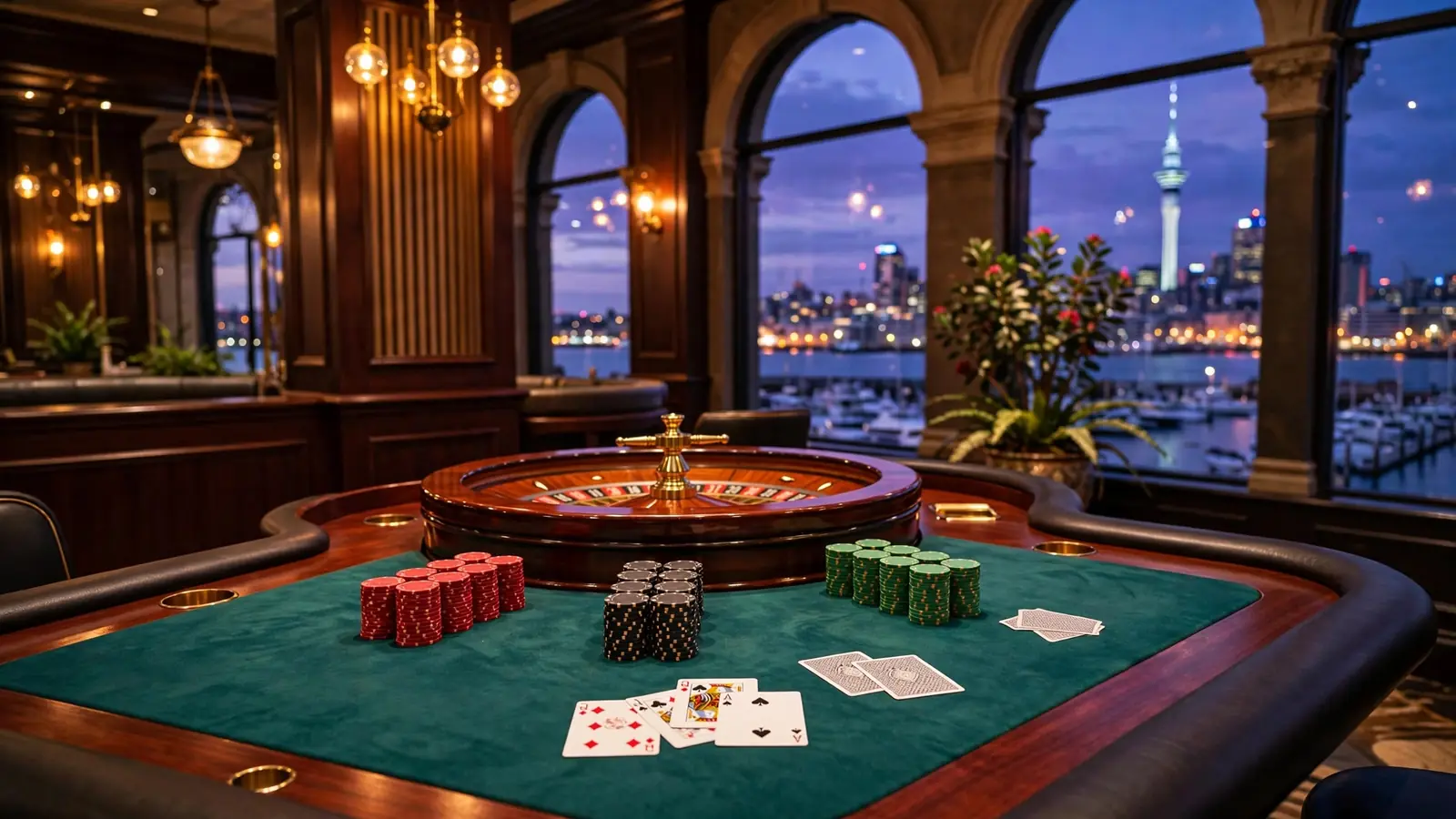
Classic pokies use three reels and have no bonus rounds. Their structure is comparatively plain: the stake goes on the base game rather than a separate feature-entry option. Video pokies commonly use five reels and may add wilds, scatters and free-spins rounds. Those features change how wins can occur, but their presence alone does not establish a higher return.
Progressive-jackpot pokies link contributions from spins across casinos offering the game. Part of each bet feeds the jackpot, so the base-game RTP is lower than it would be without that allocation. The jackpot is therefore not free upside: the base game gives up some return to fund it. A comparison based only on the headline prize misses that cost.
Bonus-buy games allow a fixed stake multiplier to enter a bonus round directly instead of waiting for the feature during ordinary play. A specialist review describes these purchases as costing 50 to 100 times the stake, depending on the title; that range should be treated as a reported feature cost, not a standard price across all games. The immediate arithmetic is clear: paying a multiplier increases the amount at risk in that entry. The review also reports that bonus buys are usually excluded from wagering on promotional funds, so promotional eligibility cannot be assumed.

For a practical comparison, separate the base-game stake from any feature purchase, then check the game’s information panel for its RTP and the terms governing promotional funds. Classic and video describe reel and feature structures; progressive and bonus-buy formats add a distinct funding or entry mechanism. None is automatically the better choice. The relevant calculation is whether the stated mechanics and cost fit the intended stake, not whether a format sounds more elaborate.
Are online pokies legal in New Zealand?
Yes. It is illegal to operate an online casino from within New Zealand, but individual New Zealanders can legally play at offshore online casinos.
What is a good RTP for online pokies?
Online pokies commonly have RTPs between 94% and 97%, so a higher RTP indicates a greater theoretical long-run return. It is an average over a very large number of spins, not a promise about an individual session.
Are offshore pokies sites safe for NZ players?
Playing at an offshore site is not a criminal offence, but offshore casinos are outside DIA oversight and New Zealand players do not have a local consumer-protection agency to handle disputes. The online casino licensing regime is expected to be in place from 2026.
Prepared by the Casino Slots Tips NZ editorial staff.