Online Craps in New Zealand: Game Formats and Bets
 Available in US
Learn how RNG and live tables differ, how common craps bets work, and how betting choices can affect the cost of play.

Table of Contents
- What an Online Craps Table Actually Offers
- The New Zealand Licensing Timeline for Online Casinos
- How a Craps Round Moves from Come-Out Roll to Point
- Pass, Don’t Pass, Come and Don’t Come Bets in Play
- Free Craps Games: What Practice Can and Cannot Show
- Free Play on an RNG Table
- Comparing Craps Bets by House Edge and Commission
- Craps Practice and the Cost of Betting Choices
- Craps Simulators and Live Tables: The Technical Difference
- Real-Money Craps and Wagering Requirements
What an Online Craps Table Actually Offers
An online craps table can refer to two different formats: a digital game whose outcomes are generated by a random number generator (RNG), or a live game run by real dealers. Both present craps through an online casino, but they do not produce the game in the same way. The distinction is about the source of the outcome, not simply how the table looks on screen.
In an RNG game, software generates the outcomes. The table is digital rather than a live session run by a dealer. A live craps game, by contrast, uses real dealers to conduct the game. The result is still viewed online, but the table itself is operated by people rather than being generated entirely by software. “Live” therefore identifies the game format; it does not mean the player is physically at a casino table.
That difference matters when comparing online casino craps games. A polished digital table and a live table may both be labelled craps, yet the label alone does not explain how either one works behind the screen. The relevant distinction is whether the outcome comes from an RNG or from a game run by real dealers. A table’s visual presentation is not enough to identify its format, and the word “casino” in a game title does not establish that a dealer is involved.
Choosing an online craps site in New Zealand means checking the available information carefully before deciding where to play. This list offers a concise reference to the details provided for each operator.
License: Tobique Gaming Commission, licence no. 0000064 Neospin is listed with a licence from the Tobique Gaming Commission, licence no. 0000064.
License: Malta Gaming Authority, licence no. MGA/B2C/370/2017 Play Grand is listed with a Malta Gaming Authority licence, no. MGA/B2C/370/2017.
License: Tobique Gaming Commission, licence no. 0000091 7Bit Casino is listed with a Tobique Gaming Commission licence, no. 0000091.
Payout speed: 1-3 business days Wintino lists a payout speed of 1–3 business days.
Payout speed: 1-3 business days Lamabet lists a payout speed of 1–3 business days.
License: Tobique Gaming Commission, licence no. 0000002 Ricky Casino is listed with a Tobique Gaming Commission licence, no. 0000002.
License: Malta Gaming Authority, licence no. MGA/B2C/394/2017 N1 Casino is listed with a Malta Gaming Authority licence, no. MGA/B2C/394/2017.
License: 07017519840 · Payout speed: 1-3 business days Zotabet lists licence number 07017519840 and a payout speed of 1–3 business days.
License: Curaçao Gaming Authority, licence no. OGL/2024/165/0185 BitStarz is listed with a Curaçao Gaming Authority licence, no. OGL/2024/165/0185.
Craps is a dice game in which bets concern the outcome of rolls made with two dice. That places it within the familiar casino-game category, alongside games such as blackjack and roulette. In New Zealand’s licensed online casino market, casino-style games may include pokies, blackjack, roulette, baccarat and poker; sports and racing betting are outside that permitted category. Craps belongs in the casino-style context rather than the sports or racing one.
That market classification helps explain what a casino craps game online represents: a casino-style game offered through an online platform, not a sports wager simply because it is accessed on the internet. The distinction is about the type of gambling product. A licensed online casino may offer casino-style games, while sports and racing betting are not included among the games authorised for that market.
The phrase “online craps table” can also blur the line between format and setting. A digital table is not automatically a live table, and a live table is not merely a digital game with a dealer’s image attached. The defining point is how the game is run: RNG-generated outcomes in the digital format, or real dealers operating the live game. Without that distinction, comparisons between online craps options can mistake presentation for substance.
This is also why the search for the best online casino to play craps cannot be answered by the game name alone. A preference for a digital table or a live dealer table is a format choice; it does not, by itself, establish which casino offers better terms or service. Those are separate questions. The table format tells what kind of game is being presented, while the casino’s other conditions require their own assessment.

The same applies to descriptions such as “live craps online casino”. The phrase points to a live format accessed online, not to a different set of craps rules. Conversely, a digital craps table may appear within an online casino without being a live game. Keeping those labels separate prevents a simple category error: online access describes where the game is reached, while RNG or real dealers describe how its outcomes are produced.
A free online casino craps game may appear in the same broad category of digital table games, but the word “free” describes the play setting, not whether the table is live. The format still needs to be identified separately. A digital game using an RNG remains a digital game; a live game remains one run by real dealers. Free-play access should not be taken as evidence that a game is live or as a measure of how a real-money table operates.
For a New Zealand player comparing casino craps games online, the useful first distinction is therefore straightforward: digital RNG table or live game with real dealers. The licensed-market context supplies a second distinction: craps is a casino-style game, while sports and racing betting are not part of the permitted casino-game category. Neither distinction ranks operators, and neither makes a particular table the best choice. They describe what the product is and how it is constituted.
Online Craps Formats
- Digital tables use a random number generator (RNG) to determine outcomes.
- Live tables are operated by real dealers in a live session.
- In New Zealand, craps is classified as a casino-style game, distinct from sports or racing betting.
The New Zealand Licensing Timeline for Online Casinos
New Zealand’s online casino market is moving from a period without domestic licensing to a system administered by the Department of Internal Affairs (DIA). For people assessing online craps in New Zealand in 2026, the key distinction is between the transition period and the later arrival of licensed sites. Those stages do not begin at the same time.
The Online Casino Gambling Act 2026 came into force on 1 May 2026 and established the licensing framework. It allows for a maximum of 15 online casino licences. That figure is a cap on licences available, not a promise that 15 operators will be active when the market opens. The DIA administers the regime; the Act sets the framework within which providers can seek authorisation.
What changes during the transition
The transition runs from 1 May to 1 December 2026. Operators that were already providing online casino services to people in New Zealand before the Act took effect may continue during this window, subject to the transition provisions. It is not a general permission for any new offshore site to begin serving the country.
The practical cutoff is around 1 December 2026. After the transition ends in December, unlicensed operators cannot continue serving New Zealand players. That date marks the end of the interim arrangement, rather than the point at which a full selection of licensed sites will necessarily be available. In other words, the legal transition and the commercial launch are separate events.

This distinction matters when considering online craps or other casino games during 2026. A site being accessible during the transition does not, by itself, establish that it holds a New Zealand licence. Nor does the later licensing framework make every existing provider eligible to operate indefinitely. The transition protects continuity only for providers already operating before the Act began and only for the period specified.
When licensed sites are expected
The licensed market is expected to start around 1 December 2026, but the first licensed New Zealand casino websites are not expected to launch until 2027. The gap reflects a staged change: the legal framework and transition end first, while the first sites under the new regime are anticipated later.
That timing is why “the market begins” and “the first licensed sites go live” should not be treated as interchangeable statements. The first date describes the expected start of the regulated market; the second describes when customers are expected to see licensed websites operating. The available dates indicate an anticipated sequence, not a guarantee that a particular site or game will be available on a particular day.
For craps casino online, the regime concerns the provider’s authority to offer online casino gambling in New Zealand; it does not determine which individual games a particular site will carry. A licence is not a catalogue of every casino game, and the limit on licences does not mean every licensee will offer the same selection. Availability therefore depends on the operator as well as the progress of the licensing rollout.
The timetable also avoids a false choice between “licensed now” and “illegal for the player.” During the transition, eligible existing providers may continue under the Act’s provisions. After the transition, unlicensed providers must stop serving New Zealand players. The legal consequences described for providers do not turn casino play itself into an offence for an individual customer.
Licensing Cutoff
After the transition period ends around 1 December 2026, unlicensed operators cannot continue serving New Zealand players.
For a 2026 assessment, the dates are the useful terms: the Act took effect on 1 May; the transitional window closes around 1 December; and the first licensed sites are expected in 2027. Until that rollout occurs, the licensing framework is underway, but a fully operational licensed online casino market is not yet established.
How a Craps Round Moves from Come-Out Roll to Point
Craps is built around rolls of two dice. Each roll produces a combined result, and the bets are placed on what will happen as the round develops. The opening stage is called the come-out roll. It determines whether the starting bet is settled immediately or whether the table moves into a point phase.
A player acting as the shooter must first have a Pass Line or Don’t Pass bet in place. The shooter then makes the come-out roll. The two starting bets look at the same roll but treat some results differently, so the opening result matters before a point exists.
For a Pass Line bet, a total of 7 or 11 on the come-out roll is a win. A total of 2, 3 or 12 is a loss. These are immediate outcomes: the roll does not establish a point, and the round does not proceed into the point phase on that basis.
The Don’t Pass bet reverses the result for some of those totals. A 2 or 3 wins for Don’t Pass, while a 12 is a tie. The tie means the bet is neither won nor lost on that roll. This difference is why the same opening roll can produce unlike outcomes for the two starting positions. A 7 or 11, for instance, is a Pass Line win, while the Don’t Pass bet does not win on those totals.

The remaining come-out totals are 4, 5, 6, 8, 9 and 10. When one of these appears, it becomes the point. The game has then moved beyond the immediate opening result: the point number is set, and play continues with the same point as the reference for the round.
From that stage, the relevant sequence is straightforward. The shooter keeps rolling until either the established point or a 7 appears. The point is not reselected with each roll; it remains the number set by the come-out roll. The round’s progress therefore depends on which of those two outcomes arrives first.
This structure gives a useful way to follow craps play online without trying to track every possible bet at once. First identify the come-out roll. Next check whether its total settles the starting Pass Line or Don’t Pass bet, or establishes a point. If there is a point, keep that number in view while the rolls continue. Other bets have their own timing and settlement rules, but they do not change this basic sequence.
The distinction between the opening roll and the point phase is the main piece of orientation needed to follow a round. A 7 can have one role on the come-out roll and another once a point has been established; the stage of play matters as much as the number. That is the basic framework for learning craps online: identify the stage, read the total, then apply the rule for that stage.
Following a Round
Observe the first roll of the dice to see if it settles the starting bets or establishes a point.
Determine if the total is a 7, 11, 2, 3, or 12, which settles Pass Line or Don’t Pass bets immediately.
If a point (4, 5, 6, 8, 9, or 10) is set, follow subsequent rolls until either that point or a 7 appears.
Pass, Don’t Pass, Come and Don’t Come Bets in Play
Once a point has been established, the Pass Line and Don’t Pass bets are resolved by the order of two possible outcomes: the point appears again, or a 7 appears first. The bets take opposite positions on that sequence. Neither is settled merely because the point has been named; the relevant roll still has to occur.
A Pass Line wager succeeds when the shooter repeats the point before rolling a 7. If the 7 comes first, the wager loses. The Don’t Pass position reverses that condition: it wins when a 7 arrives before the point and loses when the shooter repeats the point first. The same roll therefore has different consequences for the two sides. A point roll favours Pass; a 7 before that point favours Don’t Pass.
| Bet | Winning sequence after the point is set |
|---|---|
| Pass Line | The point is rolled before 7 |
| Don’t Pass | 7 is rolled before the point |
This is the resolution stage of the craps game online, not another decision about which number becomes the point. Once the point is active, the initial line bets remain tied to that number until one of the two resolving outcomes occurs. The online craps table displays the wager and the game state, but the condition behind the result is the order of rolls.
Come bets add another way to take a position after a point exists. They are available only once the game has moved beyond the come-out roll. A Come wager then wins if its relevant number is rolled before 7. It should not be confused with the original Pass Line bet: both are made on the Pass side, but the Come wager enters later, after the point has already been established.
Don’t Come bets provide the opposing position at that later stage. They are not available during a come-out roll; they can be made at another point in the round. Their logic parallels Don’t Pass: the wager takes the side that benefits when 7 comes before the number against which the bet is being resolved. If that number arrives first, the Don’t Come position loses. The distinction is timing: Don’t Pass is the opposing line bet, while Don’t Come is the corresponding choice made after the come-out phase.
For someone playing craps online, the practical reading is to track each wager separately. The Pass Line and Don’t Pass bets are attached to the established point. Come and Don’t Come bets are added later and resolve against their own relevant number, rather than changing the original line bet. A single roll can therefore settle one position while leaving another in play, depending on the number required by each wager.
The four names describe two opposing pairs, but timing separates the pairs. Pass and Don’t Pass concern the line; Come and Don’t Come become available after the come-out roll. Their outcomes depend on whether the number tied to the wager or a 7 arrives first. That sequence, rather than the direction in which the shooter appears to be doing well, determines whether each bet wins or loses.
- Track Pass Line and Don’t Pass bets based on the established point.
- Treat Come and Don’t Come bets as separate wagers added after the come-out roll.
- Confuse a Come wager with the original Pass Line bet.
- Assume the shooter’s general performance determines if a specific bet wins.
Free Craps Games: What Practice Can and Cannot Show
A free craps game can make a digital table easier to read before money is involved. It lets a player become familiar with the layout, the placement of bets and the rhythm of a round without treating a practice session as a financial test. That distinction matters: a simulated table can demonstrate how its interface responds, but it cannot establish what a real-money session will cost or return.
Craps is built around bets on rolls of two dice. In a free-play setting, the central practical task is often less about the dice than about following the table’s controls. A practice session can show where available wagers are displayed, how a selection is entered, and how the screen changes as play continues. It can also reveal whether the interface is legible and manageable on the device being used. Those are useful observations about the software, not evidence about future results.

The word “free” needs a narrow reading. It describes the practice mode, where play does not involve staking real money; it does not turn a simulated outcome into a forecast. Results in a free session do not establish that a particular betting choice will succeed later, or that the same sequence will recur when money is at risk. A practice balance is not a bankroll, and its movement has no direct monetary value.
A digital practice table and a live table also differ in who or what produces the roll. Digital craps uses a random number generator, while live craps is conducted by a real dealer. A free simulation can therefore help with familiarity with a screen-based game, but it does not reproduce the presence, pace or physical handling of a live table. Watching a live dealer is a different kind of experience from testing a simulated interface, even where both are presented online.
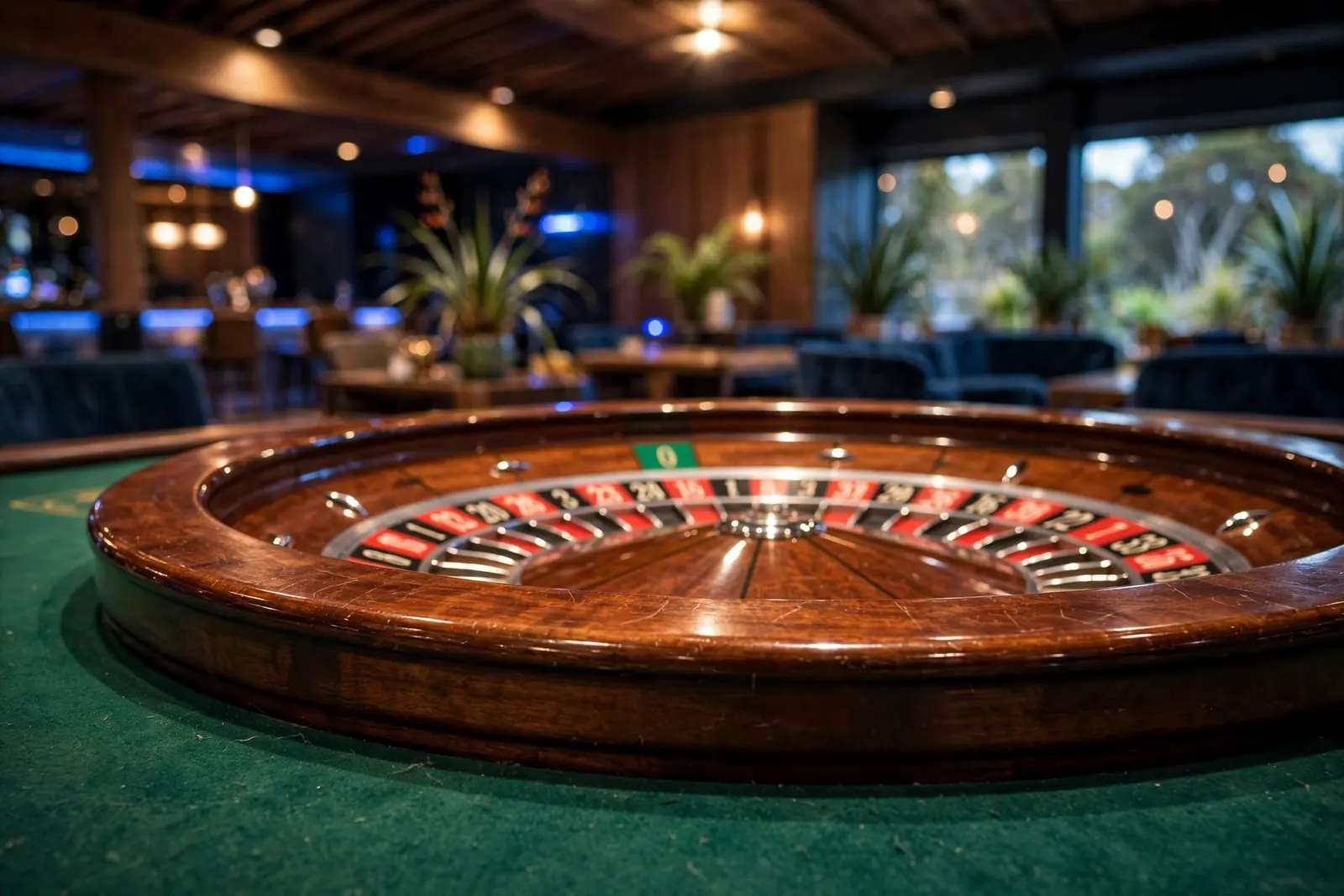
This is relevant to searches for free live craps or multiplayer play. A free digital table should not be assumed to include a live dealer or other players. Those are separate features, and the word “free” alone does not establish that either is available. Likewise, a request for a free version of crapless craps does not show that a particular table offers that variant. The mode and game type need to be identified separately; otherwise, the label promises more than the session demonstrates.
Practice is most informative when observations are kept to what the session can actually show: whether the controls are understandable, whether the displayed table is easy to follow, and whether the transition between stages of play is clear. It can also expose confusion caused by unfamiliar terminology or an interface that makes a selection difficult to track. These are process checks. They do not measure the value of a wager, the reliability of a live dealer, or the quality of a real-money offer.
A “best” free game is not a meaningful conclusion from a short practice session alone. One interface may be clearer, while another may offer a format the player wants to inspect; neither fact establishes that the game is financially favourable. Free play can answer a limited question—how the digital table works as a piece of software. It cannot answer whether real-money play is worthwhile. The difference is basic, but casino labels often make basic distinctions look optional.
Free Play on an RNG Table
Free play on a digital craps table uses the same basic format as a real-money digital table: software produces the outcomes through a random number generator (RNG). The difference is the play setting, not the presence of a live shooter. No dealer is rolling physical dice on the screen; the digital table’s results are generated by the RNG.
Free play on a digital craps table uses a random number generator (RNG), meaning no dealer is rolling physical dice on the screen.
That distinction matters when interpreting what “free” means. A free-play balance is for simulated play, not money available to withdraw. Any displayed result belongs to that setting and does not become a cash win simply because the interface resembles a casino table. The screen may present a familiar table layout, but its visual presentation does not change how outcomes are produced.
For free online craps, the relevant format is therefore a digital simulation. The RNG determines the results shown in the game, while a live table relies on real dealers. These are different ways of delivering craps online, even when the player-facing display looks similar. A free setting on an RNG table should not be mistaken for a live game with a dealer, nor should animation be read as evidence that physical dice are being rolled.
The term “online free craps” can describe access to this simulated setting, but it does not specify how a particular site implements its interface. Some details may vary between games, and the label alone does not establish whether a table is RNG-based or live. The format needs to be identified separately: digital tables use RNGs; live games use real dealers.

This also keeps the meaning of free craps online precise. It refers to a no-stakes mode of a digital game, rather than a free version of a live dealer table by default. When the table is RNG-based, the displayed outcomes come from the software’s random-number process. The presentation may imitate a casino table, but the underlying format remains digital.
In short, free play describes the setting, while RNG describes how a digital table generates results. Those terms answer different questions. One concerns whether the play is simulated rather than for money; the other identifies the mechanism behind the digital game. A free online craps table can be understood on those terms without treating it as a live dealer experience.
Comparing Craps Bets by House Edge and Commission
A useful comparison of craps bets starts with the price attached to each wager, not the table’s presentation. The Pass Line carries a stated house edge of 1.41%. That is the casino’s mathematical advantage on that bet over repeated play; it is not a fee deducted from each individual wager or a prediction of the result of one round.
The Odds bet is priced differently. It has no house edge and pays according to true odds. That makes its expected return distinct from the Pass Line wager it accompanies, but it does not remove the edge on the underlying Pass or Come bet. The two amounts should therefore be assessed as separate components rather than treated as one uniformly priced stake.
Carries a stated house edge of 1.41%.
Has no house edge and pays according to true odds, subject to table limits.
Includes a direct commission of 5%.
Odds are available only after a Pass or Come bet has been placed. The amount is also capped at a multiple of the initial bet. Since that cap can vary by table, the maximum additional stake cannot be inferred from the general rule alone. A comparison of online craps betting terms should account for both the zero-edge Odds portion and the limit applied to it; looking only at the odds offered on the base wager gives an incomplete cost picture.
Buy bets introduce a direct commission: 5%. That charge is separate from the bet’s possible return and changes the amount retained when the wager is made. The relevant comparison is therefore not simply “commission versus no commission.” It is the cost of that commission alongside the bet’s stated terms. Without the table’s specific rules, a single total-cost figure would not be reliable.
| Bet component | Stated pricing term | What it means for comparison |
|---|---|---|
| Pass Line | 1.41% house edge | The casino has a mathematical advantage on this wager |
| Odds | No house edge; true-odds payout | Adds a separately priced component, subject to a table limit |
| Buy | 5% commission | A commission applies to the wager |
These distinctions matter more than labels such as “best online craps” or “best online craps games.” A table with an Odds option does not make every wager on it equally priced, and a Buy bet’s commission cannot be ignored because another bet has no house edge. Free-play tables can display the same categories, but a simulated balance does not establish the cash cost of a real wager.
A low deposit also says nothing by itself about the price of the bets available. The useful figures are the stated edge, commission, and the table’s cap on Odds. Without those terms, comparisons between craps tables remain incomplete.
Craps Practice and the Cost of Betting Choices
Practice is useful for separating two questions that can look similar at the table: what a wager pays when it wins, and what its pricing implies over time. In craps, the Pass Line carries a house edge of 1.41%. The Odds bet has no house edge and pays according to true odds. Those terms give a practice session a clearer purpose than simply watching the dice move: compare the wager labels and payouts, then check whether the distinction remains clear while play is underway.

A basic record can keep the exercise concrete. Note which wager is being considered, its stated payout and the result of the roll. The record is not a prediction tool. A run of wins or losses does not change the stated house edge, and a short sequence cannot demonstrate that a wager has become more or less favourable. Its value is in making the cost structure visible rather than treating every return as evidence of a trend.
The Pass Line’s edge means its terms include a mathematical advantage for the house. The Odds wager is different: it pays at true odds and does not add a house edge of its own. That does not make it a guaranteed profit or erase the price attached to another wager. It means that the two components should be understood separately when reviewing a betting choice. A total return can otherwise obscure which part carries the edge.
For anyone developing an online craps strategy, practice can test whether the terms are being read correctly before a decision is made. It can also expose a common accounting error: focusing on the size of a possible payout while ignoring the wager’s pricing. The useful question is not whether a particular sequence paid, but whether the bet’s stated terms were understood and recorded accurately.
Reviewing Craps Terms
- Identify the stated house edge for the chosen wager.
- Check the payout for the Odds bet to ensure it is true odds.
- Verify the table’s maximum cap on Odds stakes.
- Note any commissions applied to Buy bets.
This approach keeps practice craps online focused on decision literacy, not on finding a system that claims to predict random outcomes. A session can illustrate how the Pass Line and Odds are presented and how their different pricing descriptions fit together. It cannot turn the no-house-edge feature of Odds into a promise of profit, nor can a favourable result revise the Pass Line’s stated edge. Practice is a way to inspect the arithmetic; the arithmetic does not become kinder because the interface is digital.
Craps Simulators and Live Tables: The Technical Difference
“Simulator” describes how a digital craps table produces outcomes; it does not mean that a real dealer is present. In an online craps simulator, a random number generator (RNG) determines the result. A live table instead uses a real dealer, with the game’s outcome produced through that live format.
The distinction is about the source of the result, not the name on the screen. Both formats present craps online, but a digital interface does not become a live table simply because it resembles one. On an RNG table, the displayed roll represents a result generated by software. In a live game, the dealer is part of the game as it is conducted.
This matters when comparing online craps casinos or deciding what a table’s presentation actually tells you. Graphics, dice animations and table layouts describe the interface; they do not, by themselves, establish whether a dealer is involved. The relevant distinction is whether the result comes from an RNG or from a live game with a real dealer.
The phrase “craps online simulator” can therefore refer to the digital format, but it should not be treated as another name for live dealer craps. The two formats may share the game’s familiar table setting while differing in how outcomes are generated. A realistic-looking screen is still digital if an RNG determines its results. Conversely, a live table is identified by the real dealer, not by how closely its interface imitates a conventional casino layout.

For a technical comparison, the useful question is narrow: software-generated result or live-dealer game? The answer identifies the format without making assumptions from visual design. It also avoids treating the word “simulator” as evidence that a table is live, or that a live table uses the same outcome-generation method as a digital one. In either case, the distinction concerns the table format, not the rules of a particular wager.
Real-Money Craps and Wagering Requirements
When a casino bonus is attached to online craps for money, the important figure is not just the bonus amount. The wagering terms determine which real-money bets count towards the required turnover, and whether a craps wager counts in full, in part or not at all. A balance can therefore be available for play while contributing little to the condition that governs withdrawal.
A specialist review reports that craps bets can contribute less towards wagering requirements than pokies. That is a reported comparison, not a fixed rule across New Zealand casinos: the contribution depends on the operator’s terms. The same type of review says that some casinos in New Zealand count craps wagers partially, with low-risk bets such as Pass and Don’t Pass identified as possible qualifying bets. “Partially” matters. A wager may be eligible without adding its full value to the required turnover.

For real-money play, the useful comparison is between the stated contribution for the intended bet and the casino’s wagering condition. If the terms exclude craps, or assign it a smaller contribution than pokies, placing more bets does not make the category count as though it were fully eligible. The calculation must use the casino’s stated treatment of that wager.
Online craps for fun is a different case: play without real-money stakes should not be treated as qualifying turnover unless the terms explicitly say otherwise. Free-play results do not establish how a real-money bonus is counted.
Before relying on a bonus, the relevant clauses are the eligible games, the contribution assigned to craps and any restrictions on eligible bets. The specialist-review claims describe possible treatment, not a promise that a particular casino will apply it. The operator’s published bonus terms control the calculation; without a stated contribution, the expected value of craps play towards the requirement is unconfirmed.
Are online casinos legal in New Zealand?
Yes. Gambling at an online casino is not an offence for individuals in New Zealand. The country’s licensing regime is administered by the Department of Internal Affairs.
Is it legal for New Zealand players to gamble at offshore online casinos?
Yes, gambling with an unlicensed operator is not an offence for consumers. Operators that were already serving New Zealand before 1 May 2026 may continue during the transition, but unlicensed operators cannot serve New Zealand players after the transition ends in December 2026.
What is online craps?
Online craps is a dice game in which players bet on the outcome of rolls with two dice. Digital tables use random number generators, while live games are run by real dealers.
Which craps strategy should you choose?
A Pass Line bet has a 1.41% house edge, and an Odds bet placed after a Pass or Come bet has no house edge and pays true odds. The Odds bet is capped at a multiple of the initial bet.
Can I use bonuses on craps?
Sometimes. Some New Zealand casinos allow craps to count partially toward wagering requirements, especially Pass or Don’t Pass bets, but craps often contributes less than pokies.
Written by the editors at Casino Slots Tips NZ.