Online Pokies in New Zealand: Free Play and Real Money
 Available in US
A practical look at demo play, bonus conditions, payment costs and the limits of protection when using offshore casino sites.

Table of Contents
- Free Play Shows the Mechanics, Not a Route to Profit
- The 2026 Licensing Shift and What It Changes
- What Counts as a New Online Pokie
- No-Deposit Bonuses: Read the Wagering Conditions First
- Real-Money Play, Offshore Sites and Mobile Access
- Payment Methods: Check the Cost Before Depositing
- Offshore Casino Oversight and the Limits of Local Protection
- RTP, Volatility and Jackpot Contributions
- Fast Payout Claims Do Not Change the Odds
- Comparing Pokie Sites Without a Top-Site Ranking
Free Play Shows the Mechanics, Not a Route to Profit
Free play can show how an online pokie behaves on screen without making a winning result more likely. It gives a chance to see the pace of play, follow the visual sequence of a spin and find out how a game presents its features. That can help distinguish a game that feels engaging from one that does not. It cannot provide a reliable forecast of what the next spin will do, or turn practice into a method for making money.
The distinction matters because a free-play balance is not cash. A balance displayed in a demo mode is there to support play within that mode; it is not a sum that can be withdrawn. Free spins may also appear in different contexts, including as part of a game’s own features or as a promotion. The label alone does not establish what conditions apply or whether any resulting balance has cash value. Each offer needs to be understood on its own terms.
Choosing an online pokies site in New Zealand is easier when you can quickly check the key details available for each operator. Use these short verdicts as a starting point for your own review.
License: Tobique Gaming Commission, licence no. 0000064 Neospin lists a licence from the Tobique Gaming Commission, licence no. 0000064.
License: Malta Gaming Authority, licence no. MGA/B2C/370/2017 Play Grand lists a Malta Gaming Authority licence, no. MGA/B2C/370/2017.
License: Tobique Gaming Commission, licence no. 0000091 7Bit Casino lists a licence from the Tobique Gaming Commission, licence no. 0000091.
Payout speed: 1-3 business days Wintino lists a payout speed of 1–3 business days.
Payout speed: 1-3 business days Lamabet lists a payout speed of 1–3 business days.
License: Tobique Gaming Commission, licence no. 0000002 Ricky Casino lists a licence from the Tobique Gaming Commission, licence no. 0000002.
License: Malta Gaming Authority, licence no. MGA/B2C/394/2017 N1 Casino lists a Malta Gaming Authority licence, no. MGA/B2C/394/2017.
License: 07017519840 · Payout speed: 1-3 business days Zotabet lists licence number 07017519840 and a payout speed of 1–3 business days.
License: Curaçao Gaming Authority, licence no. OGL/2024/165/0185 BitStarz lists a Curaçao Gaming Authority licence, no. OGL/2024/165/0185.
What a free session can show
A session without a cash stake can be useful for assessing the experience of the game itself. It may show how quickly the reels move, how the interface responds and how much time a round takes to follow. The display can also make it easier to notice whether animations, sound and repeated visual effects are enjoyable or tiring. These are observations about presentation, not evidence of likely returns.
Free spins can make a particular part of a game visible without requiring a real-money stake for each spin in that session. Watching them may clarify how the game presents a feature and how long its sequence takes. But seeing a feature occur does not establish how often it will appear in later play. A demonstration is a sample, not a schedule.
The same limit applies to a run of ordinary spins. A short session may contain several apparent wins, few wins or none. None of those outcomes tells the player what should happen next. The result can feel patterned because the symbols and animations arrive in sequence, but that appearance does not create a dependable pattern for future play.
Each spin starts independently
Online pokies use random number generators. Each spin is independent, so earlier results do not influence the result of the next one. A stretch without a win does not make a win due, and a run of wins does not mean another is more likely to follow. The machine does not keep a memory of the session in the way a person watching it may do.
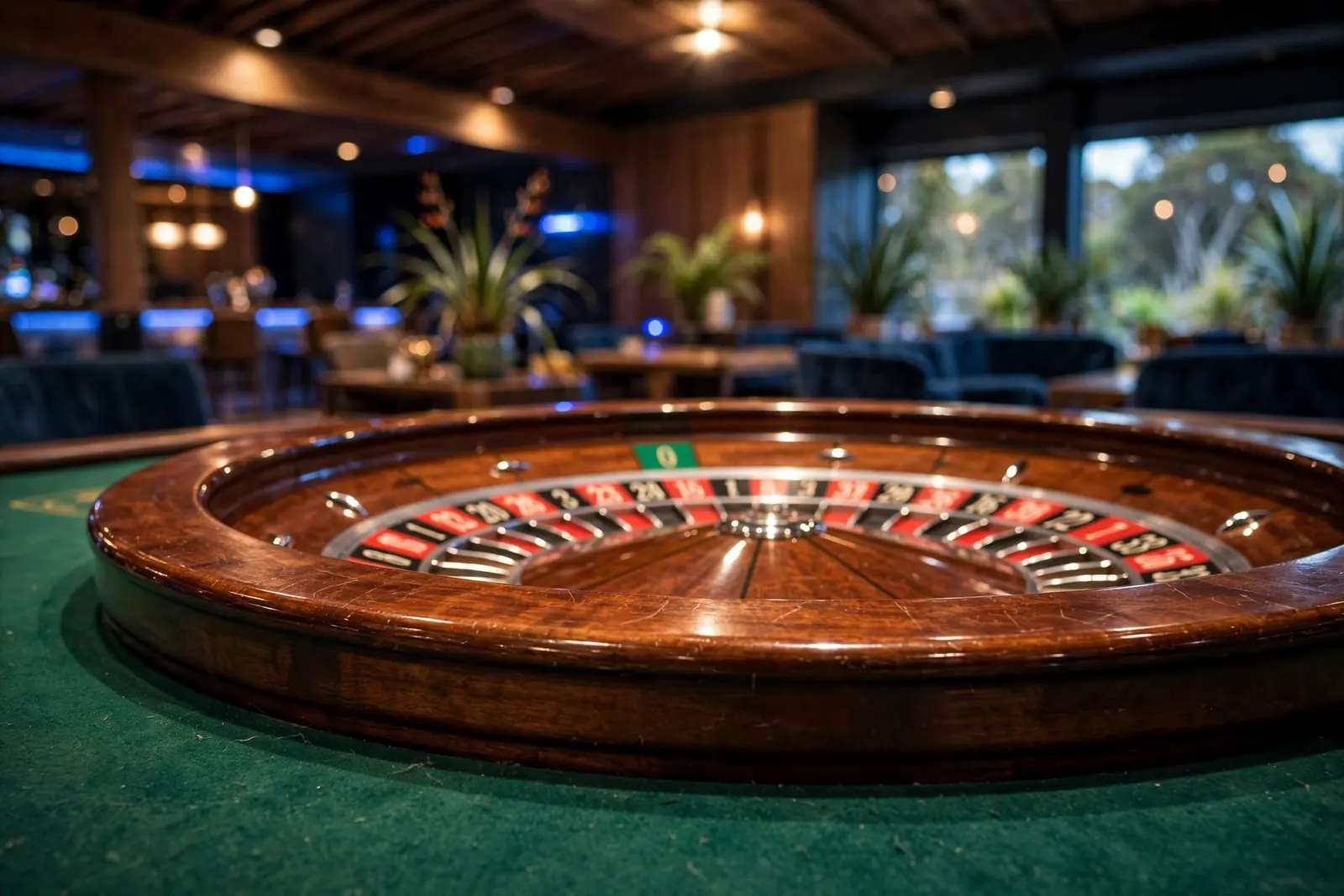
This is why common attempts to read a machine’s “mood” from recent results do not provide a sound basis for a decision. A player may remember a near miss, a sequence of matching symbols or a bonus round that appeared after many ordinary spins. Those events can be vivid, but they do not alter the next random result. A sequence that looks meaningful after it happens is not a signal that could reliably have been used beforehand.
Free play does not change this principle. A demo spin is still an outcome generated by the game, not a rehearsal that trains the machine to pay differently later. Nor does a successful practice session demonstrate that real-money play will reproduce the same sequence. Any apparent similarity between sessions is coincidence, not a transferable advantage.
Entertainment and financial expectation are separate
The useful question for free play is whether the game’s presentation is worth the time spent on it. The financial question is different. A free session cannot establish a dependable way to win pokies online, because it cannot reveal or control the random outcome of a future spin. Treating a good run as proof of skill confuses a pleasing result with a repeatable method.
That separation also helps when free spins are offered outside a demo. The presence of spins at no direct cost does not, by itself, show that the offer has a cash value or that its results can be withdrawn. Those questions depend on the terms attached to the particular promotion, which are separate from what the game looks like while it runs. A free feature can provide entertainment and still have no bearing on the likelihood of a later cash win.
Attention: Free play can demonstrate a game’s experience and mechanics, but it cannot provide a reliable forecast of future results or establish a route to profit.
The same applies when a free-play session is used to compare the feel of different games. One may appear more lively because of its sound or animation; another may feel slower or simpler. Such preferences are valid as preferences. They do not rank the games by the probability of a favourable outcome. Visual excitement is packaging, not an accounting entry.
For anyone weighing free online pokies in New Zealand against real-money play, the dividing line is therefore straightforward: free play can demonstrate the experience, while a result remains random. It can show whether the format is enjoyable enough to continue watching. It cannot establish a route to profit, compensate for earlier losses or improve the next spin. The next result is not obliged to follow the previous one, however persuasive the sequence may look.
The 2026 Licensing Shift and What It Changes
New Zealand’s position on online casino operations changed during 2026. The Gambling Act 2003 prohibits operating an online casino from within the country. The later Online Casino Gambling Act 2026 created a domestic licensing framework, marking a shift from that prohibition towards a regulated system for online casino providers.
The change was not simply a switch from unregulated to fully licensed operations at the start of the year. The 2026 Act came into force on 1 May, but its transitional arrangements run until 1 December 2026. Online casinos that were already serving people in New Zealand before the Act began may continue during that window. The full licensing regime is not expected to be operational until 2027, so the legal framework and its complete operation do not arrive at the same moment.

That distinction matters when describing online pokies in New Zealand in 2026. The year marks the start of a transition, not a point at which every operating provider is necessarily covered by a completed domestic licensing system. The Act establishes the country’s first domestic licensing regime for online casino gaming, while its transitional provisions set out how existing services may continue before the full regime is in place.
The underlying boundary on domestic operation remains important. The Gambling Act 2003 does not permit online casinos to be based in New Zealand. The new framework introduces licensing for online casino services within the country’s regulatory system; it does not erase the existing restriction on domestic casino operations. In practical terms, the change is about a new route for regulating providers, with a defined transition between the earlier position and the future licensed regime.
A specialist review describes the Department of Internal Affairs as the regulator under the licensing framework. The same type of review reports that the framework initially provides for up to 15 licences. Those details describe the proposed licensing structure, rather than evidence that the full system is already operating. The expected start of the regime from 2026 should therefore be read alongside the enacted transition dates and the later target for full operation.
The licensing conditions also change what providers will be required to do. Specialist reviews describe requirements covering harm minimisation, restrictions on advertising, age verification and tax contributions. These are regulatory obligations for licensed operators, not features that can be inferred merely from a site offering casino games. Their relevance depends on the licensing framework becoming fully operational and applying to the provider concerned.
Licensing Transition
The Online Casino Gambling Act 2026 came into force on 1 May, with transitional arrangements running until 1 December 2026, and full operationality expected in 2027.
For the market, then, 2026 is a legal transition year. The Act is in force, existing providers that meet the transitional criteria may continue until the transition ends, and the complete licensing regime is expected to follow in 2027. Describing the market as already operating under a fully established licensing system would collapse those separate stages into one. The dates and transitional status are the material points: a new domestic framework has been enacted, but its full operation comes later.
What Counts as a New Online Pokie
“New” can describe a recent release, but the label alone says little about how a game plays. A more useful distinction is its structure: reel layout, symbols and bonus features determine what happens during a spin and what kinds of rounds the game can enter. Online pokies can therefore feel quite different even when they share a familiar theme.
Classic and video formats
Classic pokies use three reels and do not include bonus rounds. Their structure is comparatively direct: the reels stop, and the symbols shown determine the result under that game’s rules. The format offers fewer feature layers than a modern video game, but that is a design difference, not a statement about how likely a game is to pay.
Video pokies commonly use five reels and may include wild symbols, scatters and free-spins rounds. Wilds can stand in for other symbols where the game rules allow; scatters can trigger a feature; and a free-spins round creates a separate sequence of spins under specified game rules. The details vary by title, so the information panel is more useful than the game’s artwork when identifying what a feature actually does.
These differences matter when comparing new pokies online. A title with several features has more moving parts to learn, while a classic format has a simpler structure. Neither format is inherently better: the distinction is what the game asks players to follow, not a promise about its outcome.

Features are part of the game design
Free spins are a feature within some video pokies, rather than a separate type of game. A trigger can open a round in which spins continue according to the title’s rules. Those rules may define how the feature starts and what symbols or effects apply during it. The name “free spins” describes the feature’s format; it does not establish that the round will produce a return.
A bonus-buy feature takes a different approach. Instead of waiting for a bonus round to be triggered during ordinary play, the player can pay a fixed multiplier of the stake to enter that round directly. The option changes how the feature is accessed, not the underlying fact that the game’s result is uncertain. It also makes the stake calculation important: the price is tied to the chosen stake, so the amount committed to a bonus buy is not the same as a regular spin at that stake.
Not every title includes a bonus buy, and its availability does not make a game “new” in itself. It is one design choice among others, alongside reels, symbols and bonus-round rules. A game can be recent without offering this feature, while another can include it as part of its mechanics regardless of when it appeared.
What the label can and cannot tell
For New Zealand online pokies, the word “new” is most useful when it refers to a specific release or a clearly identifiable feature. It does not tell how many reels a game has, whether it includes free spins, or whether a bonus can be entered directly. Those details have to be checked in the game itself.
Three-reel layout without bonus rounds, offering a direct structure where symbols determine the result.
Five-reel layout commonly featuring wilds, scatters, and free-spins rounds for more complex gameplay.
Titles allowing players to pay a fixed multiplier of the stake to enter a bonus round directly.
The practical comparison is therefore between mechanics, not marketing labels. A three-reel classic game without bonus rounds has a different structure from a five-reel video pokie with wilds, scatters and a free-spins feature. A bonus buy adds another route into a round, at a stated stake multiplier. Once those features are separated, “online pokies new” becomes less of a category and more of a question about what has actually changed in the game.
No-Deposit Bonuses: Read the Wagering Conditions First
A no-deposit bonus can put promotional funds into an account without an initial payment, but that does not make the displayed balance cash available for withdrawal. The offer is conditional. Its practical value depends on the rules attached to the funds and on whether those rules can be met through eligible play.
The first distinction is between a bonus that can be used to play and a balance that can be withdrawn. Wagering conditions set out what must happen before promotional funds, or any winnings linked to them, become withdrawable. The offer headline is therefore only one part of the calculation. The terms determine which games count, how the promotion is applied and what restrictions remain when a withdrawal is requested.
“ No wagering” is a particularly important phrase to read precisely. It may describe a specific offer, but the label alone does not establish what is withdrawable or whether other conditions apply. The written terms need to say how the promotional funds are treated and whether a win made with them can be cashed out. If that detail is unclear, the value of the offer cannot be assessed from its headline.

Game eligibility can change the calculation. Terms may define which pokies contribute towards a wagering requirement, so a game that appears in the casino lobby is not necessarily eligible for the promotion. The offer’s rules should be checked against the intended game before play begins. Promotional funds are not a general-purpose balance unless the terms make them one.
Bonus-buy features need separate attention. These let a player pay a fixed stake multiplier to enter a bonus round directly, rather than waiting for it to occur during ordinary play. Specialist reviews have reported that such features may cost 50 to 100 times the stake, depending on the game, and may be excluded from wagering with promotional funds. That is a reported condition, not a universal rule: the promotion’s own terms decide whether a bonus buy counts. If it is excluded, using promotional funds on that feature may add no progress towards the stated requirement.
A no-deposit offer should therefore be assessed in this order: identify what the promotion credits, read the wagering requirement, confirm which games and features qualify, then check the withdrawal conditions. Any stated expiry or other limit also belongs in the calculation. A large promotional balance can have little practical value if the eligible play is narrow or the conditions are difficult to satisfy.
The same discipline applies to offers described as free spins or as a small-deposit promotion. A deposit-based offer is not a no-deposit bonus, and the deposit amount does not by itself explain the promotion’s value. The relevant comparison is between the funds offered and the conditions attached to them, not between headline figures.
- Read the wagering conditions first
- Confirm game eligibility for the bonus
- Check the withdrawal conditions
- Assume a displayed balance is cash
- Rely on the headline offer alone
- Use promotional funds on excluded features
A bonus is best treated as restricted promotional credit until its terms establish otherwise. If the rules do not clearly explain when funds become withdrawable, or which play qualifies, the final cash value remains uncertain. That uncertainty belongs in the assessment before the offer is accepted, not after the balance has been used.
Real-Money Play, Offshore Sites and Mobile Access
New Zealand residents may play for real money on internationally licensed offshore casino platforms. The legal position for the individual player is distinct from the rules governing where an online casino may be based or how an operator is licensed to serve the market. Playing at an offshore platform is not a criminal offence for a New Zealander; that does not make the offshore operator a New Zealand-licensed business.
The distinction matters because “licensed” can refer to different jurisdictions. An overseas licence is issued under another country’s rules. It is not evidence of a New Zealand domestic licence, nor does it change the player’s position under New Zealand law. The Online Casino Gambling Act 2026 creates a domestic framework, with transitional provisions for operators already serving New Zealand before the Act came into force. A player’s ability to access a site and the operator’s status under that framework are separate questions.
Age is a direct eligibility condition: online casino play in New Zealand is for people aged 18 or older. That threshold applies whether the platform is reached on a computer or a mobile device. A phone does not create a different legal category of play, and an app does not turn an overseas licence into a local one.

Mobile access depends on the platform’s own setup. Some services may provide a mobile-optimised website or an app, while others may not offer both. The existence of an app, its availability in an app store, or a site that loads on a phone says nothing by itself about the operator’s licensing position. Those are access and presentation details, not evidence of domestic authorisation.
The same separation applies to real-money play more broadly. A New Zealand resident can legally play at an internationally licensed site, but that fact should not be read as a local endorsement of the operator. The player’s conduct is not a criminal offence; the platform’s regulatory status is a different matter. A foreign licence identifies the jurisdiction responsible for licensing the operator, not a New Zealand regulator.
For mobile use, the practical distinction is therefore simple: device compatibility concerns whether the service can be used on a phone; legal status concerns the player and the operator separately. Treating those as one check confuses access with authorisation. A real-money account remains a real-money account whether it is opened in a browser or through an app.
Payment Methods: Check the Cost Before Depositing
A payment option is not defined by its name alone. Paysafecard, a Paysafecard voucher or PayPal may appear in an online casino’s cashier, but availability and the conditions attached to each method depend on the operator. The relevant comparison is the amount charged, the currency used and the route available for withdrawing funds.
Currency conversion can change the final cost of a deposit. If the account balance and payment method use different currencies, a conversion fee may apply. The displayed deposit amount therefore may not equal the amount deducted from the payment account. The reverse can also matter when funds are withdrawn: a converted payment may arrive at a different value from the balance shown on the casino account. The cost cannot be assessed from the payment logo alone.
Deposit and Withdrawal Check
- Identify the deposit currency
- Confirm any conversion fees
- Establish available withdrawal methods
- Review identity-verification requirements
Before depositing, the cashier’s terms should be checked for conversion charges and the currencies accepted. The payment provider may also apply its own charges. If the operator does not make the total clear, the uncertainty is part of the cost calculation, not a minor detail to resolve after the transaction.
Paysafecard and PayPal are not interchangeable simply because both can be used for payments where an operator supports them. A voucher-based method and an account-linked payment service can have different deposit and withdrawal conditions. In particular, a method shown for deposits does not, by itself, establish that the same method can be used to withdraw. The available withdrawal routes and any conditions attached to them should be confirmed before funds are sent.
Identity verification is another transaction condition. Casino operators may require identity checks before approving a withdrawal, so completing verification before the first withdrawal can reduce the risk of an avoidable delay at that stage. The payment method does not remove this requirement. Using PayPal, a Paysafecard voucher or another route is not a substitute for confirming identity when the operator asks for it.
A useful pre-deposit check is therefore a short reconciliation: identify the deposit currency, confirm any conversion fee, establish which withdrawal methods are available, and review the identity-verification requirement. The balance credited to the casino account is only one part of the transaction. The amount paid out, the currency conversion and the ability to complete verification determine whether the payment route works as expected.

Searches for online pokies with Paysafecard or PayPal describe a payment preference, not a guarantee that a particular cashier will support it or that deposits and withdrawals will use the same channel. A payment method is suitable only when its full cost and both sides of the transaction are clear.
Offshore Casino Oversight and the Limits of Local Protection
A complaint about an offshore online pokies site does not enter the same local oversight system as a complaint involving an operator licensed in New Zealand. The distinction is jurisdictional: a foreign licence may place a casino under the rules of the authority that issued it, but it does not bring the operator under New Zealand supervision.
The Department of Internal Affairs (DIA) has a role in the domestic online casino licensing framework. Offshore sites, however, sit outside its oversight. New Zealand has no dedicated gambling regulator responsible for supervising those offshore casinos, so the DIA is not a local body that can investigate a dispute with one or require it to resolve a customer’s claim.
That leaves a practical gap between an operator’s own complaints process and local public protection. A site may describe how it handles complaints, but that is the operator’s procedure, not a New Zealand government route. If a disagreement concerns a withdrawal, account decision or game outcome, an offshore provider’s terms and the jurisdiction governing its licence may determine what process is available. A New Zealand consumer protection agency cannot be assumed to take up the case simply because the customer lives in New Zealand.
No Local Protection
Offshore casinos operate outside New Zealand’s oversight; the Department of Internal Affairs cannot investigate disputes or require them to resolve customer claims.
The domestic licensing framework is intended to create a different basis for oversight of operators licensed here. That does not make every complaint an automatic win, nor does a licence promise a particular outcome. It does mean that domestic licensing and supervision provide a local regulatory framework that is absent when the site is operating offshore. The distinction is between having a domestic authority with a role over the operator and relying on processes beyond New Zealand’s oversight.
For people comparing online pokie sites, the word “licensed” therefore needs context. A licence issued overseas is not a New Zealand licence, and it does not give the DIA authority over that casino. The relevant question is not simply whether a site displays a licence, but which regulator issued it and whether the operator is within New Zealand’s domestic framework. The status of a new online pokie site should not be inferred from a licence badge or from the fact that its games are accessible locally.
This limitation applies across online casino formats, including live games and digital pokie machines. A dispute does not acquire a local regulator merely because it began while playing the pokies online. Before wagering, the complaint terms and the regulator named by the operator indicate where responsibility lies. If the operator is offshore, local recourse through a New Zealand consumer protection agency is not available.
RTP, Volatility and Jackpot Contributions
Return to player, or RTP, is a theoretical measure of how much a pokie is designed to return across a very large volume of play. It is calculated from millions of simulated spins, not from a forecast of what will happen in a particular session. An RTP of 97%, for instance, represents a theoretical return of NZ$97 for every NZ$100 wagered over the long run. It does not mean that a player will receive NZ$97 back after wagering NZ$100, or that any session will finish near that figure.
Online pokies commonly have RTP settings between 94% and 97%. The percentage is useful for comparing the stated long-run return of games, but it is not a measure of how often a game pays or how large an individual win may be. Those outcomes are more closely associated with volatility. A game with low volatility tends to award smaller wins more frequently. High-volatility pokies pay less often, but a win can be larger. Neither pattern changes the basic limit of RTP: a statistical average cannot settle the result of a short run of spins.
RTP settings can also differ between versions of the same game. Some studios release a title at several settings, with the operator selecting which version to offer. The figure attached to a game elsewhere may therefore not match the version available on a particular site. The game’s information panel is the relevant place to check its stated RTP; a title name alone does not establish the setting.
Progressive jackpots work differently from a standard prize feature because contributions from spins across casinos running the game build a shared prize pool. Part of each bet is directed to that pool. As a result, the base game has a lower RTP: some of the stake is allocated to the jackpot rather than returned through ordinary play.
That distinction matters when comparing headline figures. A displayed jackpot amount is a pooled prize, not an indication that the base game returns more during ordinary spins. The jackpot mechanic and the base-game return describe different parts of the calculation. A large pool may be visually prominent, while the portion of each bet allocated to it reduces the base-game RTP.
Understanding Pokie Metrics
- RTP: Theoretical long-run return (typically 94%–97%) calculated over millions of spins.
- Volatility: Determines the frequency and size of wins (low volatility pays smaller wins more often).
- Jackpot Contributions: A portion of each bet allocated to a shared pool, which reduces the base-game RTP.
RTP, volatility and jackpot funding therefore answer separate questions: the theoretical long-run return, the typical pattern of win frequency and size, and the share of stakes directed to a pooled prize. None predicts the result of an individual session.
Fast Payout Claims Do Not Change the Odds
A fast-withdrawal claim describes how quickly an operator processes a payment request. It says nothing about the chance of a win, the size of a prize or the return built into a pokie. Those are separate measures: one concerns movement of funds; the other concerns the game.
The distinction matters when “highest paying” is used to describe a site or a game. A rapid payout does not make a game pay more, and a game with a higher theoretical return does not ensure that a particular session ends ahead. Online pokies commonly list RTP settings from 94% to 97%. RTP is a long-run measure, not a forecast for an individual player or a short run of spins.

Even the displayed RTP may depend on the version offered. Some studios release the same game with different RTP settings, and the operator selects which version appears on its platform. A game title seen elsewhere may therefore have a different setting. The information panel for the version actually available is the relevant reference; another site’s figure does not establish the setting in use.
This also puts “five times pay” claims in their proper place. A multiplier describes a possible game outcome or feature, not a dependable return on a stake. It cannot be read as a promise that a session will produce that result, and it does not indicate how quickly a withdrawal will be processed.
Payout speed should be assessed on its own terms. A stated processing claim concerns the operator’s handling of a withdrawal, while the time funds take to reach an account may also depend on the payment route. Neither changes the game’s RTP. Conversely, a published RTP does not establish when a requested withdrawal will be completed.

The useful comparison is therefore not a single “fastest” or “highest-paying” label. A payout claim needs clear terms about processing, while a return claim needs to match the specific game version. Treating either as evidence for the other turns two unrelated figures into one impression. In money terms, that impression has no calculable value.
Comparing Pokie Sites Without a Top-Site Ranking
A label such as “top online pokies” or “most popular” does not show how a site was assessed. A useful comparison separates verifiable operating conditions from presentation: licence status, game testing, account safeguards and the terms that affect access to funds.
Licence claims need context. New Zealand’s domestic online casino regime is being introduced in stages, so an offshore licence is not the same as authorisation under New Zealand law. Check which authority issued the stated licence and whether the operator’s status can be confirmed through that authority. For domestic operation, the relevant status is tied to the New Zealand framework and its transitional provisions. A licence logo alone establishes neither.
Game testing is a separate check. Look for the testing body named by the operator and confirm that the claim applies to the games offered, rather than assuming a platform-wide statement covers every title. Individual game certificates are more useful than a general badge because they identify what was tested. A certificate supports a claim about testing; it does not establish that a game will produce a particular result.
Responsible-gambling provisions are also practical comparison points. Check whether the site provides tools such as deposit limits and self-exclusion, and whether those controls are clearly explained. SSL encryption should be in place for account and payment information. These safeguards do not make gambling risk-free, but their absence or ambiguity is a material difference between platforms.
Promotional language and popularity claims should be treated as claims, not evidence of suitability. A comparison is stronger when each statement can be checked against an authority, a certificate, or the site’s published terms. Without that trail, “leading” is an adjective with no accounting value.
Created by the ”Casino Slots Tips NZ” editorial team.