Lightning Roulette in New Zealand: Rules and Odds
 Available in US
A clear guide to wheel and table layouts, roulette odds, practice play, and the limits of results as a predictor.

Table of Contents
- Lightning Roulette Mechanics: What the Wheel Can—and Cannot—Tell You
- Live and Online Play Under New Zealand’s Gambling Framework
- First-Person Lightning Roulette: A Viewpoint, Not a Change in Odds
- Roulette Strategy and the Cost of the House Edge
- How to Play—and Why No Bet Guarantees a Win
- Free Online Play: Practice Without Treating It as a Forecast
- Bonuses, Bitcoin Searches and Roulette Predictions: Check the Conditions
- Roulette Results and Statistics: The Numbers Behind the Return
- Lightning Roulette Demo Play: What a Trial Can Establish
- Checking Lightning Roulette Online in 2026
Lightning Roulette Mechanics: What the Wheel Can—and Cannot—Tell You
Lightning Roulette combines roulette with game-specific features, but the word “Lightning” does not by itself establish how those features work. The wheel’s layout, the table’s betting layout and any additional rules are separate things. Keeping them separate prevents a visual display or a run of results from being mistaken for evidence about what comes next.
European Roulette provides a useful reference point for the underlying wheel: it has 37 pockets, including a single zero. Its house edge is 2.70%. Those figures describe European Roulette, not automatically every game carrying a roulette name. Without confirmed rules for a particular version, they should not be transferred to Lightning Roulette as if the wheel and terms were identical.
Wheel positions are not table positions
The numbered pockets sit around the physical or simulated wheel. The betting table, by contrast, arranges numbers and bet areas for placing wagers. These layouts serve different purposes: the table organises choices, while the wheel determines the order in which numbers sit around the rim.
That distinction matters for called bets. They are grouped by the positions of numbers on the wheel, not by the numbers’ locations on the table. A group that looks adjacent on the betting layout is not necessarily a neighbouring section of the wheel. Conversely, numbers that sit near one another around the rim may appear far apart on the table.
A result display can show what has landed, but the table’s geometry cannot reveal a hidden sequence in the wheel. The arrangement is a map of the game, not a forecast.
What a spin can establish
A spin establishes the result of that spin. It does not change the probability of the next result. Roulette spins are independent, so earlier outcomes do not make a number “due,” nor do repeated appearances make it more likely to arrive again on the next turn.
This applies whether the recent history looks orderly or unusual. A cluster of results is still a record of completed spins, not a signal from the wheel. The same limit applies to number patterns and visual streaks: they describe the past, not the next outcome.

This is the most dependable rule for interpreting Lightning Roulette results. Any feature that highlights numbers, sequences or past outcomes may help describe what has appeared. It cannot, on that basis alone, establish what will appear next.
Multipliers and game-specific rules
Lightning Roulette is associated with multiplier-related searches, but the precise mechanics cannot be assumed from the game’s name. The rules for a particular version need to state how any multiplier is selected, which bets it can affect, how winnings are calculated, and whether other conditions apply. Those details are not part of the general definition of roulette.
The same caution applies to the game’s full rules. A familiar wheel format does not prove that every payout, selection method or special feature matches European Roulette. The exact rules shown for the version in play are the relevant terms; a title alone is not a rule sheet.
For that reason, no number can be identified as the number to play on the basis of the wheel’s history. The wheel layout explains where numbers sit, and the game rules explain how bets are treated. Neither supplies a reliable prediction of a future result.
Covering every number
The question of betting on every number has two parts. One is mechanical: whether the particular game permits the required selections and stakes. That depends on its betting interface and rules. The other is financial: what the total stake and resulting payout would be if a covered number landed. That depends on the applicable payouts and any game-specific conditions.
Without those terms, a blanket claim that covering every number guarantees a profit—or even a particular return—would be unsupported. Covering outcomes is not the same as removing the house edge. The wheel’s mechanics can be described; the financial result requires the actual rules and payout schedule.
The practical distinction is simple: known roulette mechanics explain the wheel and the independence of spins. Lightning-specific features require the version’s stated terms. Mixing the two turns a game label into a claim the label cannot support.
Attention: No number can be identified as the number to play based on the wheel’s history, as spins are independent and do not follow predictable patterns.
Live and Online Play Under New Zealand’s Gambling Framework
A live casino version of Lightning Roulette sits within New Zealand’s online casino framework; the game’s live presentation does not determine whether the provider is authorised to operate. That question depends on the legal status of the service and the rules applying to its provider.
New Zealand prohibits online casinos from being based domestically. The Gambling Act 2003 did not permit online casinos to operate from within the country, while gambling services provided from offshore were not licensed or supervised by a New Zealand regulator before the Online Casino Gambling Act 2026. Customers using an offshore site during that period had no domestic government recourse. Offshore services could nevertheless be accessed by residents, and the player did not incur a fine or criminal liability merely for wagering there.
The 2026 Act changed the regulatory framework, but not all at once. It came into force on 1 May 2026 and established New Zealand’s first domestic licensing regime for online casino gambling. The transition runs from that date until 1 December 2026. Only providers that were already serving people in New Zealand before the Act came into force may continue during this period, and they remain subject to the Act’s transitional provisions.
That is a limited continuation arrangement, not a general permission for new providers to enter the market or advertise to New Zealand customers. Advertising online casino gambling to people in New Zealand is prohibited during the transition. A provider that has not applied for a licence must cease conducting online casino gambling in New Zealand by 1 December 2026. The full licensed regime is not expected to be fully operational until 2027; unlicensed operation is expected to become an offence around mid-2027.


Who regulates the framework
The Department of Internal Affairs is New Zealand’s primary gambling regulator and oversees regulation of the online casino licensing framework. The Gambling Commission has a distinct licensing role: it hears and determines casino licensing applications, issues online casino licences, and approves changes to licence conditions. Those responsibilities concern the provider and its permission to operate, rather than the rules of a particular game.
The distinction matters when a casino advertises a live table or an online roulette title. A game name, live stream or “500x” phrase in promotional material does not itself establish that the provider holds a New Zealand licence, that the product is available under a particular licence, or that a stated feature forms part of the game. Regulatory status must be assessed at the provider level, under the applicable transitional or licensing rules.
The new regime also brings stricter age and identity verification requirements for licensed operators. That is an operator obligation, not a guarantee of a particular game’s availability or an endorsement of its terms. Providers without a licence may face enforcement action and fines of up to NZ$5 million; the potential sanction is directed at operators, not customers.
For Lightning Roulette, the practical distinction in 2026 is therefore between a provider permitted to continue under the transition and one with no basis to do so. The transition does not mean that every offshore casino is approved, and an accessible website is not proof of local authorisation. Equally, a resident’s use of an offshore service is not, by itself, a criminal offence or grounds for a fine under the stated framework. The legal exposure falls on the provider, while the historical absence of domestic supervision left customers without local government recourse.
Legal Risk
Providers without a licence must cease conducting online casino gambling in New Zealand by 1 December 2026, and unlicensed operation may become an offence around mid-2027.
The licensing framework identifies who may operate and who supervises that permission. It does not establish that every version described as live Lightning Roulette is available in New Zealand, nor does a game label settle the provider’s regulatory position. Those are separate checks, and the market’s transition dates make the distinction material.
First-Person Lightning Roulette: A Viewpoint, Not a Change in Odds
“First person” describes how a game is presented, not a different kind of roulette. In First Person Lightning Roulette, the label signals a viewing perspective. It does not, by itself, establish what controls, camera angles or other interface elements are available. Those details depend on the particular version and should not be assumed from the name alone.
That distinction matters because presentation can feel more immediate than a conventional screen layout. A closer or more immersive view may make the wheel seem easier to follow, but it does not provide information about what the next result will be. The visual experience is packaging around a roulette game, not a signal from the wheel.
The underlying point is mathematical: each spin is a separate event. A run of particular numbers does not make a different number more likely on the next spin, and a previous result does not alter the next spin’s probabilities. A first-person view cannot change that relationship. The sense of continuity between rounds belongs to the presentation; the outcomes do not carry a memory of earlier spins.
The same separation applies to game labels. “First person” is not an RTP figure, a payout rule or a promise of altered odds. No specific return percentage can be established from that phrase alone. A published RTP, where available, would need to relate to the exact game version and its stated rules; the viewing perspective is not a substitute for that information.

Nor does the label establish whether a particular version is offered as a demo, what payment methods a site accepts or whether a service has any particular access restriction. Those are separate matters, determined by the site and the terms attached to its service. A search for a first-person demo or for Lightning Roulette sites may join those subjects together, but the game’s camera perspective cannot verify them. Likewise, “pay by phone” describes a payment question, not a feature of the roulette presentation.
This is useful when comparing descriptions that place several claims side by side. A page may use “first person” alongside language about speed, access or rewards, but proximity is not evidence that one feature causes another. The view can change how the round is seen; it does not establish how a site handles deposits, withdrawals or eligibility. Each claim needs its own terms and evidence.
For a player assessing the game itself, the relevant distinction is simple: viewpoint concerns presentation, while probability concerns the roulette process. A different angle may make the experience feel more direct, but it cannot make a past result predictive or make future results dependent on it. Any real-money stake remains exposed to the result of its spin.
First-person Lightning Roulette is therefore best read literally and narrowly. It identifies a way of viewing the game. It does not certify a particular interface, disclose an RTP, confirm a payment route or supply a method for anticipating outcomes. That is less dramatic than the label may sound, but it is the more useful interpretation.
Viewpoint vs Probability
A first-person view changes the presentation and visual experience of the game, but it does not alter the underlying mathematical odds or the independence of each spin.
Roulette Strategy and the Cost of the House Edge
A roulette strategy can organise decisions, but it cannot change the probabilities built into the wheel. In European Roulette, 37 pockets include a single zero, giving the game a house edge of 2.70%. That edge is the long-run mathematical difference between stakes received and winnings paid under the stated rules. It is not a fee deducted from every spin, and it does not specify what any individual session will cost.
The distinction matters when judging systems that change bet size after a win or loss. A progression may alter the size and timing of stakes; it does not alter the chance that a particular pocket will land. A run of losses can therefore increase the amount exposed without improving the underlying odds. A system that promises to beat Lightning Roulette by recovering losses through larger later bets has changed the risk profile, not removed the house edge.
The same limit applies to choosing numbers from recent results. Roulette spins are independent: earlier outcomes do not change the probability of outcomes on the next spin. A number that has not appeared for a while is not thereby “due”, and a recent streak does not establish that it will continue. Past results can describe what happened; they cannot provide a reliable signal for the next outcome.
That leaves strategy with a narrower, practical role. It can set boundaries around spending and session length, and it can keep decisions consistent rather than reactive. Those controls are useful for limiting exposure, but they are not a route to positive expected returns. The amount set aside remains at risk, and any plan that depends on continuing after losses needs to be assessed against the possibility that funds run out before a recovery arrives.
Lightning Roulette adds game-specific features to the roulette format, but a strategy should not assume that those features cancel the ordinary uncertainty of a spin. The relevant rules and payouts must be understood before any calculation is meaningful. If a calculation relies on an unverified assumption about the game, its apparent precision is packaging, not evidence.
There is no best betting pattern in the sense of one that reliably converts roulette into a profitable activity. A lower-variance approach may produce smaller swings; a higher-variance one may produce larger swings. Neither changes the house edge. Nor does covering more outcomes guarantee a profit: the combined stakes and the payouts still determine the result, while the zero remains part of the European wheel.
A sound financial limit is therefore more useful than a supposed winning system. Set a maximum loss in advance, do not increase it to chase a result, and do not risk more than can be afforded to lose. The house edge describes a long-run disadvantage, while short sessions can end either way. That uncertainty is not a flaw in the calculation; it is the reason no strategy can promise to beat the game.
How to Play—and Why No Bet Guarantees a Win
A roulette bet is a stake placed on an outcome before the wheel is resolved. The bet may cover a single number or a broader category shown on the table. If the result falls within the selected outcome, the game pays according to its rules; otherwise, the stake is lost. The exact options and payout terms depend on the roulette version, so the displayed rules matter more than the game’s name.
Before Placing a Bet
- Review the table’s rules and payout terms
- Choose a permitted bet type
- Set a stake within your affordable budget
- Confirm the bet before the spin begins
For Lightning Roulette, the basic financial question is unchanged: what amount is at risk on the next spin, and what happens to that amount if the bet loses? A bet is not a deposit with a likely return. It is money exposed to a random result, and every real-money bet can lose. A sequence of wins does not make the next stake safer; a sequence of losses does not make a win due.
That is why no reliable method can guarantee a win on Lightning Roulette. Betting patterns can change how much is staked and how quickly a balance rises or falls. They cannot control the wheel. Claims that a system can force a result, exploit a guaranteed pattern or provide a dependable way to cheat are not a basis for a sound financial decision. A download or a different screen for the same game does not change the probability of a roulette outcome.
The practical steps are limited: review the table’s rules, choose a permitted bet, set the stake, and confirm it before the spin. The interface may differ between games or platforms, so the precise buttons and available options should not be assumed. A bet should be treated as an expense that may produce no return, not as a plan for recovering earlier losses. Money needed for bills or other obligations is not a gambling budget; no more should be risked than can be afforded to lose.
Previous results provide no forecast. Roulette spins are independent, meaning that earlier outcomes do not alter the probabilities on a later spin. A number that has appeared repeatedly is not thereby less likely to appear again, and one that has been absent is not owed a turn. A history panel can record what happened. It cannot convert that record into information about the next result.
Payout percentages also need careful interpretation. A specialist review reports 94.70% for American roulette and 97.30% for European roulette. Those figures describe the named versions in that review; they are not a promise that an individual session, bet or Lightning Roulette game will return those proportions. The result of a particular wager remains uncertain, and the amount returned depends on the game’s rules and the outcome.
The sensible limit is therefore financial, not predictive: decide in advance what loss is acceptable, keep the stake within that boundary, and stop when it is reached. There is no bet that removes the possibility of losing.
Free Online Play: Practice Without Treating It as a Forecast
Free online play can make the basic flow of Lightning Roulette easier to follow without putting money at risk. It may help clarify how a selected wager is recorded, when a round is complete and where the result appears. Those are practical points of familiarity, not evidence about what the next spin will produce.
The terms “free” and “online” do not, by themselves, establish what a particular version offers. Access may depend on the site and the game’s presentation; the availability of free play, its conditions and the options shown should be checked on the relevant game screen. A free mode should not be assumed to include every feature of real-money play, or to reproduce every condition attached to it.
- Use free play to learn the interface
- Observe how rounds are displayed
- Clarify how wagers are recorded
- Treat free results as a forecast
- Assume free play reflects all real-money conditions
- Use free sessions to identify winning patterns
Nor does access alone answer where Lightning Roulette can be played. A listing or game screen can identify a version, but it does not establish that free play is available, that all functions are identical across versions, or that the displayed game is the one a player expects. The title matters less than the rules and options actually presented.
Free play is most useful as a low-cost way to learn the interface and observe how a round is displayed. It can show whether the controls and labels are understandable. It cannot show that a sequence is due to continue, reverse or repeat. Roulette spins are independent: earlier results do not alter the probability of outcomes on a later spin. A run of similar outcomes is a record of what happened, not a signal from the wheel.
That distinction is important when interpreting a free-play balance or a string of results. Since no real stake is being put at risk in a genuinely free mode, its balance is not a measure of money that could be withdrawn. A favourable run does not establish an expected return, and an unfavourable run does not make a future result more likely to compensate for it. The record describes the session; it does not forecast another one.
The same caution applies to questions about Lightning Roulette payout. A payout figure cannot be inferred simply from the game name or from a free session’s results. The relevant information is the payout table and rules displayed for the specific version and wager. If those terms are not clear, a free session cannot supply them by producing wins or losses. An outcome history is not a substitute for stated rules.
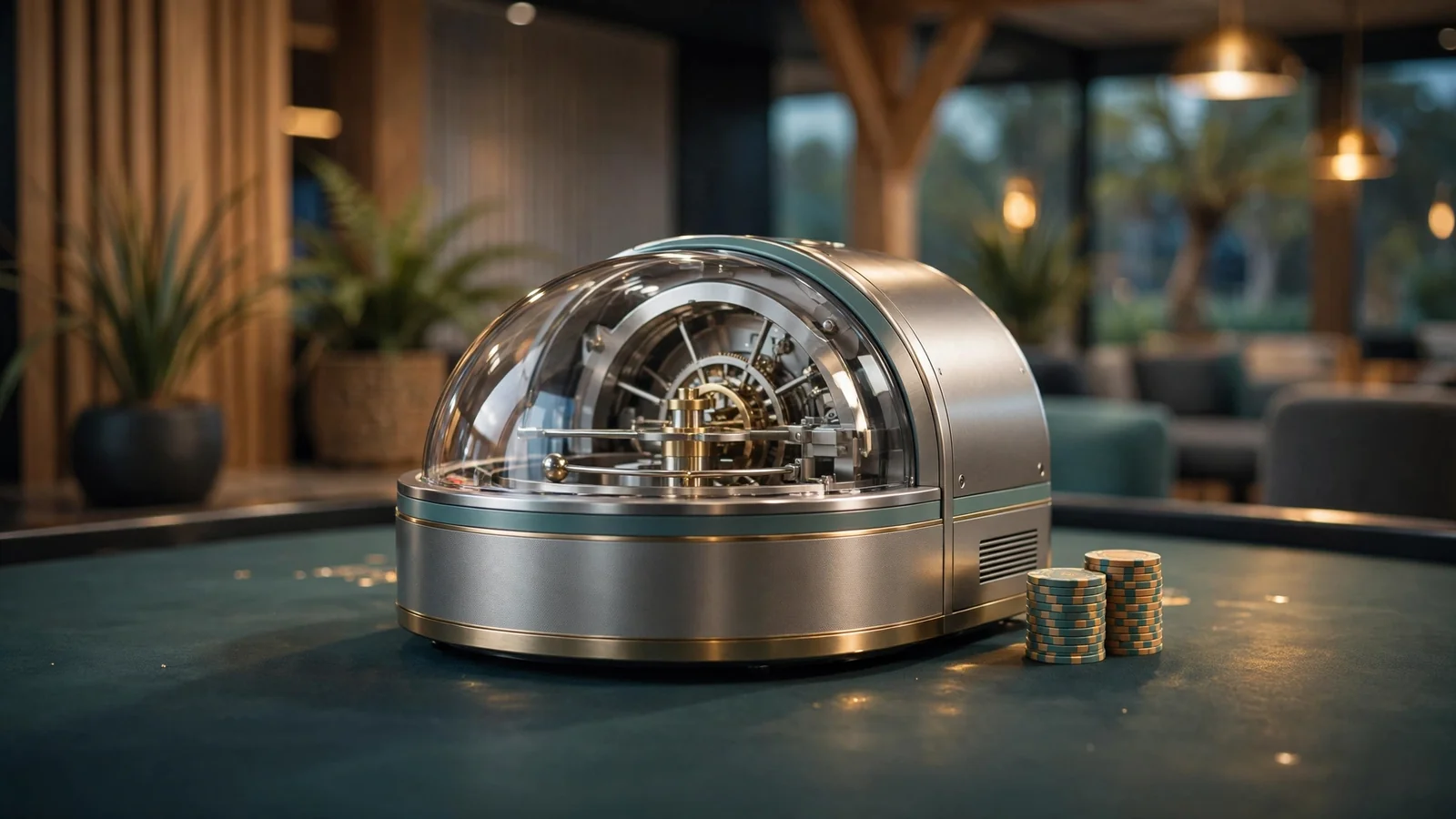
The useful boundary is straightforward: free online play can familiarise someone with the way a particular screen works, but it cannot establish a winning pattern or predict real-money outcomes. Any later real-money wager remains exposed to loss. A session that costs nothing is still capable of creating false confidence if its results are treated as a forecast; that is a bookkeeping error, not a roulette insight.
Bonuses, Bitcoin Searches and Roulette Predictions: Check the Conditions
A Lightning Roulette bonus is a set of conditions attached to an offer, not an adjustment to the game’s probabilities. The headline value alone does not establish what can be withdrawn. Eligibility rules determine who can claim it; expiry sets the time allowed to use it; game-contribution terms determine whether roulette play counts towards wagering requirements; and withdrawal restrictions can affect both the bonus and related winnings.
The required wagering terms are specific: bonus money must be wagered 50X within 30 days. Winnings from free spins must be wagered 50X within 7 days. A withdrawal request voids all active or pending bonuses. These conditions should be read together. A bonus that expires before its wagering requirement is completed, or roulette play that contributes little or nothing towards that requirement, has a different practical value from the headline offer. The relevant calculation is what remains withdrawable after eligibility, contribution, expiry and withdrawal rules are applied.
Bonus Wagering Requirements
Bonus money must be wagered 50X within 30 days, and winnings from free spins must be wagered 50X within 7 days. Note that a withdrawal request voids all active or pending bonuses.
Bitcoin searches raise a separate question. A reference to Bitcoin does not establish that a particular operator accepts it, that a bonus applies to deposits made with it, or that the associated withdrawal terms match those for another payment method. Payment eligibility and promotion eligibility are separate conditions; neither should be inferred from the other. The applicable terms need to state the permitted payment method and how it affects the offer.
Claims about Lightning Roulette tracking or prediction require a different kind of scrutiny. A record of previous outcomes can describe what has already occurred. It cannot change the probability of a later result: roulette spins are independent, so previous results do not determine what comes next. A tracker may organise historical results, but that record is not evidence that a prediction tool can identify a winning outcome. Calling a display a predictor does not supply a predictive advantage.
The distinction matters financially. A bonus changes the conditions attached to funds; it does not make a roulette result more certain. A tracking tool describes past outcomes; it does not turn them into instructions for future ones. Offers and prediction claims therefore belong in separate calculations. One calculation concerns eligibility, required wagering, expiry, game contribution and the consequence of requesting a withdrawal. The other concerns whether a claim about forecasting has a basis beyond the presentation of past results.
When the terms are incomplete or unclear, the value that can be established is limited. No bonus should be treated as cash available for withdrawal before its conditions are satisfied, and no sequence of recorded outcomes should be treated as a forecast. Any real-money roulette bet can lose; funds at risk should not exceed what can be afforded to lose.

Roulette Results and Statistics: The Numbers Behind the Return
A results history records what has already happened; it does not supply a forecast. Roulette spins are independent, so a run of red, black, high numbers or low numbers does not change the probability of the next outcome. A statistics screen can summarise past results, but it cannot turn those results into a reliable signal for a future Lightning Roulette round.
The underlying wheel matters when interpreting return figures. European Roulette uses a single-zero layout and has a house edge of 2.70%. American Roulette adds a double-zero pocket to its single zero, making 38 pockets in total; its house edge is 5.26%.
A specialist review reports payout percentages of 97.30% for European Roulette and 94.70% for American Roulette. These figures express the corresponding long-run theoretical return under the stated formats. They are not a promise about an individual session, nor evidence that a particular online game uses either layout. A payout percentage is best read as a model of aggregate results over extensive play, not as a repayment schedule for each player.
That distinction matters when searching for Lightning Roulette statistics. A display of recent numbers may be accurate as a record and still have no predictive value. Likewise, a published return figure is useful only when its game version and rules are known. The standard European and American figures cannot simply be assigned to Lightning Roulette without confirming that the relevant version uses the same wheel and payout structure.
The term “slot” can also lead to a category error. Lightning Roulette is a roulette game, so slot-machine return comparisons do not establish its odds. The useful questions are narrower: which wheel format is in use, what rules govern the bets, and whether the reported percentage belongs to that exact version. Without those details, a number may be precise while answering the wrong question.
Features a single-zero layout with a house edge of 2.70% and a theoretical return of 97.30%.
Includes both a single and double-zero pocket, resulting in a house edge of 5.26% and a return of 94.70%.
In practical terms, statistics can describe historical outcomes or compare established roulette formats. They cannot identify the next winning number, validate a pattern, or establish the return of a specific Lightning Roulette version on their own. Past results remain a ledger of completed spins; the next spin starts without memory.
Lightning Roulette Demo Play: What a Trial Can Establish
A Lightning Roulette demo can show how a trial version presents a round and lets a player interact with it. That makes it useful for learning the sequence of a session and recognising the game’s controls, without putting real money at stake. It is a familiarisation tool, not a test of future outcomes.
A free demo may also make it easier to distinguish the wheel’s result from the way the game displays it. The trial can establish what appears on screen during that session. It cannot establish that the same sequence, frequency or result will recur later, or that a perceived pattern has predictive value.

That limit follows from roulette’s independence: each spin is separate, and earlier results do not change the probability of outcomes on a later spin. A run of repeated colours in a demo therefore gives no basis for expecting a different colour next. Nor does a sequence that appears balanced imply that the next result is due to complete it. The display records events; it does not turn them into a forecast.
Demo conditions should not be treated as a financial simulation of real-money play. A trial can familiarise someone with the game itself, but it does not establish how a real-money session will feel or what its final balance will be. The absence of financial exposure is precisely what makes the trial useful for orientation—and what prevents it from measuring the cost of staking money.
A sensible reading of a Lightning Roulette free demo is therefore narrow: it can show how the version being tried works as an interface, and help clarify whether its presentation is understandable. It cannot validate a betting method, reveal a hidden cycle or predict a real-money result. The trial’s information ends at what was displayed during the trial.
Checking Lightning Roulette Online in 2026
Choosing a Lightning Roulette site in New Zealand means considering what each operator can reliably tell you about its offering. This list provides a concise reference to the available details for each option.
License: Tobique Gaming Commission, licence no. 0000064 Neospin lists a licence from the Tobique Gaming Commission, licence no. 0000064.
License: Malta Gaming Authority, licence no. MGA/B2C/370/2017 Play Grand lists a Malta Gaming Authority licence, no. MGA/B2C/370/2017.
License: Tobique Gaming Commission, licence no. 0000091 7Bit Casino lists a licence from the Tobique Gaming Commission, licence no. 0000091.
Payout speed: 1-3 business days Wintino lists a payout speed of 1–3 business days.
Payout speed: 1-3 business days Lamabet lists a payout speed of 1–3 business days.
License: Tobique Gaming Commission, licence no. 0000002 Ricky Casino lists a licence from the Tobique Gaming Commission, licence no. 0000002.
License: Malta Gaming Authority, licence no. MGA/B2C/394/2017 N1 Casino lists a Malta Gaming Authority licence, no. MGA/B2C/394/2017.
License: 07017519840 · Payout speed: 1-3 business days Zotabet lists licence number 07017519840 and a payout speed of 1–3 business days.
License: Curaçao Gaming Authority, licence no. OGL/2024/165/0185 BitStarz lists a Curaçao Gaming Authority licence, no. OGL/2024/165/0185.
The name Lightning Roulette identifies a roulette variant, but the name alone does not establish the exact rules or presentation of a particular online version. Details such as the wheel layout, available bets, payout table and any game-specific features need to be checked in that version’s rules. A label or promotional description is not a substitute for those terms.
One point does not depend on the presentation: roulette spins are independent. Earlier results do not change the probability of outcomes on later spins. A run of the same colour, a sequence of numbers or a displayed history therefore cannot establish what the next spin will produce. Past results are records, not forecasts.
The distinction matters when comparing an online listing with the game itself. A title can confirm which variant is being presented, but it cannot by itself verify that every version has identical rules, settings or interface. Nor does a visual feature imply a change to the underlying probability of a spin. Those details belong to the specific game information, not to the name.
For Lightning Roulette online in New Zealand in 2026, the careful conclusion is limited: the game can be identified by its title, while its precise implementation must be confirmed from the version’s own rules. Claims about outcomes being predictable from previous spins do not follow from roulette history. Random results leave no reliable pattern to extract, however detailed the record appears.
Real-money play still carries the possibility of losing each bet. Any amount put at risk should be limited to what can be lost without affecting essential spending. The useful check is not whether a displayed sequence looks persuasive, but whether the rules clearly describe the game being offered—and whether the claimed feature is actually part of that version.
Prepared by the Casino Slots Tips NZ editorial staff.