Blackjack Tables in New Zealand: Rules and Play
 Available in US
The dealer manages each hand in turn as players aim to finish closer to 21 without going over.

Table of Contents
- How Blackjack Tables Work: Cards, Dealer and Live Play
- Blackjack Rules and Payouts: The Terms That Change the Calculation
- Online Blackjack Tables in New Zealand in 2026
- Strategy at the Table: How Rules Affect Decisions
- Bets, Chips and Electronic Blackjack
- When to Hit or Stand—and What a $5 Minimum Means
- Where to Sit at a Blackjack Table
- Reading a Blackjack Card Chart
- A Blackjack Cheat Sheet Without Guaranteed-Win Claims
- Blackjack Table Limits and Payout Terms
How Blackjack Tables Work: Cards, Dealer and Live Play
A blackjack table is organised around one contest: each player’s hand is measured against the dealer’s, and the aim is to finish closer to 21 without going over. The dealer is the common opponent, not another player competing for the same pot. Several people can take part at once, but each hand is assessed separately against the dealer’s hand.
At a casino, the table’s curved edge gives players places to sit facing the dealer. The dealer works from the opposite side, handling the cards and keeping the round moving. The felt marks out the playing positions and betting areas, so each player’s cards and stake remain associated with that seat. This layout is functional rather than decorative: it allows the dealer to deal and collect cards while keeping each hand distinct.
The number of occupied positions can change from round to round. A player may be seated beside others or have space around them; either way, the dealer manages the hands in turn. The table’s shared setting makes the pace visible. Cards are dealt, players make their decisions, and the dealer completes the round. The action at one position may take longer than at another, but the table proceeds as a single sequence.
A physical blackjack table at a casino and a live online table share the central feature of actual cards handled by a dealer. The difference is how the player sees and joins the game. In a casino, the cards and dealer are present in the room. In a live-dealer game, a camera stream brings that table to a screen, while the player participates through the online interface. It resembles the casino table experience, but the stream adds a layer between the deal and the viewer.

That layer affects tempo. A stream can be delayed, so the action on screen may not arrive at precisely the same moment as the action at the table. The interface also has to register a player’s choice before the round continues. These small intervals are part of the live format, not evidence that the game has stopped. A physical table has its own pauses as players consider their hands, but there is no video feed between the cards and the people watching them.
A live blackjack table online therefore combines a real dealer and cards with screen-based participation. The dealer handles the game; the interface carries the player’s choices back to the table. When the stream is clear and current, the sequence is easy to follow. When it lags, the delay can make a decision window feel shorter or the result feel less immediate. Some live tables may also require higher bets than other formats, so the live presentation is not simply a visual choice.
The online display usually gives each participant a defined area for their hand and betting position, while the dealer’s cards appear in a separate part of the screen. This mirrors the physical table’s division of space: the player’s hand is distinct from the dealer’s, and the round has a visible centre of attention. In a busy game, several player positions may be shown at once. The number of people on screen does not change the basic contest; the dealer remains the opponent for each hand.
A 21 blackjack table is not a different objective from blackjack under another label. The number refers to the target around which the contest is built. The practical experience comes from watching the cards, following the dealer’s progress and making choices at the relevant point in the round. The table format determines whether that sequence is seen directly in a room or through a live stream; it does not change who the hand is played against.

The table’s pace is also shaped by how many hands are being handled and how quickly decisions are made. A physical game has the sounds and movement of a shared room. A live stream replaces that room with a camera view and an on-screen layout, while retaining a human dealer and actual cards. Neither format turns the game into a private contest against other seated players. Their hands may be visible, but the result for each position still depends on that player’s comparison with the dealer.
For anyone comparing a casino blackjack table with a live online version, the useful distinction is therefore operational: one is experienced in person, the other through a stream and interface. Actual cards connect the two. The stream can introduce delay, and some live tables can carry higher betting requirements; those are material differences, not cosmetic details. The central task remains the same: finish nearer to 21 than the dealer without exceeding it.
Blackjack Rules and Payouts: The Terms That Change the Calculation
Blackjack is a comparison with the dealer, not a contest to reach a particular total at any cost. The aim is to finish closer to 21 than the dealer without going over. The arithmetic is simple; the table rules determine which choices are available and how a winning hand is paid.
Number cards count at face value, while jacks, queens and kings each count as 10. An ace can count as either 1 or 11, according to which value fits the hand without taking it over 21. That flexibility is why an ace-containing hand can have a different total depending on the next card. It also explains the term “soft” hand: the ace can still be treated as 1 if counting it as 11 would bust.
The available actions
A player may hit to take another card or stand to keep the current total. Double down means increasing the wager in connection with taking a further card; split means separating a pair into two hands, subject to the table’s conditions. Some games also permit surrender, which ends the hand under that game’s stated terms.
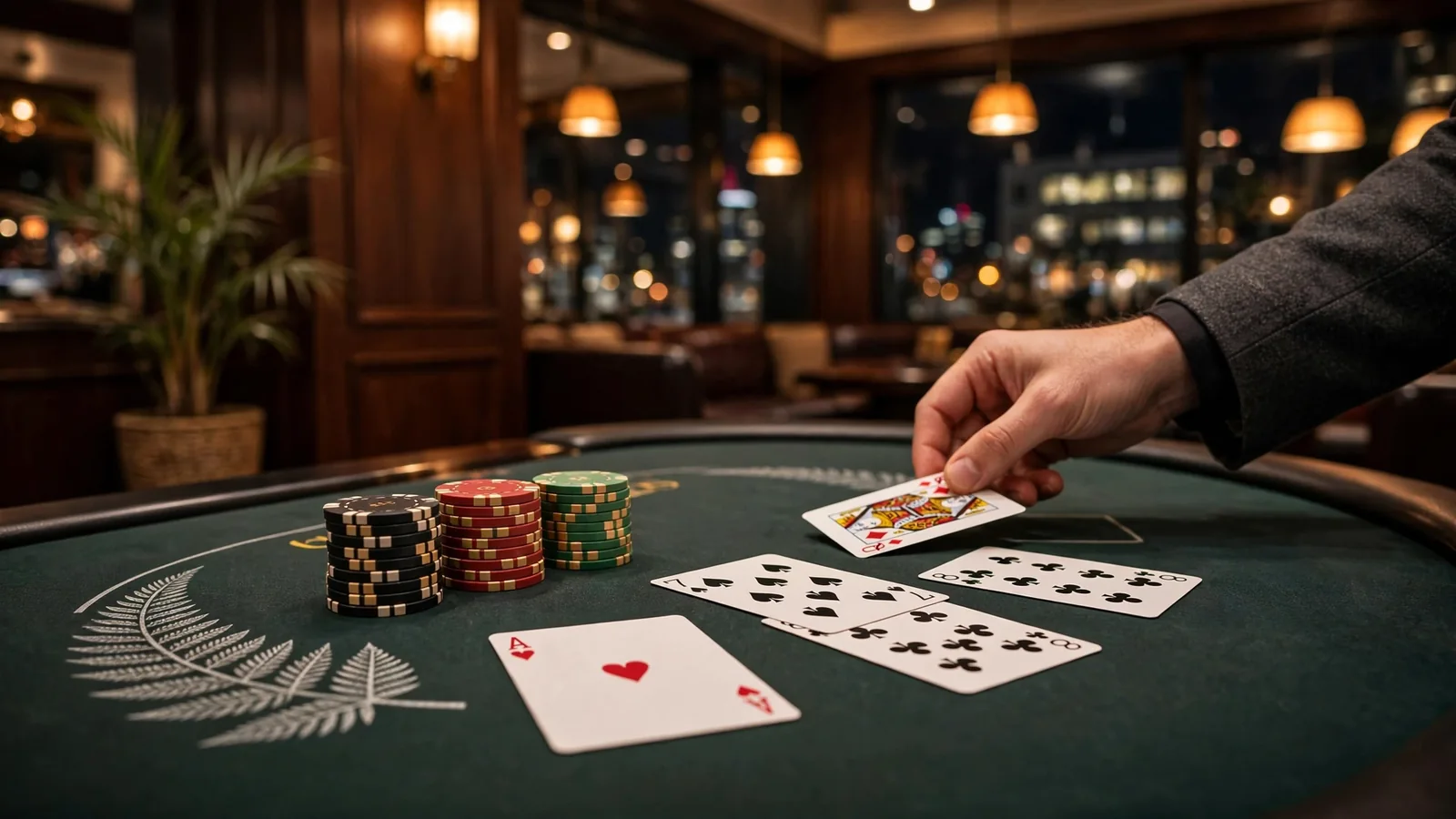
The permitted actions are part of the rules, not a universal menu. A casino blackjack table can restrict when doubling or splitting is allowed, and surrender may not be offered. The posted rules therefore matter before a hand begins. A table that does not allow double down is not automatically a different game in every other respect, but it removes that option from the calculation. There is no separate payout that compensates for an unavailable action.
The phrase “blackjack win table no double down” points to this distinction. A hand can still win through the ordinary result of play, but the player cannot use a double-down action if the table rules exclude it. The payout for a win and the options available during the hand are separate terms. Treating them as one can make a table look more generous or restrictive than it is.
Natural blackjack and its payout
A natural blackjack is the opening combination of an ace and a ten-value card. Its payout may differ from the payout for other winning hands. A specialist review describes 3:2 as one possible natural-blackjack payout and notes that some tables instead offer 6:5. Those figures are payout ratios, not a promise about every game. The table’s own rules are the operative terms.
Natural Blackjack Payout
Example: 3:2 × $10 = $15 profit.
The difference affects the return on the same winning hand. At 3:2, a winning wager earns a profit equal to one and a half times the original stake; at 6:5, it earns a profit equal to one and one-fifth of the stake. The original wager is returned as well, where the payout is stated as profit. A natural-blackjack payment should not be assumed to apply to every hand that reaches 21: the opening combination is a specific hand, not simply a total achieved after drawing.
This is why a blackjack table price is not a single figure that can be read from the game name. The phrase may refer to the amount required to take part, but the financial result also depends on the table’s payout terms. A displayed minimum or stake amount does not, by itself, explain what a natural blackjack earns. Those are distinct pieces of information and should be read separately.
Rules that change between games
The number of decks can differ, as can the dealer’s procedure on a soft 17. Rules for surrender, the available player actions and the payout for blackjack may also vary. A specialist review identifies these as features that differ between games; they should not be treated as fixed casino blackjack table rules.
The dealer’s soft-17 rule concerns whether the dealer takes another card or stands on that total. That detail changes the conditions under which the dealer’s hand develops. It is not a minor wording choice, even though the player’s own card values remain the same. Similarly, deck count and payout terms belong to the particular game, not to the generic label “blackjack.”
A practical blackjack table guide therefore starts with the rules printed for the game: how cards count, which actions are allowed, how the dealer plays a soft 17, whether surrender is available, and what a natural blackjack pays. The word “table” does not guarantee identical terms across physical, electronic or live-dealer versions. Variant rules can affect both strategy and house edge, so the game name alone is not enough to establish the calculation.
Online Blackjack Tables in New Zealand in 2026
Choosing a blackjack table in New Zealand involves more than finding a game: it is also worth checking what is known about the casino behind it. This list gives you a concise reference point for considering the options.
License: Tobique Gaming Commission, licence no. 0000064 Neospin lists a licence from the Tobique Gaming Commission, number 0000064. This gives readers a specific licensing detail to consider when assessing its blackjack offering.
License: Malta Gaming Authority, licence no. MGA/B2C/370/2017 Play Grand lists a Malta Gaming Authority licence, number MGA/B2C/370/2017. That licensing information is a useful point of reference for players considering its blackjack tables.
License: Tobique Gaming Commission, licence no. 0000091 7Bit Casino lists a Tobique Gaming Commission licence, number 0000091. Its licence details are the available distinguishing information for this blackjack-focused reference.
Payout speed: 1-3 business days Wintino lists a payout speed of 1–3 business days. This is a practical detail to consider alongside its blackjack offering.
Payout speed: 1-3 business days Lamabet lists a payout speed of 1–3 business days. Players can weigh that stated timeframe when considering its blackjack tables.
License: Tobique Gaming Commission, licence no. 0000002 Ricky Casino lists a Tobique Gaming Commission licence, number 0000002. This provides a concrete licensing detail for readers assessing its blackjack offering.
License: Malta Gaming Authority, licence no. MGA/B2C/394/2017 N1 Casino lists a Malta Gaming Authority licence, number MGA/B2C/394/2017. The licence information offers a specific point of reference when considering its blackjack tables.
License: 07017519840 · Payout speed: 1-3 business days Zotabet lists licence number 07017519840 and a payout speed of 1–3 business days. These stated details give players practical information to consider alongside its blackjack offering.
License: Curaçao Gaming Authority, licence no. OGL/2024/165/0185 BitStarz lists a Curaçao Gaming Authority licence, number OGL/2024/165/0185. This licensing detail is the available specific information for readers considering its blackjack tables.
The legal position for an online blackjack table in New Zealand changed during 2026. The Online Casino Gambling Act 2026 created the country’s first domestic licensing system for online casino gambling and took effect on 1 May. It did not make every site immediately licensed: the market is moving through a transition, with the full licensing regime not expected to be operational until 2027.
Responsibility is divided between two public bodies. The Department of Internal Affairs is New Zealand’s primary gambling regulator and oversees the online casino licensing framework. The Gambling Commission considers and decides licence applications, issues online casino licences and approves changes to licence conditions. These roles are distinct: oversight of the framework sits with the department, while individual licensing decisions sit with the commission.
What the transition means
The Gambling Act 2003 did not permit online casinos to be based in New Zealand. Before the 2026 legislation, online casino gambling supplied from overseas was not licensed or supervised by a New Zealand regulator. A person using an offshore website in that period had no domestic government recourse if a dispute arose. Playing at an offshore casino without a local licence does not, by itself, make the customer liable to a fine or prosecution.
Legal Compliance
Providers that have not applied for a licence must stop conducting online casino gambling in New Zealand by 1 December 2026 to avoid fines of up to NZ$5 million.
The new Act provides a temporary route for continuity rather than an immediate switch to a fully licensed market. An online casino that was already serving people in New Zealand before 1 May 2026 may continue during the transition, subject to the Act’s provisions. That permission runs only until 1 December 2026. It is not the same as holding a domestic licence, and it does not turn a newly arriving provider into an eligible transitional operator.
Providers that have not applied for a licence must stop conducting online casino gambling in New Zealand by 1 December 2026. If an application is declined, the provider must cease its online casino operations in the country and leave the market. Unlicensed operation is expected to become an offence around mid-2027; enforcement action and fines of up to NZ$5 million may apply to operators without a licence. Those consequences concern providers, not customers simply placing a bet.
Advertising and player protections
The transition also places limits on promotion. Online casino operators are prohibited from advertising to people in New Zealand during this period. Once licensed operators are permitted to advertise, that permission remains subject to tight rules, and sponsorships are prohibited. A promotional message should not be mistaken for evidence that a site already holds a New Zealand licence.
Licensed operators must use stricter age and identity verification. These checks form part of the licensing framework, rather than a feature of the blackjack game itself. The relevant distinction for a player comparing online tables is therefore not only whether the game is live or software-based, but also which legal stage the provider is operating under and whether it has the required status once licensing is in force.
A blackjack win table or displayed payout describes game terms; it does not settle a dispute or establish regulatory oversight. During the transition, a site’s continued availability may reflect its pre-existing operation and transitional permission, not a completed licence application. The practical calculation is straightforward: the 2026 framework is being introduced in stages, and transitional access has an endpoint. Availability today and a domestic licence are not interchangeable conditions.
Strategy at the Table: How Rules Affect Decisions
A blackjack table strategy is conditional, not a fixed set of moves that applies to every game. The decision attached to a hand depends on the version being played and the rules in force. Since variants can change both the available choices and the house edge, a strategy reference is useful only when it matches the table. A chart that assumes one set of conditions may give the wrong instruction at a table with different terms.
This is the practical limit of basic strategy: it organises decisions for a particular game, but it does not remove the effect of the rules or turn chance into certainty. Before applying a chart, the relevant conditions need to be identified. The number of decks, the dealer’s approach to soft 17, surrender availability and the natural-blackjack payout can differ between games. Each difference can change which decision is mathematically preferable. Strategy is therefore a match between a chart and a table, not a portable shortcut.
Match Strategy to Table
- Identify the number of decks
- Check the dealer’s soft 17 rule
- Verify surrender availability
- Confirm the natural-blackjack payout
Match the reference to the table
A blackjack probability table is not a forecast of what will happen in a particular hand. It describes probabilities under specified assumptions. Change the game conditions and the underlying calculation may change too. A probability figure presented without its assumptions is incomplete information, even when it looks precise.
The same applies to a blackjack surrender table. Surrender is only relevant where the option is available, and a reference for one variant should not be treated as a rule for another. A blackjack pay table also has to be read as part of the game’s terms: the payout affects the value of a natural, while other rule differences affect decisions elsewhere. These details belong together because a strategy calculation needs the full set of conditions, not a convenient fragment.
A private blackjack table does not, by itself, establish that a different strategy is required. The meaningful question is whether its rules differ from those used by the reference material. Privacy describes the setting; the stated game conditions determine whether a chart applies. If those conditions are unclear, the calculation cannot be checked reliably.
What a chart can and cannot do
A strategy chart can make decisions more consistent by setting out choices for defined hands and table rules. It does not predict the next card, prevent a losing run or guarantee a positive result. A result can differ from the decision that had the best expected value under the stated assumptions. That is a feature of a game with uncertain outcomes, not evidence that a chart has failed.
The house edge is also not a personal loss forecast for a particular session. It describes the game’s structural advantage under its rules; it does not specify the result of an individual sequence. Changing variants can change that edge, which is why a strategy discussion that ignores the table’s terms leaves out part of the calculation.
Card counting is separate from basic strategy. It uses information about cards already dealt to adjust estimates of what remains. Mental card counting is not illegal under New Zealand law. That legal point is not a promise that counting will work in every setting, that a particular game permits an advantage, or that it removes variance. In online games with automatic shuffles, counting should not be presented as an effective route to profit.
No betting system can convert uncertain outcomes into guaranteed income. A sound decision process can still end in a loss, and increasing stakes to recover losses changes the amount at risk rather than repairing the earlier result. A defined budget and a refusal to chase losses keep the financial exposure separate from the strategy calculation.
Where play involves a bonus, the terms also affect the final amount available. Fine print should be checked on trustworthy sites and casino pages before real-money play. Blackjack may contribute differently to wagering requirements, and maximum-bet rules can apply while those requirements are being met. A strategy chart does not account for those conditions; they belong in the separate calculation of whether the offer’s terms are acceptable.
Table Strategy
- Strategy charts are conditional and must match the specific table rules
- The house edge varies based on the game variant
- Card counting is legal in NZ but ineffective in automatic online shuffles
- No betting system can guarantee income or remove variance
- Budget boundaries are essential to avoid chasing losses
Bets, Chips and Electronic Blackjack
A bet is the amount committed to a hand before play begins. At a physical table, chips make that amount visible: the stack placed in the betting area represents the stake, while the cards and dealer determine how the hand proceeds. Online, the same decision is made through a digital interface, but the display replaces physical chips. The format changes; the money at risk does not.
At a live table, chips also make the betting sequence legible to the dealer and other players. The initial stake is set before the cards are dealt, and any later permitted change to that stake depends on the game’s rules. This is separate from how a player chooses to act during the hand. Keeping the two decisions distinct helps with basic accounting: the bet is the committed amount, while the hand’s result determines what happens to it.
An electronic blackjack table game can refer to an RNG version, where software shuffles and deals the cards, or to a live-dealer stream. These are materially different formats. RNG blackjack runs through software shuffles and can move faster because it does not wait for a streamed table to show each stage of play. The pace may suit someone who wants fewer pauses, but a faster sequence also means less time between decisions and the next wager.
Live-dealer blackjack uses actual cards and presents the game through a video stream, making the experience closer to a casino table. That resemblance comes with practical limits: streaming can delay the action, and live games may require higher bets than electronic versions. A displayed table minimum is therefore part of the format’s cost, not a measure of how much a session will ultimately involve. The total depends on the stakes chosen and how many hands are played.
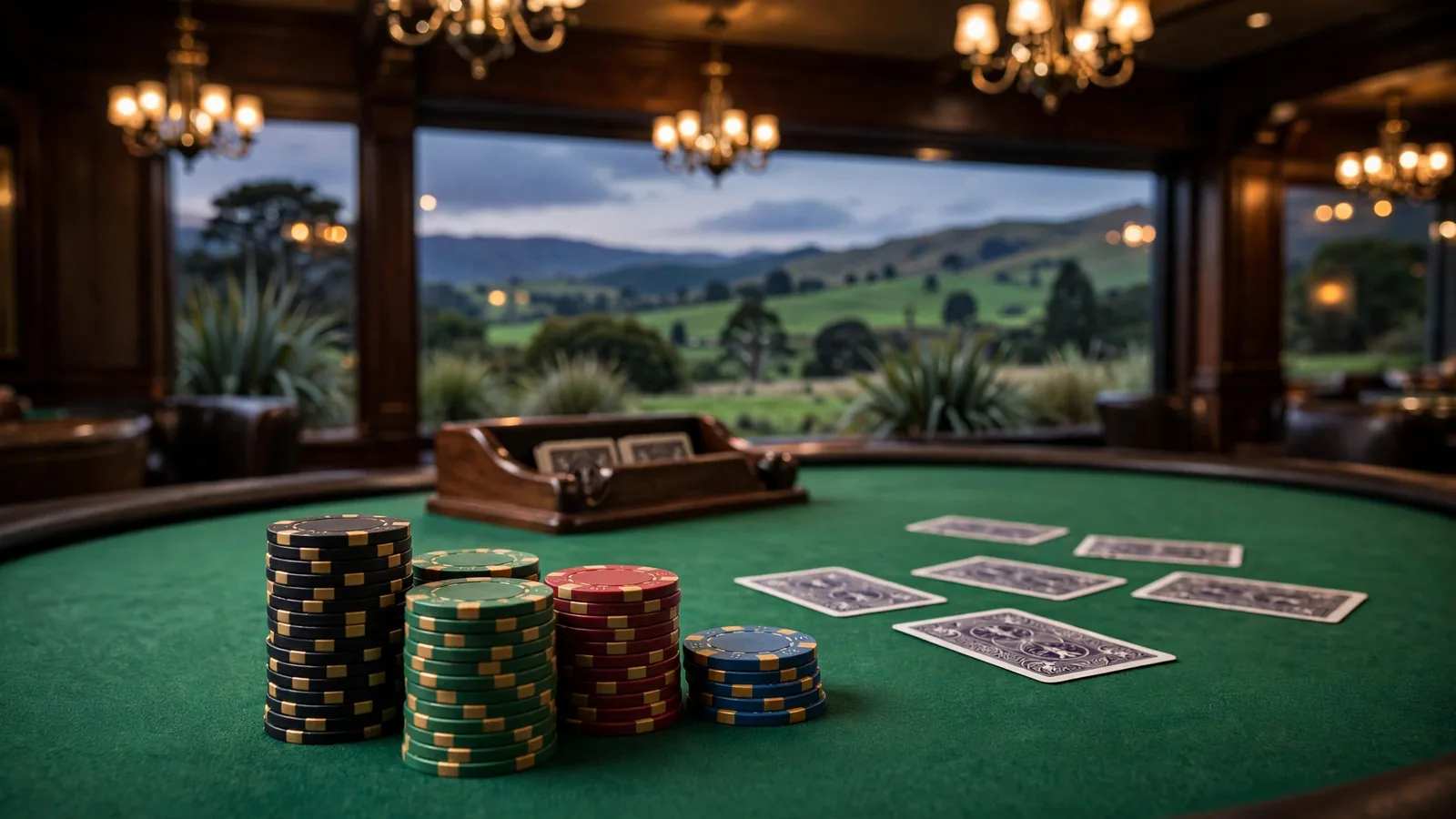
Chips are a convenient unit of display, not a separate source of value. A digital balance and a physical stack both need to be read in terms of the money represented. Before play, the relevant terms include the stake accepted at the table and any conditions attached to a promotion. Bonus conditions can include wagering requirements; blackjack may count differently towards them, and maximum-bet rules can apply while those requirements are being met. The fine print can change the usable value of an offer, so the headline amount alone is not a reliable calculation.
A fixed budget gives the session a defined financial boundary. Once it is used, increasing the stake to recover losses turns a recorded loss into a larger exposure; it does not improve the terms of the game. Electronic speed can make that boundary easier to cross unnoticed, while a live stream can create pauses without changing the underlying risk. Neither format alters the basic accounting: each new bet is additional money at risk.
When to Hit or Stand—and What a $5 Minimum Means
A hit adds another card to the hand; standing ends the player’s turn with the total already held. The choice is immediate, but it is not a fixed instruction that applies identically at every table. Blackjack games can differ in rules, including whether the dealer takes a card on soft 17, and those terms affect the conditions around each decision.
- Consider the risk of exceeding 21
- Base decisions on the current total
- Check table rules for available actions
- Assume a hit always improves a hand
- Apply a fixed instruction to every table
- Overlook whether double down or split is permitted
A useful starting point is the current total and the risk of exceeding 21. A low total leaves more room for another card; a total already near 21 leaves less. That describes the trade-off, not a guarantee about what the next card will be. A hit can improve a hand or take it over 21, while standing avoids that extra-card risk but leaves the existing total to compete against the dealer’s hand.
Hit and stand are not the only available actions. Depending on the hand and table rules, a player may also be able to double down or split. Those options have separate conditions, so a displayed action should not be assumed to be available in every situation. The table’s rules determine the permitted choices.
What the $5 minimum tells you
A $5 minimum identifies the smallest permitted wager for the relevant table or betting position. It does not, by itself, state the maximum bet. The maximum is a separate limit and must be shown in the table terms; it cannot be calculated from the minimum alone. A table with a stated floor therefore does not supply enough information to establish its ceiling.
The same distinction matters during promotional wagering. Maximum-bet rules may apply while wagering requirements are being met, and blackjack may contribute differently from other games. Those conditions can change the amount of qualifying play without changing the table’s ordinary minimum. The fine print should be checked on a trustworthy site and with the casino before real-money play.
Keep the decision separate from the budget
The hit-or-stand choice concerns the hand. The $5 minimum concerns the entry price for a wager. Neither establishes how much a session will cost: repeated hands can use further wagers, and outcomes remain uncertain. A budget set before play puts a limit on that exposure; raising stakes to recover losses does not change the underlying odds or make a previous loss reversible.
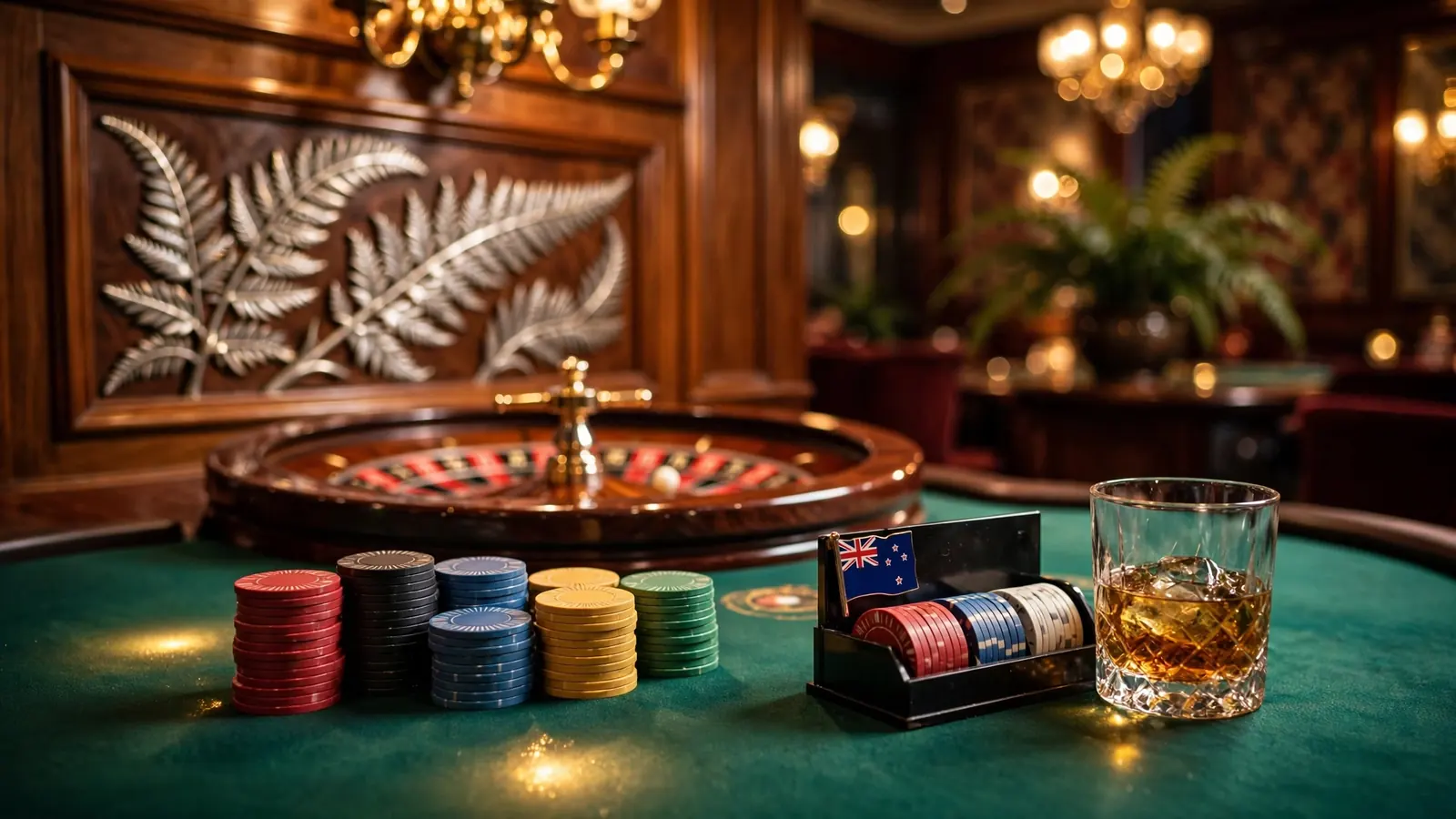
Where to Sit at a Blackjack Table
There is no position at a blackjack table that, by itself, makes a hand more likely to win. The game remains a contest against the dealer: each player is trying to finish closer to 21 without going over. A seat changes where someone sits, not that objective.
The practical difference is comfort and visibility. A position with a clear view of the table can make it easier to follow the dealer’s play and see how the round progresses. A seat that feels cramped or leaves cards and activity hard to see may make the experience less comfortable, but it does not provide a mathematical advantage. “Best” therefore depends on what makes the game easiest to follow, not on a special edge in the cards.
The table’s pace and the presence of other players can also affect how a seat feels. Some players prefer a position where they can watch the whole round; others may be more comfortable with less attention on them. Those are preferences about the experience. They are not evidence that one position changes the result.
Seat choice should not be confused with control over the dealer’s cards or another player’s decisions. Each hand is still assessed under the table’s rules, and the aim remains to beat the dealer without exceeding 21. A seat cannot compensate for terms that are unfavourable or turn a losing hand into a winning one.
Before settling in, the useful checks are straightforward: is the place available, can the table be followed clearly, and does the pace suit the player? If the terms are difficult to see or understand from a particular position, moving to a clearer spot may improve visibility. That is a practical adjustment, not a strategy for improving the odds.
Searches for the best place to sit at blackjack tables often imply that position might determine success. It does not. Choose for a clear view and a comfortable playing experience; judge the financial terms separately. A favourable seat is not a substitute for favourable rules.
Reading a Blackjack Card Chart
A blackjack chart is only useful if the hand is entered with the same card values the game uses. Number cards count at face value, so a seven contributes seven and a four contributes four. Jacks, queens and kings each count as ten. An ace is different: it may count as one or eleven, depending on which value keeps the hand from exceeding the game’s target.
That ace distinction is the main point to check before following a chart. A hand containing an ace may be treated differently from a hand with the same total made entirely from fixed-value cards. When the ace can count as eleven without taking the total over the target, the hand is commonly called soft; when it must count as one, it is hard. The labels describe how the total is formed, not the rank of the other card.
A blackjack table chart commonly organises information around the player’s hand and the dealer’s visible card. The hand may be shown as a total, or as a pair, or marked as soft when an ace is being counted as eleven. Read the chart’s key first: abbreviations and symbols can vary, and a label should not be guessed from its position alone. Then identify the cards in the hand, calculate their values, and match that hand to the chart’s relevant row or category. The dealer’s card belongs on the other axis where the chart uses one.
A quick value check prevents a basic misread: a queen and a six total sixteen, while an ace and a six can be counted as seven or seventeen. The chart’s category depends on the ace’s usable value, not merely on adding the largest possible total.
Using Strategy Charts
Identify the total of your hand, noting if an ace makes it a “soft” or “hard” hand.
Locate the dealer’s visible card on the chart’s axis.
Find the intersection of your hand total and the dealer’s card to determine the recommended action.
A chart does not replace the table’s stated rules. Variants can differ, so a chart made for one set of terms may not fit another. The card values remain the starting reference; the chart’s labels and applicable rules determine how that reference is organised.
A Blackjack Cheat Sheet Without Guaranteed-Win Claims
A blackjack cheat sheet is best treated as a compact reminder of the decisions available at the table, not as a script that fixes every hand. The player may hit, stand, double down or split, subject to the rules of the game. The right choice depends on the situation and the table’s terms; a short reference cannot remove that dependence.
| Action | What it means |
|---|---|
| Hit | Take another card. |
| Stand | Keep the current hand and take no further card. |
| Double down | Increase the wager and take the additional card allowed by the table rules. |
| Split | Separate a pair into two hands, where the rules permit it. |
The table’s own rules govern which options are available and when. A cheat sheet should therefore be read alongside those rules, rather than treated as a substitute for them. A compact blackjack table cheat sheet can help keep the action names clear, but it cannot promise a favourable result or turn a variable game into a fixed calculation.
Card counting is a separate practice from memorising player actions. In New Zealand, mental card counting is not illegal. That legal point is not evidence of a guaranteed advantage, and it does not make a system certain to produce a profit.
Financial terms matter too. Before playing for real money, the bonus conditions and fine print should be checked on trustworthy sites and casino materials. Blackjack may contribute differently to wagering requirements, and maximum-bet rules can apply while wagering requirements are being met. A budget should be set in advance; losses should not be chased by increasing stakes or extending play.
A useful reference is concise enough to consult without obscuring the table’s actual conditions. Its function is to organise choices, not to forecast the next card. Any system presented as a guaranteed way to win confuses a decision aid with a promise the game cannot support.
Blackjack Table Limits and Payout Terms
A table limit sets the permitted stake range, but it does not describe the whole financial deal. The minimum and maximum stake are separate terms, and neither should be inferred from a game title or a casino’s general description. The table’s own rules and payout terms need to be read alongside its limits before any stake is placed.
The rules can alter what a win returns. A specialist review reports that a natural blackjack may pay 3:2 at one table and 6:5 at another. Those ratios produce different returns for the same qualifying hand, so the payout printed for the specific game matters more than a broad claim about blackjack. A specialist review also notes that deck count, the dealer’s decision on soft 17 and surrender availability can differ between games. These terms affect the game being assessed; the limit alone does not settle them.
A useful comparison therefore records the stake range and payout together, then checks the other listed rules. If the minimum fits a budget but the payout or conditions do not, the table is not made suitable by its low entry point. A maximum stake is a ceiling, not a target. Setting a fixed budget and not chasing losses keeps the decision separate from the next hand’s outcome.
Promotional funds add another layer. Blackjack may contribute differently to wagering requirements, and maximum-bet rules can apply while those requirements are being met. The applicable conditions should be checked before play; a table limit does not override them.
Searches for limits at a particular casino can lead to general pages that do not state the terms for an individual blackjack table. The relevant figures are the ones displayed for the chosen game at the time of play, together with its payout and rules. Where those terms are not clear, the apparent stake range is not a complete basis for comparing tables.
Can you beat online blackjack by counting cards?
Online RNG blackjack uses software shuffles and allows faster play than live-dealer games. Live-dealer blackjack uses actual cards, though streaming may delay play.
Does blackjack always pay 3:2?
No. A natural blackjack often pays 3:2, but some tables pay 6:5; check the payout rules at the table.
What is card counting?
Card counting involves mentally calculating or tracking cards during play.
Is card counting illegal?
No. Using mental calculation to count cards is not illegal under New Zealand law.
Written by the editors at Casino Slots Tips NZ.