Blackjack Strategies for New Zealand Players
 Available in US
See how hand values, chart decisions and table rules affect play across standard blackjack and its variants.

Table of Contents
- How Blackjack Decisions Work
- Basic Strategy as a Decision Chart
- Card Counting: What It Means in New Zealand
- Why Deck Count and Table Rules Change the Chart
- Payouts, Insurance and the Cost of a Misread Term
- Blackjack Switch and Variant-Specific Decisions
- Bet Sizing Without a Guaranteed-Win System
- The 2026 New Zealand Online Casino Framework
- What Makes a Blackjack Strategy Optimal
- Practice Across RNG and Live-Dealer Games
How Blackjack Decisions Work
Blackjack is a contest against the dealer, not a comparison between the other players at the table. The aim is to finish with a hand closer to 21 than the dealer’s hand, without going over 21. A hand that exceeds 21 is a bust and cannot win, even if the dealer later also goes over. The central decision is therefore not simply how to reach 21. It is how to improve a hand, or keep its value, while accounting for the risk of exceeding the limit.
The arithmetic is direct once each card’s value is understood. Number cards count at face value: a 4 contributes four, and a 9 contributes nine. Face cards—kings, queens and jacks—each count as 10. An ace is different: it can count as either 1 or 11. A hand’s total is the sum of its cards, with the ace assigned the value that makes the hand work without exceeding 21 where possible.
That flexible ace is what makes some hands change value without changing their cards. An ace with a 6 can be counted as 7 or 17. If another card would make the higher total exceed 21, the ace can instead count as 1. The hand can therefore remain live at a lower total rather than busting. A hand containing an ace counted as 11 is commonly called soft; if the ace must count as 1, the hand is hard. The distinction describes the hand’s arithmetic, not a different set of cards.
Blackjack strategy can help you make more informed decisions, but choosing where to play also means checking the available information about an operator. Use these concise details as a reference when considering your options.
License: Tobique Gaming Commission, licence no. 0000064 Neospin is listed with a Tobique Gaming Commission licence, number 0000064.
License: Malta Gaming Authority, licence no. MGA/B2C/370/2017 Play Grand is listed with a Malta Gaming Authority licence, number MGA/B2C/370/2017.
License: Tobique Gaming Commission, licence no. 0000091 7Bit Casino is listed with a Tobique Gaming Commission licence, number 0000091.
Payout speed: 1-3 business days Wintino’s stated payout speed is 1–3 business days.
Payout speed: 1-3 business days Lamabet’s stated payout speed is 1–3 business days.
License: Tobique Gaming Commission, licence no. 0000002 Ricky Casino is listed with a Tobique Gaming Commission licence, number 0000002.
License: Malta Gaming Authority, licence no. MGA/B2C/394/2017 N1 Casino is listed with a Malta Gaming Authority licence, number MGA/B2C/394/2017.
License: 07017519840 · Payout speed: 1-3 business days Zotabet has the listed licence number 07017519840 and a stated payout speed of 1–3 business days.
License: Curaçao Gaming Authority, licence no. OGL/2024/165/0185 BitStarz is listed with a Curaçao Gaming Authority licence, number OGL/2024/165/0185.
For instance, an ace and a 7 can total 8 or 18. Add a 5, and counting the ace as 11 would make 23, so the ace counts as 1 and the hand totals 13. By contrast, a hand with a 10 and a 7 is a hard 17: there is no ace available to reduce the total. These examples show why the visible total alone does not always describe a hand fully. A total formed with a flexible ace has room to absorb a card that a hard total may not.
A natural blackjack is the opening hand formed by an ace and a 10-value card. Its arithmetic reaches 21 immediately. It differs from reaching 21 after taking additional cards, even though both totals are 21: the route to the total can affect how the hand is treated under the table’s rules. The exact financial treatment belongs to the table terms, not to the card-value calculation.
After receiving cards, a player can decide whether to take another card or keep the current hand. Hitting means taking a card; standing means taking no more cards. Each choice has a clear trade-off. A hit can move a low total closer to 21, but it can also push the hand over the limit. Standing protects the existing total from that immediate risk, but leaves the dealer to complete the comparison. Neither action changes the value of the cards already held.
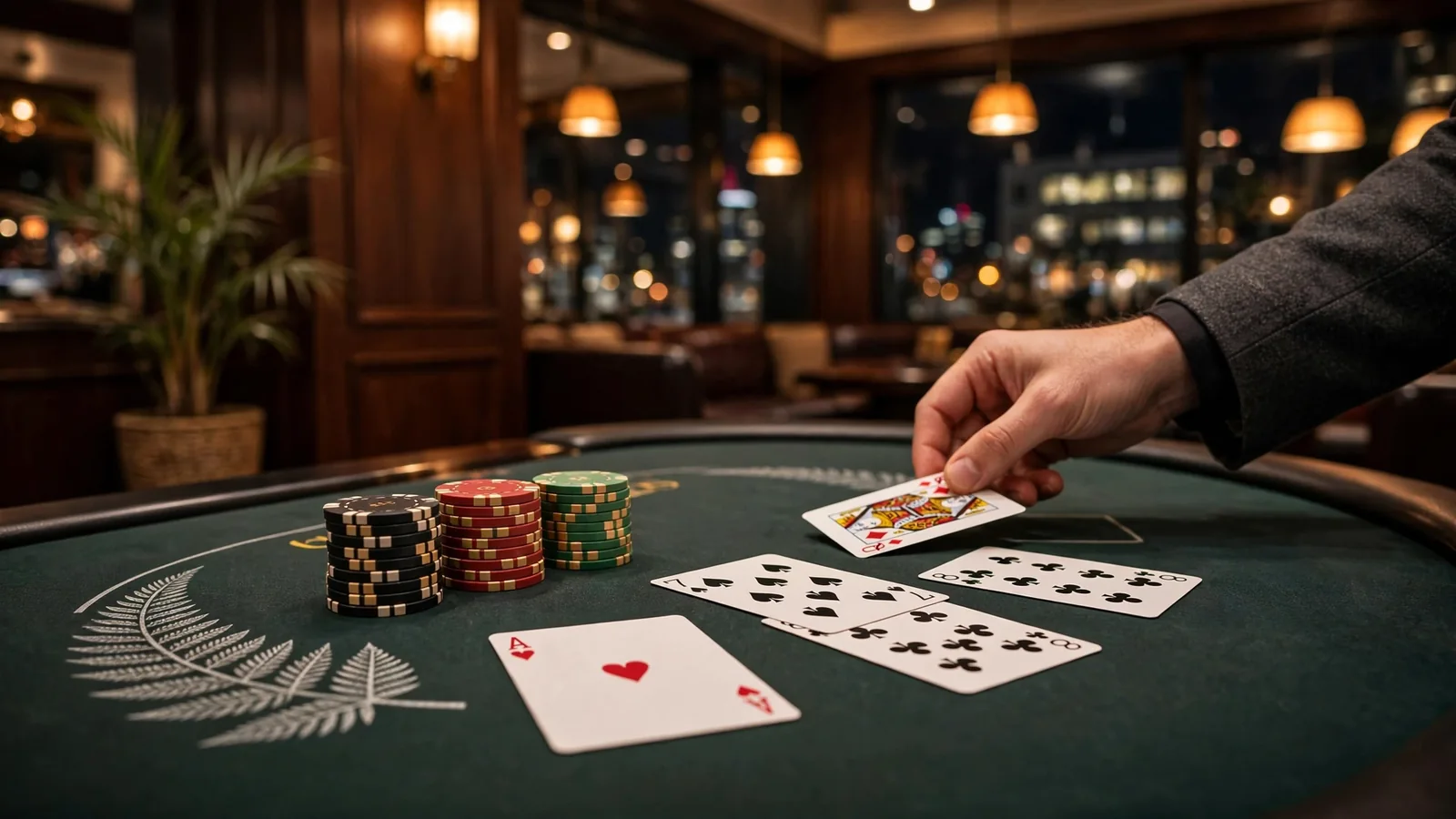
The comparison is made against the dealer’s completed hand. A player does not need to make exactly 21 to win; a lower total can be sufficient if it is closer to 21 than the dealer’s total and has not busted. Conversely, a hand that looks strong in isolation may lose to a closer dealer total. The result depends on both sides of the comparison, not on whether the player’s hand feels high.
This makes blackjack a game of constrained choices rather than a race to collect cards. A low total may invite another card because there is room to improve, while a high total leaves less room before the bust point. An ace changes that calculation because it may be counted low or high. The same card can therefore carry different practical value depending on the rest of the hand.
Other available actions can alter how a hand is played. Doubling down commits to a larger hand wager while taking a card under the table’s conditions; splitting separates a pair into two hands. Some games also allow surrender, which ends a hand under specified terms. These are not alternative ways of counting cards: they change the decisions available after the initial deal. Their precise use depends on the game and its rules.
The foundation of casino blackjack strategy is the relationship between hand total, flexibility and the risk of exceeding 21. Card values establish the arithmetic; the dealer comparison establishes the objective. Once those are clear, decisions can be considered in context rather than as isolated instructions. A total is not a promise of a win, and a flexible ace is not an extra card. Each is simply part of the calculation that determines whether taking another action has a plausible benefit.
Blackjack Foundations
- The goal is to beat the dealer’s hand without exceeding 21.
- Aces are flexible, counting as either 1 or 11 to avoid busting.
- A hand is ‘soft’ if it contains an ace counted as 11, and ‘hard’ otherwise.
- Decisions like hitting or standing involve a trade-off between improving the hand and the risk of busting.
Basic Strategy as a Decision Chart
A basic strategy chart turns a blackjack hand into a decision lookup. One axis represents the player’s hand; the other represents the dealer’s upcard. Their intersection indicates an action: hit, stand, double down or split. The chart is not a prediction of the next card. It is a consistent way to select an action from the information available at that point.
To use one, first identify the hand category shown by the chart. A hard hand has no ace being counted as 11; a soft hand includes an ace counted as 11; and a pair consists of two cards of the same rank. Charts may separate these categories because the same total can call for a different action depending on how it was made. Then locate the dealer’s upcard and follow the row and column to the marked choice.
The notation matters. A chart may use letters or colour blocks rather than spelling out each action. Its key should define every symbol before play begins. If the intersection says to double down or split, but the table does not permit that move in the situation, a chart may provide an alternative action. That fallback must be read from the chart itself; guessing at it defeats the point of using one.
A blackjack basic strategy card is most useful when it matches the game being played. The heading or notes should identify relevant rules, including whether the dealer hits or stands on soft 17. Those labels are not decoration: a chart prepared for one rule set may give different recommendations from one prepared for another. A chart without clear rule information is an incomplete reference, not a universal answer. Rule differences deserve separate attention before a chart is treated as applicable.

A simple blackjack strategy is therefore not a slogan such as “always hit” or “stand on a strong total.” It is a conditional instruction: given this hand category and this dealer upcard, take the action shown. The same player hand can lead to different choices against different upcards. Conversely, hands that look different at first glance may fall into the same chart category. The chart replaces improvisation with a repeatable process.
Basic strategy governs decisions about the hand, not the amount placed on it. It does not specify a betting progression, promise a winning session or remove the possibility of losing. In tournament play, decisions may also be shaped by the tournament’s format and position relative to other players; a standard chart should not be mistaken for a complete tournament plan. These distinctions keep a useful tool within its actual scope.
Can basic strategy beat blackjack? It can guide decisions according to the game’s rules, but it cannot guarantee a positive result. A chart is a decision aid, not a forecast. Its value lies in reducing avoidable inconsistency: the action is selected by the hand and upcard rather than by a recent win, a recent loss or a hunch.
Before relying on a chart, check that its terminology and rule labels match the table. Keep the reference available until the action pattern is familiar, and use the same chart consistently for that game. If the rules change, the reference may need to change too. The practical test is simple: each recommendation should be traceable to the correct hand category, dealer upcard and rule set.
- Match the strategy chart to the specific game rules.
- Check if the dealer hits or stands on soft 17.
- Use a repeatable process instead of improvisation.
- Keep the reference available until patterns are familiar.
- Use a chart without clear rule information.
- Rely on slogans like “always hit” or “stand on a strong total.”
- Treat a basic strategy chart as a guaranteed winning forecast.
- Guess fallback actions if a move is not permitted by the table.
Card Counting: What It Means in New Zealand
Card counting is the mental practice of keeping a running sense of which cards have appeared and which remain in play. It does not mean memorising every card or knowing what the next card will be. The count is an estimate of the unseen cards’ overall composition, used to assess whether that composition may be more or less favourable to the player.
That makes card counting different from a basic strategy chart. A chart maps a hand and the dealer’s upcard to a prescribed choice under stated rules. Counting adds information about cards already dealt; it does not replace the chart or turn a weak decision into a sound one. The two methods answer different questions: one concerns the best available action for a given hand, while the other concerns how the remaining cards may affect the value of future hands.
A blackjack counting strategy therefore depends on disciplined observation, not a prediction of individual outcomes. A player may keep a simple running tally as cards are exposed, adjusting it according to the counting method being used. The tally is not a probability guarantee, and it does not identify a particular card waiting to appear. At most, it provides a broad signal about the balance of cards still in play. Errors in tracking, interruptions, or changes in the game can weaken that signal.
The practical distinction matters because counting is often presented as if it were a blackjack strategy to win. It is not. A count can be useful only when it is accurate and when the game conditions allow the information to be applied. Even then, a favourable estimate does not settle the result of the next hand. Blackjack remains a game of uncertain outcomes, and a sequence of losses can occur despite careful play.

In New Zealand, using mental calculation to count cards is not illegal. That statement is limited to the act of counting with the mind; it is not a promise that every casino, game or method of play will treat a counter in the same way. The legal status of mental arithmetic should not be confused with an entitlement to use any device or to disregard a venue’s conditions. The distinction is straightforward: the calculation itself is not prohibited by New Zealand law, but that does not make counting a guaranteed or universally accepted way to play.
A strategy card, whether printed or viewed on screen, serves a different purpose. It gives a reference for decisions based on the hand and dealer card; it does not track cards already dealt. A calculator can also compare decisions under specified assumptions, but it cannot supply an accurate count of cards that have appeared unless that information is entered correctly. Tools can organise a decision. They cannot repair missing or mistaken observations.
Nor does card counting make unrelated betting systems reliable. A scratch-and-win approach, a profit accumulator or a progression that raises stakes after losses does not become sound because a running count is added to it. A betting progression cannot guarantee profit. The amount risked should remain within a set budget, and losses should not be chased. If play takes place under wagering requirements, blackjack may contribute differently from other games and maximum-bet rules may apply; those terms affect the calculation and should be read before play with real money.
Legal Status
In New Zealand, using mental calculation to count cards is not illegal, though this does not entitle a player to use devices or disregard venue conditions.
The useful measure is not whether a method sounds advanced, but whether it changes a decision on a basis that can be observed and applied consistently. Counting is mental tracking, not foresight. Its legal status in New Zealand does not alter that limit.
Why Deck Count and Table Rules Change the Chart
A blackjack strategy chart is conditional on the rules of the game it describes. Deck count, the dealer’s action on soft seventeen, surrender availability and the natural-blackjack payout can all differ between games. A specialist review notes these variations; they are enough to make a chart from one table an unreliable reference for another.
Deck count belongs in the comparison even when the visible choices appear identical. A chart prepared for a single-deck game is not automatically interchangeable with one for a shoe containing several decks. The mix of cards remaining in play differs, and the probabilities underlying the recommended decisions shift with it. That does not mean every hand will have a visibly different instruction. It means a player should not assume that a chart labelled for one deck count applies without adjustment to another.
The same caution applies to the dealer’s soft-seventeen rule. If the dealer must hit that hand, the dealer may draw again; if the dealer stands, play ends on that total. Those are different conditions for evaluating a player’s choice. A chart built around one rule may therefore give a different recommendation from a chart built around the other, even if the player’s hand and the dealer’s upcard match.

Surrender also changes what is available. Where the table permits it, a chart can include surrender as a decision; where it does not, that option is absent. A recommendation cannot be applied when the table does not offer the action. Treating the chart as a list of universal commands ignores the actual terms of play.
Payouts matter as well. A chart’s assumptions about the return on a natural blackjack affect the value of decisions across the game. A table’s stated payout should therefore be compared with the conditions behind the chart, rather than treated as a minor detail. The payout itself is a separate financial term; the important point here is that a strategy reference should match it.
Before using a chart, its stated conditions need to be checked against the table: deck count, soft-seventeen treatment, surrender rules and natural-blackjack payout. If any term differs, the chart may not describe the game being played. Searching for a single-deck or multi-deck strategy guide does not settle the matter unless the remaining rules also align.
The practical test is compatibility, not the label on the chart. “Basic strategy” identifies an approach based on the game’s rules; it does not certify that every chart applies to every table. When the rule set is unclear, the chart’s recommendation is conditional, not a reliable instruction.
Payouts, Insurance and the Cost of a Misread Term
A natural blackjack payout is a table term with a direct effect on the return from that hand. A specialist review reports that natural blackjacks often pay 3:2, while some tables pay 6:5. That report should not be read as a statement of the current market norm: the payout is a condition of the particular game, and the displayed rules are the relevant terms.
Payout Risks
A natural blackjack payout can vary between 3:2 and 6:5; choosing a game based on graphics or speed while ignoring these terms can significantly affect your return.
The difference matters even when the hand is the same. Under a 3:2 payout, the profit on a natural is higher relative to the original stake than under 6:5. A player comparing games by graphics, speed or a general label such as “blackjack” can miss that difference. The practical comparison is the payout printed in the rules, not the impression created by the game’s presentation.
A natural blackjack is not simply any hand that reaches the same total later. The payout term applies to the natural hand as defined by the game. If the rules are unclear about what qualifies, or whether a particular hand receives the stated return, the uncertainty is part of the price of playing. A perfect basic strategy cannot correct a payout assumption that was wrong before the hand began. Strategy answers how to act under known conditions; it does not improve the conditions themselves.
Insurance should not be treated as a routine addition to a hand. For most players, it is better avoided as a bet rather than accepted automatically whenever it appears. Its presence does not make the underlying blackjack decision more favourable, and a familiar label is not evidence that the extra wager is worthwhile. The relevant question is whether the separate terms justify committing more money; without a sound basis for that decision, declining it keeps the stake calculation simpler.
That distinction also matters when practising. Repeating decisions can help make a strategy consistent, but practice does not establish that a table’s payout or side-bet terms are favourable. A practice routine should include reading the rules before play and checking the natural-hand payout each time the game changes. This is less glamorous than searching for a perfect blackjack strategy, but it addresses a loss that no sequence of correct decisions can repair.

Where play is funded through a bonus, blackjack may contribute differently to wagering requirements, and maximum-bet rules may apply during wagering. Those conditions can change the value of a session even when the game’s own payout is understood. The bonus terms and game rules therefore belong in the same calculation, not in separate mental compartments.
A fixed budget limits the amount exposed; increasing stakes to recover losses does not turn a poor term into a better one. The accounting is plain: confirm the natural payout, treat insurance as optional rather than habitual, and include any applicable wagering conditions before deciding what a session costs.
Blackjack Switch and Variant-Specific Decisions
A blackjack basic strategy guide is useful only when it matches the game being played. “Blackjack” describes a family of games, not one fixed set of decisions. A variant can change the rules and, with them, the strategic choices and house edge. A chart built for one version may therefore give the wrong answer at a different table, even if both games use familiar blackjack terms.
Blackjack Switch should be treated as its own variant, not as standard blackjack with a cosmetic change. Its title signals a different game format, but the name alone does not establish which decisions are available or how those decisions affect the result. Those details have to come from the table’s rules. Without them, importing a standard chart is guesswork presented as precision.
Variant Mismatch
Importing a standard blackjack chart into a variant like Blackjack Switch is guesswork, as different game formats change the available decisions and house edge.
The practical check is to match the strategy to the exact game description. Confirm the rules that define the variant and any actions or conditions that differ from the standard game. Then use guidance written for that version. A blackjack basic strategy table is not transferable merely because it uses the same hand labels or offers familiar choices. A mismatch can change the recommended play and the expected cost of decisions across many hands.
This distinction also matters when assessing the odds of winning blackjack with basic strategy. Basic strategy is a way to choose among available decisions under stated rules; it is not a promise of a winning session. In a variant, the relevant rules shape what “basic strategy” means and affect the house edge. A result quoted for one format cannot be assigned to another without establishing that the underlying game conditions match.
The best blackjack strategy is therefore conditional rather than universal: first identify the variant, then apply advice designed for it. Where a table’s description is incomplete or ambiguous, the strategy cannot be checked against the actual game. The uncertainty is in the terms, not in a missing secret technique.
A useful comparison keeps the scope narrow. It asks whether the guide covers the same variant and whether its recommendations reflect that variant’s rules. It does not treat a familiar label as proof of equivalence, nor assume that a strategy for standard blackjack automatically works for Blackjack Switch. The cost of a misapplied chart is harder to see than a stated table condition, but it remains part of the game’s strategic and house-edge context.
Bet Sizing Without a Guaranteed-Win System
The amount placed on a blackjack hand is not separate from the decisions available during play. Depending on the table rules, a player may be able to double down, split a pair or surrender. Each choice changes how much of the budget is exposed to that hand; none turns an unfavourable result into a certain return.
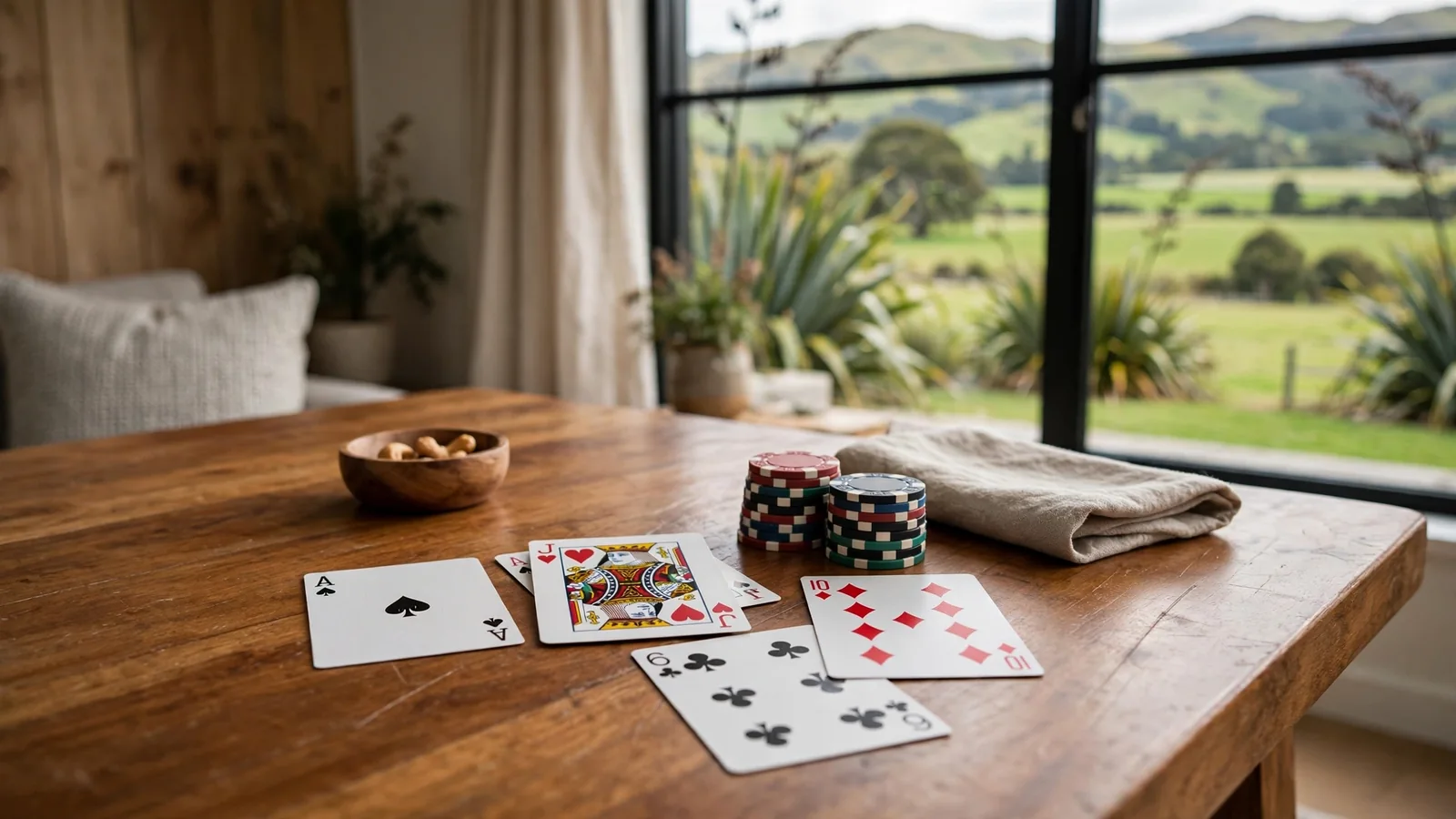
Doubling down commits an additional stake in exchange for taking a restricted course of action on the hand. Splitting creates separate hands from a pair and can therefore require another stake. Surrender, where offered, ends the hand under the table’s terms and limits the amount retained from the original wager. These options should be assessed as rule-dependent decisions, not as automatic instructions to increase or recover money.
A blackjack betting strategy based on raising stakes after losses may look orderly on paper. A sequence such as increasing the wager in steps can still meet a run of losing hands before any recovery occurs. The next stake then grows while the underlying chance of winning has not been improved by the progression. A fixed pattern cannot control the cards, and a win after losses does not prove that the system caused it. Betting systems are not guaranteed-profit methods.
The same distinction applies to systems that raise a wager after a win. They alter the distribution of money committed across hands, not the game’s rules or the outcome of the next hand. A progression can change the size of a gain or loss, but it cannot remove the possibility of losing the accumulated stake. The arithmetic is straightforward; the certainty is not there.
A practical limit starts with a budget set before play and a decision not to chase losses. Once the budget is reached, continuing because a recovery seems due adds exposure without changing the hands already lost. The size of a wager should remain compatible with that preset limit, including any extra stake required by a permitted double or split. If those actions would exceed the limit, the original wager was too large for the planned session.
Budget and Terms
- Set a fixed budget before starting play.
- Confirm the natural blackjack payout of the table.
- Review bonus wagering requirements and maximum bet rules.
- Ensure the original wager allows for potential doubles or splits without exceeding the budget.
Promotional terms require a separate calculation. Blackjack may contribute differently from other games towards wagering requirements, and maximum bet rules may apply while those requirements are active. A stake that seems affordable in isolation can still breach a condition or fail to contribute as expected. Before playing for real money, the relevant fine print and bonus conditions should be checked on trustworthy sites and at the casino. The stated terms, rather than a betting progression, determine what counts and what is permitted.
The best blackjack strategy cannot be reduced to a sequence of rising stakes. Hand decisions and wager size serve different purposes: the former respond to the available choices, while the latter determine how much money is at risk. Keeping that distinction intact is more useful than treating a betting pattern as a rescue plan.
The 2026 New Zealand Online Casino Framework
Blackjack strategy concerns decisions at the table; the legal framework concerns which providers may offer online casino gambling and which public bodies oversee that activity. The distinction matters in 2026, when New Zealand is moving from a market without domestic online casino licensing to a regulated licensing system.
The Online Casino Gambling Act 2026 came into force on 1 May 2026 and established New Zealand’s first domestic licensing regime for online casino gambling. The Department of Internal Affairs is the primary gambling regulator and oversees regulation of the online casino licensing framework. The Gambling Commission has a separate decision-making role: it considers casino licence applications, determines them, issues online casino licences and approves changes to licence conditions. In practical terms, the Department provides regulatory oversight, while the Commission handles licensing decisions.

The transition is not an immediate switch to a fully operational licensed market. Online casinos that were already serving people in New Zealand before the Act took effect may continue during the transitional period, which runs from 1 May to 1 December 2026. A provider that has not applied for a licence by the end of that period must stop providing online casino gambling in New Zealand. The full licensed regime is not expected to be operational until 2027, and unlicensed operation is expected to become an offence around mid-2027.
This timing changes how “licensed” should be understood in a discussion of blackjack strategies. During the transition, continued operation by a qualifying existing provider does not, by itself, mean that it already holds a New Zealand online casino licence. Before the Act, offshore online casino services were not licensed or supervised by a New Zealand regulator, and customers had no domestic government recourse. The Act creates a pathway to domestic licensing; it does not make every offshore site part of that system.
The framework also distinguishes provider obligations from player liability. New Zealand prohibits online casinos from being based domestically, while the transition allows qualifying existing providers to continue temporarily under the Act’s provisions. The stated enforcement consequences concern providers, including possible action against unlicensed operators; they should not be recast as a claim that an individual player faces a fine for using an offshore site.
The rules governing marketing are also changing. Advertising by licensed operators is subject to tight restrictions, sponsorships are prohibited, and promotion to people in New Zealand is prohibited during the transition period. These are conditions on operators, not a blackjack strategy. Whether a player uses a basic blackjack strategy or a betting progression has no bearing on a provider’s licensing status.
NZ Licensing Transition 2026
The Online Casino Gambling Act 2026 established a domestic licensing regime. There is a transitional period from 1 May to 1 December 2026, during which qualifying existing providers may continue. Full operational licensing is expected by 2027, after which unlicensed operation is expected to become an offence.
What Makes a Blackjack Strategy Optimal
A blackjack strategy is optimal only in relation to a defined game. The rules determine which choices are available and how the game responds to them; changing those conditions can change the best decision and the house edge. There is no single sequence of actions that remains optimal across every version of blackjack.
The term describes a decision method, not a promise about a hand’s result. A sound approach selects among the permitted actions according to the situation and the rules in force. It can improve the quality of decisions over time, but it cannot determine which cards will appear or guarantee a profitable session. A favourable decision can still produce an unfavourable outcome. That is variance, not evidence that the decision was wrong.
A blackjack strategy table is one way of presenting a rule-specific method. Its recommendations are useful only when the game being played matches the assumptions behind it. A table taken from a different variant may direct a player towards an action that is not best under the actual rules. The relevant comparison is therefore not between tables in isolation, but between a table’s assumptions and the game’s terms.
How was blackjack optimal strategy devised? In broad terms, possible decisions are assessed against the outcomes they can produce under a particular set of rules. The preferred action is the one that gives the strongest mathematical result for that situation, not necessarily the one that feels safer or has worked on a previous hand. The calculation has to be repeated when a rule or available option changes; otherwise, the recommendation may no longer fit.
A blackjack team strategy does not remove that requirement. If several players use a shared approach, consistency depends on applying decisions suited to the same game conditions. Agreement among players cannot make an unsuitable method optimal, and coordination does not turn a probabilistic game into a certain return. The rules remain the controlling terms; the group structure is only a way of applying a method.

“Optimal” is therefore a conditional label: best for a particular game, under its stated rules, among the choices available. Without those conditions, it is an incomplete description, not a universal advantage.
Practice Across RNG and Live-Dealer Games
Practice conditions depend partly on how the cards are handled. Online RNG blackjack uses software shuffles and generally moves through hands faster than a live-dealer game. That pace can make it easier to repeat decisions in a short session, but it also means more hands can pass quickly. Faster play is not a reason to increase the budget or keep playing after losses.
The shuffle method also sets a boundary on what practice can teach. An RNG game reshuffles through software; card counting should not be treated as effective against automatic shuffles. Practice there is better understood as rehearsal of decisions under the displayed rules, not as a way to predict cards or secure a result.
Live-dealer blackjack uses actual cards, giving the game a physical table format. Streaming can introduce delays, and the required bets may be higher than in RNG games. Those conditions change the pace and cost of practice: a slower hand does not necessarily mean a cheaper one. The rules and bet conditions remain relevant before play begins.
An advanced blackjack strategy table, including a PDF version kept for reference, is useful only when it corresponds to the game being practised. The format does not make a strategy universal. Comparing the table with the live game’s rules helps prevent a mismatch, while the faster RNG pace calls for deliberate pauses rather than decisions made simply to keep up.
Any practice involving real money still has a cost. Set a budget in advance and do not chase losses. Where wagering requirements apply, blackjack may contribute differently from other games, and maximum bet rules can apply during wagering. Fine print and bonus conditions should be checked before play; a bonus changes the conditions attached to funds, not the underlying uncertainty of a hand.
Created by the ”Casino Slots Tips NZ” editorial team.