Online Free Spins in New Zealand: Offer Value
 Available in US
A spin offer’s stated total reflects the stake allocated to each spin, while wagering rules and game limits shape what bonus winnings can become.

Table of Contents
- What a Free-Spin Offer Is Worth in Cash Terms
- No-Deposit Spins: Small Credits, Specific Conditions
- Deposit Offers: The Wagering Calculation
- Auckland Searches and No-Deposit Claims
- Where Free Spins Appear: Welcome Offers and Reloads
- Sign-Up Spins and the Deposit Match
- Slot Restrictions and Bonus-Buy Exclusions
- Game-Specific Spins and Their Expiry
- Bonus Winnings: Turnover, Caps and Cashout
- New Zealand’s Online Casino Licensing Framework
What a Free-Spin Offer Is Worth in Cash Terms
A headline count measures how many spins are offered, not how much those spins are worth. The cash value depends on the stake attached to each spin. A larger count can therefore represent less potential play than a smaller count if the value of each spin is lower. A specialist review makes this distinction: the number of spins alone is not a measure of their value.
The basic calculation is straightforward:
Total face value of spins = number of spins × value of each spin.
That result is the offer’s face value, not a forecast of winnings or a cash amount available for withdrawal. It describes the total stake allocated to the spins if each is used once at its stated value. The distinction matters because promotional language often gives the count prominent treatment while leaving the per-spin amount in the terms.
For instance, an offer can be assessed by identifying its spin count and the stake assigned to each spin, then multiplying the two. No particular count or stake is needed to apply the method. If either input is unclear, the advertised total cannot be converted reliably into a monetary figure. A long count may sound substantial, but without the value per spin it remains an incomplete description.
Choosing an online casino for free spins in New Zealand is easier when you can check the available licensing and payout information before deciding. Use this list as a starting point, and review each operator’s terms for the details that matter to you.
License: Tobique Gaming Commission, licence no. 0000064 Neospin is listed with a licence from the Tobique Gaming Commission, licence no. 0000064.
License: Malta Gaming Authority, licence no. MGA/B2C/370/2017 Play Grand is listed with a Malta Gaming Authority licence, no. MGA/B2C/370/2017.
License: Tobique Gaming Commission, licence no. 0000091 7Bit Casino is listed with a licence from the Tobique Gaming Commission, licence no. 0000091.
Payout speed: 1-3 business days Wintino lists a payout speed of 1–3 business days.
Payout speed: 1-3 business days Lamabet lists a payout speed of 1–3 business days.
License: Tobique Gaming Commission, licence no. 0000002 Ricky Casino is listed with a licence from the Tobique Gaming Commission, licence no. 0000002.
License: Malta Gaming Authority, licence no. MGA/B2C/394/2017 N1 Casino is listed with a Malta Gaming Authority licence, no. MGA/B2C/394/2017.
License: 07017519840 · Payout speed: 1-3 business days Zotabet lists licence number 07017519840 and a payout speed of 1–3 business days.
License: Curaçao Gaming Authority, licence no. OGL/2024/165/0185 BitStarz is listed with a Curaçao Gaming Authority licence, no. OGL/2024/165/0185.
Even the calculated face value does not tell the full financial story. A spin is a chance to play, not a cash credit that can automatically be withdrawn. Its result depends on the game outcome, and the bonus does not change the house edge. The player can receive no return from a spin, or a return that differs from its stake. Thus, the face value measures the amount of play represented by the offer; it does not establish an expected payout, a minimum win, or a guaranteed cash return.
A useful comparison keeps these measures separate. First comes the spin count, which describes quantity. Next comes the stake per spin, which allows the face value to be calculated. Then comes the cash value actually realised, which depends on the outcomes and on the applicable offer terms. Treating these as interchangeable makes a promotion appear more certain than it is. A stated amount of play is not the same as money in an account.
The same distinction applies when offers are compared across online casinos. Comparing only the headline counts can rank promotions incorrectly. One offer may advertise more spins but assign a lower stake to each; another may have fewer spins at a higher stake. The count alone cannot establish which has the greater face value. Where the per-spin stake is not stated clearly, the comparison is not complete, regardless of how prominent the spin total appears.

For New Zealand readers considering online free spins, the calculation should begin with the terms that define the stake, not with the promotional headline. The value should be read as a package of game opportunities rather than as cash received. Any resulting winnings remain subject to the promotion’s conditions, and a player can lose a deposit while using an offer. A bonus does not make the underlying game more favourable.
This is why a cash calculation is useful but limited. It strips away the presentation and gives a common basis for describing the spins themselves. It does not predict how often a game will pay, how much it may return, or whether any winnings will be withdrawable. Those are separate questions governed by game outcomes and the offer’s conditions. The calculated face value is therefore a starting point for comparison, not a final valuation of the money a player can expect to keep.
A clear offer should make its per-spin stake legible alongside the number of spins. When only the count is visible, the missing input prevents a meaningful face-value calculation. When both are available, multiplication gives the total stake represented by the spins. That figure is precise as a description of allocated play, while remaining deliberately modest as a statement about cash: it says what the spins are worth to play, not what they are certain to pay.
Face Value Calculation
Determine the total number of free spins offered in the promotional headline.
Locate the specific monetary value assigned to each individual spin within the terms and conditions.
Multiply the number of spins by the value of each spin to find the total face value of the offer.
No-Deposit Spins: Small Credits, Specific Conditions
A no-deposit offer is defined by what is not required to activate it: a qualifying deposit. A specialist casino review describes this category as account-opening promotions that may provide a modest bundle of spins or account credit in the NZ$5–NZ$20 range. That is a reported scale, not a promise that every operator offers credit, or that every new account will receive the same package. The terms attached to a particular promotion determine what is actually available.
The distinction matters because a free-spin count is not a cash amount. A bundle can look substantial while representing a modest amount of play, depending on the stake assigned to each spin. In a credit-based offer, the stated credit is easier to read as a starting balance, but it is still promotional funds rather than cash already available to withdraw. Neither label, on its own, establishes what can ultimately be cashed out.
“No deposit” also describes the entry condition, not necessarily the full path from registration to a usable benefit. The offer may be presented as part of account creation, but the terms still determine how it is activated and what applies to it. A headline that omits those details is incomplete. The relevant comparison is between the actual spins or credit granted and the conditions attached to those funds, not between promotional labels.
High spin counts need particular care. A specialist review addressing New Zealand offers states that a NZ$1 deposit does not buy a package of 150 spins, and treats counts of that scale as part of welcome packages rather than standalone no-deposit deals. This is a useful distinction between offer types, not evidence that every large package has identical terms. A large number on a banner should not be read as proof that the spins are free of a deposit condition.
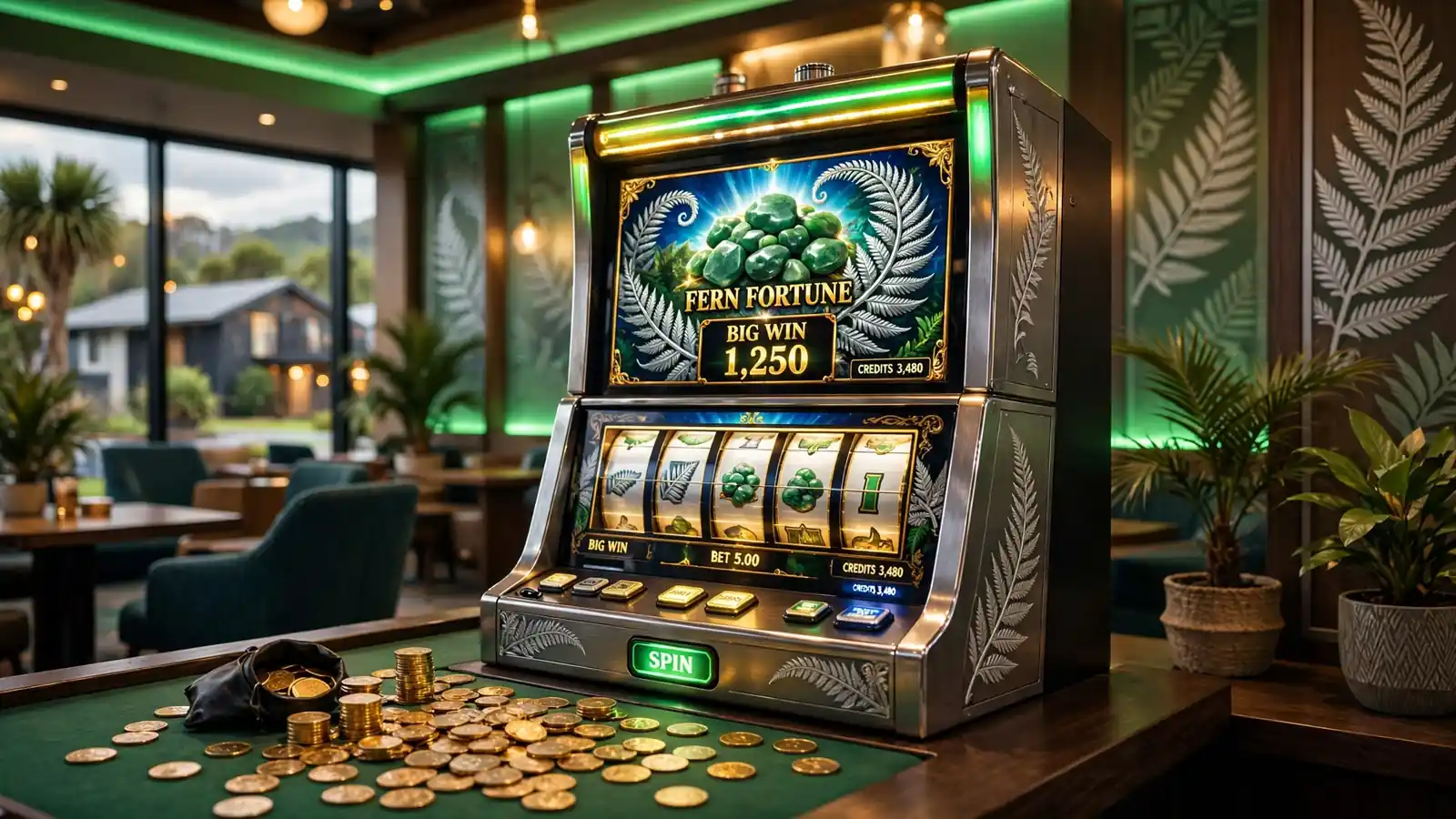
The wording can blur that distinction. “Free spins” may refer to spins bundled into a broader welcome package, while “no deposit” identifies a specific condition of entry. When both ideas appear close together in promotional copy, the package terms need to show whether the spins are available simply on account creation or only after another qualifying action. If a deposit is required, the offer is not no-deposit in the practical sense, however prominently the spin count is displayed.
The useful check is therefore narrow: identify what must happen before the spins or credit are issued. Then confirm the amount or number granted and whether the promotion’s conditions change how the resulting balance can be used. A promotion should not be treated as standalone simply because its headline contains “free.” Nor should a small deposit requirement be mentally absorbed into the word “free”; it remains money placed at risk.
Promotional credit does not change the house edge, and any deposited funds can be lost. That remains true even when the initial offer itself does not require a deposit: later play with personal funds is a separate financial decision, not a guaranteed route to turning the bonus into cash. No-deposit wording removes one entry requirement; it does not turn a casino game into a source of assured value.
The cash comparison should stay grounded in what is actually granted. If the offer gives spins, the headline count alone cannot establish the value. If it gives credit, the figure is promotional credit, not a cash payment. In either case, a claim of a large free package should be checked against the activation condition before it is treated as a no-deposit offer. Terms can change, so the live promotion conditions should be checked before opting in, including any maximum bet, time limit, wagering requirement or cashout cap that applies. The promotion is a set of conditions, not a balance sheet entry.
Financial Risk
Promotional credits and free spins do not change the house edge, and any deposited funds can be lost during play.
That is why the modest scale described in a specialist review is more informative than an inflated headline read in isolation. A small spin bundle or limited account credit can be a genuine no-deposit promotion, while a large spin count may belong to a different package with a qualifying deposit. The category is determined by the condition for receiving the offer, not by the size of the number printed beside it.
Deposit Offers: The Wagering Calculation
A deposit-linked free-spin offer has two separate amounts to assess: the money deposited or matched, and the wagering attached to the resulting bonus or spin winnings. The headline package does not show how much play is required before those winnings can be treated as withdrawable. That calculation depends on the operator’s stated wagering base and multiplier.
A specialist review places the playthrough attached to free-spin winnings in a range from 20x to 40x. That is a reported range, not a rule that applies to every offer. The terms must specify what the multiplier applies to: the winnings from spins, the bonus amount, or another stated figure. Applying a multiplier to the wrong base produces a materially different result.
The arithmetic is direct once the base is clear. If a stated condition is 40x, the relevant amount is multiplied by 40 to calculate qualifying wagering. A 100% match capped at $500 illustrates the scale: where the full $500 match is the wagering base and the condition is 40x, the required qualifying wagering is $20,000. The deposit itself is not the amount being multiplied in that calculation; it is the matched bonus that supplies the base.

The $20,000 figure is a wagering target, not a promised loss or a required extra deposit. It represents the total qualifying stakes counted under the promotion’s rules. Stakes may be placed repeatedly, so the cumulative amount can reach the target without a single $20,000 bet. But reaching that total does not establish what the account will hold at the end. The house edge is unchanged by the bonus, and the player can lose the deposit while attempting to meet the condition.
A lower multiplier reduces the arithmetic requirement only when the same base is used. For instance, a 20x condition on that same $500 base would mean $10,000 in qualifying wagering. This is a calculation from the stated multiplier and base, not a claim that every offer uses either figure. The difference between those outcomes is substantial, which is why “free spins included” says little about the amount of play attached to them.
Deposit matches can also have a qualifying floor, a cap on the amount matched, or terms that define which wagers count. Those details affect the starting figure or the rate at which qualifying wagering accumulates. A stated match percentage alone is not enough to calculate the obligation: the maximum bonus, the actual qualifying deposit, and the wording of the playthrough condition all matter. If the offer applies its multiplier to winnings rather than the match, the calculation must use those winnings instead.
Wagering Calculation
Determine the amount being multiplied, such as the matched bonus amount.
Find the playthrough requirement (e.g., 40x) specified in the offer terms.
Multiply the base by the multiplier to determine the total qualifying stakes required before withdrawal.
The practical check is therefore a short sequence: identify the wagering base, confirm the multiplier, then multiply. The resulting figure should be described as qualifying wagering, not as cash owed to the casino or a guaranteed route to withdrawal. The terms should also be checked for maximum bet, time limit and maximum cashout before opting in, since a wagering total may be only one condition among several.
For New Zealand players comparing online casino free spins, a deposit should not be made solely to secure a promotion. The match can make a bonus balance look larger while leaving the required turnover—and the possibility of losing the deposit—unchanged in substance. A precise calculation is more useful than the advertised package size: if the base or multiplier is unclear, the cost cannot be reliably assessed.
Auckland Searches and No-Deposit Claims
An Auckland label can describe the intended audience or the wording used to present an offer. It does not, by itself, establish that Auckland residents receive a separate promotion. The relevant distinction is between location language and the conditions attached to the offer: whether a qualifying deposit is required, which games are eligible, when the spins expire, and what happens to any winnings.
A claim of online casino free spins with no deposit in Auckland therefore needs to be read as a claim about the offer’s entry condition, not as proof of a city-specific benefit. The same wording could refer to a promotion available more widely, or simply to a page aimed at people in Auckland. Without terms stating that the promotion is exclusive to that location, the place name adds no cash value and changes none of the conditions.

The phrase “no deposit” also needs a precise meaning. It should indicate that the spins can be activated without making a qualifying deposit, rather than merely describing a promotion that includes spins alongside a deposit offer. A headline can leave that distinction unclear. The terms should identify any required action and state whether account creation alone is sufficient. If a deposit is a condition, the offer is not a no-deposit promotion in the practical sense, whatever the headline suggests.
The label still says little about what can be kept. Free-spin terms may restrict the games on which the spins can be used, set a period for using them, or limit the amount withdrawable from resulting bonus winnings. Those conditions determine whether a promotional balance can become cash, and they are separate from the Auckland wording. A no-deposit claim should not be treated as a promise of unrestricted play or unrestricted withdrawal.
Expiry claims need particular care because a short deadline can make an offer unusable even where no deposit is required. One specialist review reports that some free-spin promotions can expire between 24 and 72 hours after receipt. That is a report about offers covered by that review, not a general timetable for every casino or a guarantee that an Auckland promotion will remain available for that period. The operator’s current terms are the controlling detail for a specific offer.
Expiry Windows
Some free-spin promotions can expire within 24 to 72 hours after receipt, making the operator’s current terms the controlling detail.
A cashout cap can also change the practical result. If winnings from free spins are subject to a stated maximum withdrawal, the amount above that cap may not be payable, regardless of the balance displayed during play. The headline count of spins cannot answer that question. A meaningful comparison requires the cap and its application to be clear before the offer is accepted.
A location-specific heading is not a substitute for these conditions. The useful evidence is the offer’s written wording: whether a deposit is required, the eligible games, the expiry point, and any restriction on withdrawing winnings. If those details are absent or inconsistent with the headline, the Auckland label does not resolve the uncertainty. It is a place name, not a term of the promotion.
Where Free Spins Appear: Welcome Offers and Reloads
Free spins can appear at different points in a casino’s promotion cycle. A specialist review describes two broad formats: spins included in a welcome offer, and spins issued as a separate promotion. These are different ways of presenting an offer, not evidence that one format is inherently more valuable.
In a welcome package, spins are attached to the offer presented to new customers. The package may also include other promotional elements, so the spins should be read as one component rather than as a standalone benefit. The relevant distinction here is timing: the spins arrive as part of an initial offer, rather than as a later promotional drop.
Standalone promotions are separate from that initial package. A specialist review notes that such spins may be tied to a particular pokie. That makes the promotion identifiable by both its timing and the game named in its terms. A casino listing that advertises free spins therefore does not, by itself, establish whether they belong to a welcome package or are available independently; the promotion’s own description needs to make the format clear.

Reloads belong to a later stage. They are recurring promotions offered after the initial sign-up period, rather than part of the welcome package. According to a specialist review, weekly reload promotions can include free-spin drops linked to new pokies or online game releases. This is a reported promotional pattern, not a promise that a reload will appear every week or accompany every release. The offer in force is the relevant one.
The practical comparison is straightforward. Welcome spins are presented alongside an initial offer; standalone spins are issued separately; reload drops are recurring promotions that may be connected to a game release. Those labels describe when the spins appear. They do not establish that every operator uses all three formats, or that an advertised promotion will remain available.
For an online casino with free spins, the format should be clear before the promotion is treated as part of its offer: is it included at sign-up, separately issued, or presented as a reload? The distinction matters because a welcome package and a later drop are not interchangeable. A headline about free spins without that context leaves the timing unclear.
A specialist review’s account of these formats is a snapshot, not a standing schedule. Promotional arrangements can change, so the current offer description is the appropriate reference for deciding which category applies. A reload mention should not be read as a guaranteed recurring benefit, and a welcome-package mention should not be mistaken for a separate promotion. The useful comparison is the offer’s place in the promotion cycle, not the fact that each format uses spins.
Spins attached to the initial package presented to new customers upon sign-up.
Separate offers that may be tied to a particular pokie and issued independently of welcome packages.
Recurring promotions offered after the initial sign-up, often linked to new game releases.
Sign-Up Spins and the Deposit Match
A sign-up package may combine two different bonus components: a deposit match and free spins tied to a selected pokie. A specialist review describes offers for New Zealand-friendly sites in this format, with the match advertised at 100% to 200%. That description is not a promise that every current offer has those terms, or that a particular package will remain available. The operator’s live conditions determine what is actually offered.
The match and spins should be assessed as separate parts of the package. A match adds bonus funds in relation to a qualifying deposit; spins provide a set of plays on the named game. Neither component is cash in hand. A displayed match does not establish how much of the bonus can be withdrawn, and the spin count does not establish what those plays will return. The outcome depends on play, while bonus conditions may affect whether winnings can be withdrawn.
The central financial point is that a bonus does not change the house edge. The deposited money remains at risk, and a player can lose it. A larger advertised package therefore cannot be treated as a reduction in the cost of gambling or as a guaranteed return. It is a conditional offer attached to play, not an assured credit to a withdrawable balance.

Before accepting a sign-up package, the terms need to be read as a single set of conditions. Relevant details include the qualifying floor, wagering requirements, maximum bet, time limit, eligible game and cashout cap. The selected pokie matters: spins are not interchangeable with cash or with plays on any game. Where a bonus code is required, it needs to be entered during registration or in the cashier before the first bet; applying it later may not activate the offer.
A package can also create pressure to deposit more than intended in order to receive the advertised combination. That changes the amount exposed to loss, not the certainty of a payout. A deposit should not be increased solely to qualify for a promotion, and the offer should not be treated as a reason to spend beyond a set budget.
The sensible comparison is between the package’s actual conditions and the deposit that would be made without it. If the terms are unclear, or the qualifying floor or withdrawal conditions do not fit the intended spend, the headline combination has no reliable cash value. Promotions can change without notice, so the current terms should be confirmed before opting in or depositing.
Slot Restrictions and Bonus-Buy Exclusions
Free spins do not necessarily apply across an entire casino catalogue. An offer may be limited to named eligible pokies, so the game selected for the promotion determines where the spins can be used. Starburst and Book of Dead are examples of titles that may appear on an eligible-games list; their presence in a casino’s catalogue does not, by itself, establish that either title qualifies for a particular offer.
That distinction matters when comparing online slots with free spins. A promotion’s headline description may be broad, while its terms identify only a specific game or set of games. The eligible list is the operative detail: spins used on a different pokie may not count under the offer. Game availability and promotion eligibility are separate conditions, not interchangeable ones.
Bonus-Buy Restrictions
Some bonus terms exclude bonus-buy features; using this category may put promotional play outside the stated rules.
Bonus-buy pokies require a further check. These games let a player pay a multiple of the stake to enter a feature round, rather than waiting for the feature to trigger during ordinary play. A specialist review has reported that some bonus terms exclude this category. That is a reported condition, not a universal rule; the applicable offer terms determine whether a bonus-buy feature is permitted.
The practical reading is therefore game-specific. First establish which pokie the free spins are assigned to, then check whether that game offers a paid feature entry and whether the terms allow it. If a bonus-buy option is excluded, using it could put the promotional play outside the stated rules. The restriction concerns the way the feature is entered, not merely the name of the game.
These limits do not improve the underlying odds. A bonus does not change the house edge, and the deposit used to access an offer can still be lost. Eligible-game wording should be treated as a boundary on how the promotion may be used, not as a reason to assume that a particular pokie will produce a return.
Game-Specific Spins and Their Expiry
Free spins can be assigned to one named pokie rather than used across a casino’s full game library. That restriction determines where the spins can be played; it does not make them interchangeable with cash or with spins on another game. If an offer names a particular title, the eligible game is part of the offer’s conditions, not a detail to discover after the spins have been credited.

Expiry is a separate condition. A specialist review reports that free spins may have a defined use window of 7 to 30 days. That range describes the report, not a universal deadline: the operative date depends on the terms attached to the specific promotion. The start point matters too. A period may run from receipt or crediting, so the relevant wording should identify when the clock begins and when unused spins cease to be available.
The practical check is narrow: identify the named pokie, confirm the eligible spin balance, and note the stated expiry point before use. A promotion can be clear about the game while still leaving its timing to a separate clause. If the expiry is measured from crediting, a delay in noticing the account entry can consume part of the available window.
Game access and time allowance are independent. A spin may remain unused because the required pokie is not available to the account, or because the use period has ended. Neither circumstance changes the terms; the promotional balance is simply no longer usable under them. The displayed spin count alone therefore does not establish how much time remains to play.
The expiry clause should be read alongside any notice in the account or promotion screen, since the key detail is the deadline attached to that batch of spins. That is enough to separate a usable game-specific offer from a balance that exists on screen but has already expired.
Game-Specific Spin Check
- Identify the named eligible pokie
- Confirm the eligible spin balance
- Note the stated expiry point
- Verify when the expiry clock begins
Bonus Winnings: Turnover, Caps and Cashout
A win from an online casino free spins bonus is not necessarily ready to withdraw when it appears in the balance. Bonus winnings can be subject to a playthrough requirement: the amount must be wagered a specified number of times before withdrawal is permitted. Until that condition is met, the displayed balance is not equivalent to cash available for cashout.
The calculation depends on the terms attached to the bonus. A specialist review has reported a free-spin offer with a playthrough requirement as high as 200x. That is a specific reported condition, not a general description of every offer. At that level, the amount of qualifying play required can make clearing the requirement extremely difficult. The headline winnings alone therefore say little about the amount that may ultimately be withdrawable.
A separate restriction can apply even after the required wagering is completed: a cashout cap may limit how much can be taken from bonus winnings. If the winnings exceed that cap, the excess does not become withdrawable simply because the playthrough condition has been met. The practical value of a win is therefore shaped by both the turnover rule and the withdrawal ceiling.
Terms also determine which wagers count, how much can be staked, and how long the bonus remains available. Those details matter because failing a condition can prevent withdrawal or affect the bonus balance. The current promotion terms should be checked before opting in, including the wagering requirement, maximum bet, time limit and cashout cap. Promotion terms can change, so an old description is not a reliable basis for calculating a current offer.
A bonus does not alter the house edge of the pokie, and the deposit can still be lost. The sensible accounting treatment is to keep the bonus balance separate from withdrawable funds until every condition is satisfied and the operator’s stated cashout limit has been applied. A large on-screen win may be real as a balance entry; it is not, by itself, a cash return.

New Zealand’s Online Casino Licensing Framework
New Zealand’s online casino rules changed with the Online Casino Gambling Act 2026, which took effect on 1 May 2026. It creates the country’s first domestic licensing system for online casino gaming. The Gambling Act 2003 had not permitted online casinos to be based in New Zealand, while gambling websites operating from overseas were not licensed or supervised by a New Zealand regulator.
The new regime includes a transition period from 1 May to 1 December 2026. Providers that were already serving people in New Zealand before the Act began may continue during that window, subject to the transitional provisions. The complete licensing system is expected to be operational in 2027, and unlicensed operation is expected to become an offence around the middle of that year. These dates matter: a site operating during the transition is not, by that fact alone, proof that it holds a domestic licence.
The Department of Internal Affairs (DIA) is New Zealand’s primary gambling regulator and oversees the online casino licensing framework. The Gambling Commission has a separate licensing role: it considers and determines casino licence applications, issues online casino licences and approves changes to licence conditions. In practical terms, the DIA oversees the framework, while licensing decisions and specified changes sit with the Commission.
This distinction is relevant to online gambling free spins because a promotion does not establish an operator’s legal status. Nor should a claim of New Zealand licensing be treated as confirmed without checking the DIA’s register. During the transition, the statutory permission for existing providers to continue is a specific arrangement, not a general licence for any overseas casino to present itself as locally authorised.
Before the new framework, customers using offshore casino sites had no domestic government recourse. The licensing regime changes the regulatory structure, but it does not turn an advertised bonus into a guaranteed return or remove the possibility of losing a deposit. Legal status and promotion terms are separate checks: the former concerns whether an operator is authorised under the applicable framework; the latter concerns what a particular offer permits.
Can players win real money with a no-deposit casino bonus in New Zealand?
Yes, but bonus winnings may need to meet wagering requirements before withdrawal and may be subject to cashout limits.
Are no-deposit bonuses legal for New Zealand residents?
Only licensed operators may legally offer online casino gambling to people in New Zealand.
When will New Zealand launch online casino licenses?
The Online Casino Gambling Act 2026 came into force on 1 May 2026, establishing the licensing framework.
Created by the ”Casino Slots Tips NZ” editorial team.