NZ Casinos with Visa: Payment and Licensing Checks
 Available in US
A Visa logo confirms a displayed payment route, not an operator’s New Zealand licence or the terms governing a deposit.

that · accept · online
A Visa logo in a casino cashier answers one narrow question: whether that payment route is displayed for the relevant account. It does not, by itself, establish the operator’s legal position in New Zealand, the treatment of a particular card, or the terms attached to a transaction. Those are separate checks, and collapsing them into a single “accepts Visa” label makes the comparison less useful.
The legal setting changed in 2026. The Online Casino Gambling Act 2026 took effect on 1 May and created New Zealand’s first domestic licensing framework for online casino gambling. Its transition period runs until 1 December 2026. Providers that were already serving people in New Zealand before the Act began may continue during that period under its transitional rules. The fully licensed regime is not expected to be operating in full until 2027.
That timing matters when interpreting claims about casino sites that accept Visa deposits. A payment option is not evidence that a site holds a New Zealand licence, and the transition does not mean that every offshore provider has the same status. Before the new framework, offshore online casino gambling was not licensed or supervised by a New Zealand regulator. Customers using such websites had no domestic government recourse. The new regime sets out a route toward licensing, but the transition is not itself a blanket endorsement of every operator.
Choosing a New Zealand casino that accepts Visa calls for attention to the details available about each operator. This list offers a concise starting point for reviewing the options.
License: Tobique Gaming Commission, licence no. 0000064 Neospin is listed with a licence from the Tobique Gaming Commission, licence no. 0000064.
License: Malta Gaming Authority, licence no. MGA/B2C/370/2017 Play Grand is listed with a Malta Gaming Authority licence, licence no. MGA/B2C/370/2017.
License: Tobique Gaming Commission, licence no. 0000091 7Bit Casino is listed with a licence from the Tobique Gaming Commission, licence no. 0000091.
Payout speed: 1-3 business days Wintino lists a payout speed of 1–3 business days.
Payout speed: 1-3 business days Lamabet lists a payout speed of 1–3 business days.
License: Tobique Gaming Commission, licence no. 0000002 Ricky Casino is listed with a licence from the Tobique Gaming Commission, licence no. 0000002.
License: Malta Gaming Authority, licence no. MGA/B2C/394/2017 N1 Casino is listed with a Malta Gaming Authority licence, licence no. MGA/B2C/394/2017.
License: 07017519840 · Payout speed: 1-3 business days Zotabet is listed with licence number 07017519840 and a payout speed of 1–3 business days.
License: Curaçao Gaming Authority, licence no. OGL/2024/165/0185 BitStarz is listed with a Curaçao Gaming Authority licence, licence no. OGL/2024/165/0185.
The domestic position also has a history. The Gambling Act 2003 prevented online casinos from being established within New Zealand. The 2026 Act changes the framework by introducing domestic licensing, rather than making the earlier arrangement equivalent to the new one. For a Kiwi user comparing a Visa cashier option, the practical point is to distinguish the payment facility from the provider’s regulatory position and from the protections available under the applicable rules.
Searches for the best casinos that accept Visa often combine two decisions that should be kept apart. One is whether Visa appears among the available deposit methods. The other is whether the site is an appropriate place to hold an account and wager. The first is a cashier detail; the second requires attention to the operator’s status and the legal period in which it is operating. A payment symbol cannot settle both questions.
The same distinction applies to prepaid Visa cards and Visa gift cards. Their names may suggest that they will work like any other Visa-branded payment method, but a brand match alone does not establish acceptance or transaction eligibility. A casino’s cashier may present a payment route without confirming that every card product bearing the same network mark can use it. The relevant terms are those shown for the account and transaction, not an assumption based on the word “Visa.” No provider should be treated as suitable solely because a card option is visible.


New Zealand’s transition rules also have a defined endpoint. A provider that has not applied for a licence must stop conducting online casino gambling in New Zealand by 1 December 2026. If an application is declined, the provider must cease those operations and leave the market. Unlicensed operation is expected to become an offence from around mid-2027, and operators without a licence may face enforcement action and fines of up to NZ$5 million. These provisions make dates and operator status material; a generic claim that a site accepts Visa cannot substitute for them.
Advertising is subject to its own limits. During the transition, online casino gambling services must not be advertised to people in New Zealand. Licensed operators may advertise under tight rules, while sponsorships are prohibited. Accordingly, a payment-method description should be treated as information about a transaction route, not as a reason to regard an operator as approved or to overlook the restrictions that apply to its market activity.
A sound comparison therefore starts with precise wording. “Visa available” may describe a cashier option; it does not necessarily describe every Visa card type, guarantee a successful payment, establish the operator’s licensing status, or explain the protections that apply. The operator’s position under the transitional framework is a distinct matter from the payment label. For anyone assessing a Visa casino in NZ, those categories should remain separate: payment method, card eligibility, provider status and the relevant dates each answer a different question.
Attention: A payment symbol or the availability of Visa is not evidence that a site holds a New Zealand licence or is endorsed by the government.
online
A Visa-accepting online casino is not defined by a logo on its home page. The relevant question is whether the casino’s own cashier offers Visa for the intended transaction, and whether the terms explain what happens after the payment is submitted. Payment options can depend on the operator’s arrangements and the account in use, so a general claim that a casino takes Visa does not establish that every Visa card will work.
The payment page is the practical point of comparison. It should identify the available method before a deposit is made and show any conditions attached to it. If Visa appears only in promotional material, or the cashier does not show it for the account, that is not confirmation of an available route. The distinction matters: a method can be named in general information without being offered for a particular transaction.
The same care applies to withdrawals. The presence of Visa as a deposit option does not, by itself, establish that winnings can be returned to the same card. Operators may set payment conditions, and the cashier and terms are the places to establish them. A useful comparison therefore separates deposit availability from payout availability rather than treating “Visa accepted” as a complete description of the payment service.
Terms should also be read alongside the payment screen. The relevant details include whether the cardholder’s name must match the casino account, whether verification is required before a payment or payout, and whether the operator states any internal charge. No assumption should be made that a payment network’s rules and a casino’s rules are identical. If the operator’s wording is unclear, the uncertainty belongs in the comparison; it should not be replaced by a promise that the transaction will proceed.


For a Kiwi user, this is a matter of checking the particular site rather than relying on a generic list of online casinos accepting Visa. A list can become outdated, and availability may depend on the operator’s current cashier. A carefully described option is one for which the payment method, transaction type and applicable conditions are all visible. Where only the logo is visible, the evidence is incomplete.
New Zealand’s legal position also affects how such sites should be understood. The Online Casino Gambling Act 2026 established the country’s first domestic licensing framework for online casino gambling and took effect on 1 May 2026. Its transition runs until 1 December 2026. Operators that were already serving people in New Zealand before the Act began may continue during that period under its transitional provisions. The full licensed system is not expected to be operating until 2027.
That transition does not turn a payment method into evidence of domestic licensing. Nor does the fact that a site can be reached establish what regulatory status applies to its operator. Before the new framework, offshore online casino gambling was not licensed or supervised by a New Zealand regulator, and customers using offshore sites had no domestic government recourse. The new Act changes the regulatory framework, but the transition has its own limits and dates; payment branding does not explain them.
- Check the current cashier for Visa availability
- Verify the operator’s legal status during the transition
- Use a payment logo as a regulatory credential
- Assume regulatory status based on cashier options
Accordingly, a comparison of Visa casinos online should keep two separate questions in view: whether Visa is actually offered in the cashier, and what legal position applies to the operator during the transition. Combining those questions produces a misleading shortcut. A functional payment option is not a regulatory credential, while a regulatory status says nothing about whether the cashier will accept a given card.
There is also a practical distinction between a card being eligible in principle and a transaction being approved. The casino may present Visa as an option, but the payment still depends on the applicable operator terms and the card’s own acceptance conditions. A declined transaction should not be treated as proof that all Visa cards are unsupported, just as a successful deposit would not establish that a later payout follows the same route.
The most reliable description is therefore narrow: Visa is available only where the operator’s current cashier presents it for the relevant transaction and the terms support that use. Any broader claim needs confirmation from the specific casino rather than inference from a logo, a search result or an old payment-method page. In a market moving through a new licensing transition, precision is more useful than a long list of names.
electron · online
Visa Electron is a card label, not proof that a casino cashier will accept a particular payment. A site displaying Visa may support some Visa cards without confirming that Electron transactions are included. The distinction matters because a payment can fail before any casino balance is credited, even when the card carries the Visa name.
The relevant check is specific: does the cashier list Visa Electron, or does the operator’s payment information explicitly include it? A general Visa logo is not a complete answer. If the wording is unclear, the operator’s support team can confirm whether Electron cards are eligible for deposits and whether the same card can be used for any later payment back to the account. Those are separate questions; deposit availability does not establish payout availability.
A general Visa logo does not guarantee that Visa Electron is accepted; specific confirmation from the cashier or support team is required.
What “accepts Electron” needs to mean
For a Visa Electron casino, acceptance should mean more than a card symbol on a payment page. The payment route must be available to the account, the card must be eligible for the transaction, and the bank must approve the authorisation. A cashier may show a method that is unavailable for a particular account or card, so the displayed option alone is not a guarantee of a completed payment.
The payment screen and the card issuer’s rules are both relevant. An operator can define which payment methods it offers, while the issuer controls whether a transaction on its card can proceed. A decline does not by itself identify which side rejected the payment. Repeated attempts without clarifying the reason do not improve the evidence.
Before treating an online casino as compatible with Electron, the useful points to establish are:
- whether the operator names Visa Electron specifically, rather than Visa in general;
- whether the method is enabled in the cashier for the account;
- whether the issuer permits the intended online transaction;
- whether the operator states any separate conditions for payments to or from that card.
This is a compatibility check, not a ranking. There is no reliable basis for calling a particular site the best Visa Electron casino without current, operator-specific confirmation. Payment pages and terms can change, and a broad card logo cannot settle the question.
Deposits and account records
A card transaction is authorised through the payment chain; the operator’s cashier records the result and updates the account if the payment succeeds. A pending or declined authorisation should not be treated as a completed deposit. Keeping the cashier confirmation and the bank’s transaction record makes it easier to distinguish a failed attempt from a payment that has been authorised but is not yet reflected in the account.
The name and details on the payment method should also match the account information requested by the operator. Any identity review or payment check can affect how an operator handles an account, so inconsistent information creates avoidable uncertainty. The operator’s terms are the relevant place to establish its requirements; a generic claim that a site accepts Visa Electron does not describe the account checks attached to an individual payment.
Visa Electron should not be confused with every other Visa-branded card. A casino’s general Visa option may cover a different card type, while an issuer may apply its own restrictions. The practical conclusion is narrow: compatibility has to be confirmed for the named card and the specific cashier, rather than inferred from a payment logo or from another player’s experience.


New Zealand context
New Zealand’s online casino rules changed in 2026. The Online Casino Gambling Act took effect on 1 May 2026 and set a transition that runs to 1 December 2026. During that period, providers already serving New Zealand customers before the Act began may continue under its transitional provisions. The full domestic licensing system is expected to be operational in 2027; the Gambling Act 2003 does not permit online casinos to be based in New Zealand.
That legal setting is separate from card compatibility. A payment option does not establish an operator’s regulatory status, and a Visa mark is not evidence of New Zealand oversight. Before considering any offshore service, the distinction between payment availability and the protections available under the changing domestic framework should remain clear. In the earlier period, offshore online casino services were not licensed or supervised by a New Zealand regulator, leaving customers without domestic government recourse.
For Electron specifically, the sound assessment is therefore conditional: confirm the exact card type with the operator, check the issuer’s decision on online transactions, and read the operator’s current terms. Without those checks, “Visa accepted” is too broad to support a conclusion that a Visa Electron payment will work.
Visa Electron Compatibility
- Confirm the operator names Visa Electron specifically
- Verify the method is enabled in the account cashier
- Check that the card issuer permits the online transaction
- Review operator terms for separate card conditions
casino visa
A Visa logo on a card does not establish that a casino will accept it. Payment options depend on the operator’s cashier, and availability can differ between its website and app. A useful comparison therefore starts with the payment method shown at the point of deposit, not with a general claim that a site is a Visa casino.
The cost also needs to be read as a complete transaction. The casino may display a deposit amount, while the card issuer determines how the payment is handled on the account. The terms should make clear whether the operator applies an internal charge and whether the cashier accepts the card for the intended transaction. Without those details, a “best Visa casino” label says little about the amount that will actually leave the account.
Apple Pay is a separate route that can use a Visa card already added to an Apple device. It sends a one-time token rather than the underlying card number. At a casino, the deposit is authorised as a card payment; the casino credits the account after the bank approves the authorisation, while settlement takes place later. That distinction matters when checking account activity: the displayed balance and the final card settlement are not necessarily simultaneous.
Apple Pay is not guaranteed to appear for every operator, website, app or device. A gambling block on the card can also cause the payment to be declined. A failure at the cashier may therefore reflect the card’s settings or the payment route, rather than a problem with the casino balance. Repeated attempts do not resolve a block.


The phrase “Visa casino NZ” can also obscure a more important distinction: the payment brand does not establish the operator’s position under New Zealand law. The Online Casino Gambling Act 2026 took effect on 1 May 2026 and created the country’s first domestic licensing framework for online casino gaming. During the transition, providers that were already serving New Zealand customers before that date may continue until 1 December 2026, subject to the Act’s transitional provisions. The full licensing regime is not expected to be operational until 2027.
That transition does not turn a Visa payment into evidence of local authorisation. Before the new Act, offshore online gambling had no New Zealand licensing or supervision, and customers wagering with offshore websites had no domestic government recourse. The Gambling Act 2003 also bars online casinos from being based in New Zealand. Payment access and legal status are separate questions; a functioning card checkout answers only the first.
For a prepaid Visa card, the same practical test applies: the casino must offer that card route, and the transaction must pass the relevant payment checks. The word “prepaid” alone does not confirm acceptance or remove any operator conditions. Nor does a payment logo establish that winnings can be returned through the same route; payout arrangements are a separate part of the cashier terms.
A comparison of Visa casinos should consequently focus on what the cashier actually offers, any stated charges, and the conditions attached to the chosen payment route. A ranking without those terms is packaging, not a useful calculation.
Legal Risk
Unlicensed operation is expected to become an offence from mid-2027, with operators potentially facing fines of up to NZ$5 million.
withdrawal · fast
A fast Visa withdrawal is not simply a quick bank transfer. The elapsed time has two separate parts: the casino’s review and approval, followed by the card credit. A payment displayed as “pending” has not necessarily left the operator, so the bank’s processing time cannot be assessed until approval is complete.
A specialist review describes casino payout approval windows as ranging from less than an hour to several days. Identity checks are the main reason a withdrawal can be delayed; bonus status and fraud screening can also form part of the operator’s review. The advertised processing window therefore describes a stage of the process, not a guaranteed arrival time in a Kiwi user’s bank account.
After operator approval, card credits commonly take two to four business days, with longer waits possible, according to a payments-industry review. Processing moves on New Zealand banking days, so a weekend or public holiday can extend the calendar wait without changing the stated processing time. This timing is a reported benchmark, not a promise applying to every casino, card issuer or transaction.
The payment route matters too. Players commonly request a payout through the method used to deposit. Winnings may be returned to that method up to the amount deposited, with any excess sent by another method. That can make Visa a practical withdrawal route only where the casino supports payouts to the relevant card and the transaction qualifies under its cashier rules. A “Visa Direct” label on a payment page is not, by itself, confirmation that casino withdrawals are available through it.
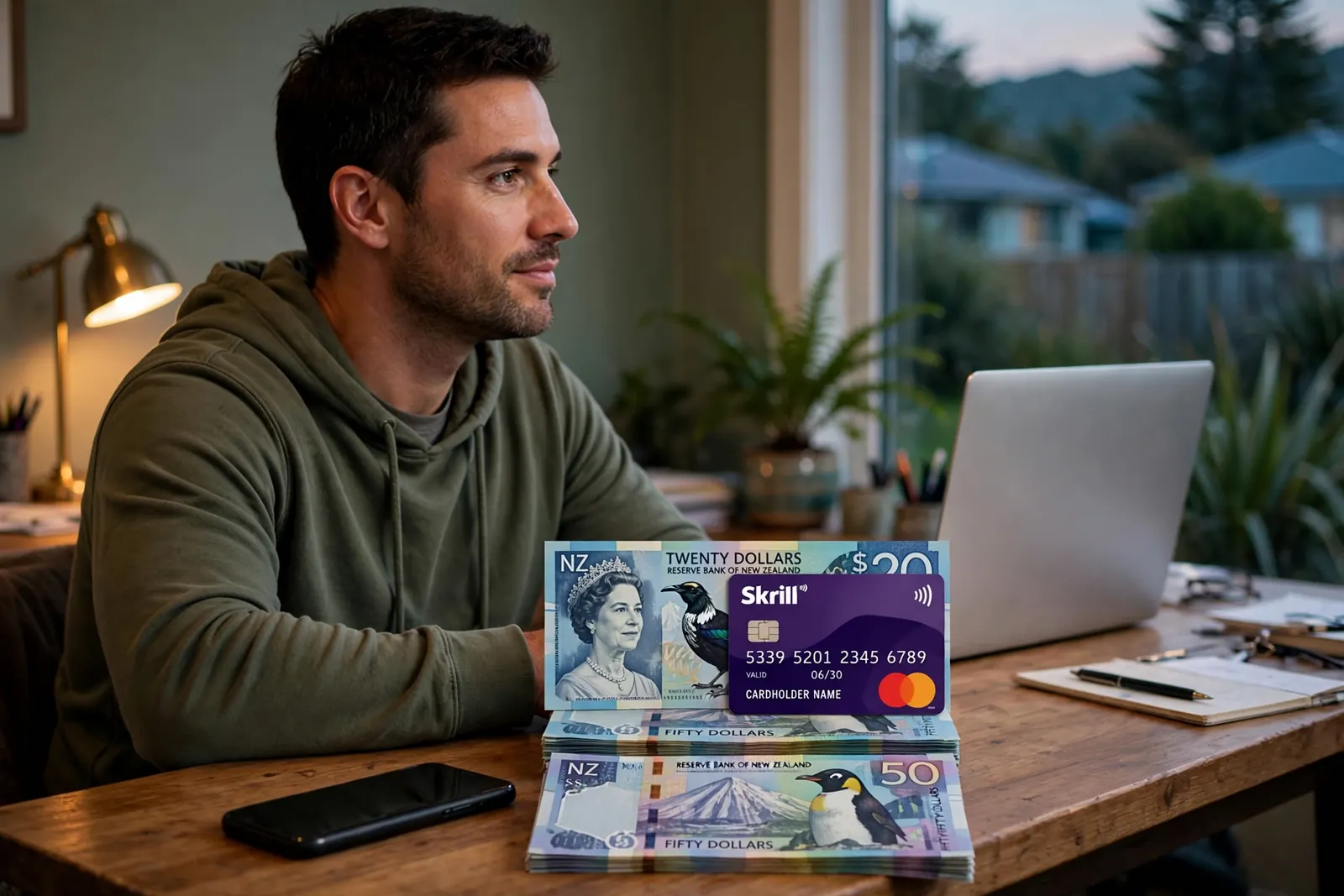

Before treating any offer of a fast Visa debit withdrawal as meaningful, the relevant terms are the casino’s approval procedure, the payout method actually available after a deposit, and the bank-side processing estimate. The distinction is material: a short operator review cannot remove the card-credit stage, while a fast card estimate cannot shorten an unresolved identity check. The final arrival time depends on both.
New Zealand’s online-casino framework is also in transition. The Online Casino Gambling Act 2026 took effect on 1 May 2026, with transitional arrangements for eligible providers already serving the market before that date continuing until 1 December 2026. The full licensing system is expected to be operational in 2027. Payment speed does not establish a provider’s regulatory status, and the payout terms should be read separately from any claim about licensing.
card · gift · online
A Visa gift card is not automatically usable at an online casino simply because the cashier displays Visa. The relevant question is whether the casino accepts that particular card for gambling payments and whether the card issuer authorises the transaction. Acceptance can depend on both sides; the Visa logo alone does not settle it.
A gift card also does not buy casino chips directly in the way a voucher might buy a product. If the payment is accepted, it funds the casino account, and the resulting balance is used for play. The deposit should be treated as a card payment, not as a guaranteed route around the casino’s cashier rules or the card issuer’s restrictions.
Attention: Do not send a prepaid card’s PIN or full security details through live chat or email; use only the secure cashier flow.
Before attempting a payment, check the casino’s payment information for Visa deposits and any stated exclusions for prepaid or gift cards. Then check the card issuer’s terms for online gambling transactions. If either set of terms is unclear, the payment outcome cannot be assumed from the card brand. A declined transaction may reflect the casino’s payment policy, the issuer’s decision, or details required to process the card.
There is a separate distinction between deposit acceptance and withdrawals. A gift card may be suitable for funding an account without being a usable destination for a payout. The casino’s cashier terms determine the available withdrawal methods; the card’s payment function does not establish that winnings can be returned to it. Any expectation about receiving a payout should therefore be checked independently from the deposit option.
A prepaid card’s PIN or full security details should not be sent through live chat or email. Payment information belongs only in the casino’s secure cashier flow, if the card is accepted there. Sharing a complete prepaid PIN outside that process creates an avoidable loss risk.
For Kiwi users, the practical test is narrow: confirm that the casino explicitly accepts Visa gift cards, confirm that the issuer permits the intended transaction, and check how the operator handles withdrawals before depositing. If one of those conditions is absent, a Visa gift card casino deposit is uncertain, regardless of how prominently Visa appears on the payment page.
The same discipline applies to buying casino chips with a Visa gift card: the phrase describes a hoped-for payment route, not a feature guaranteed by the card. A visible Visa option is evidence of card processing support, not proof that every Visa product will pass. The final decision rests on the specific card, the operator’s terms and the issuer’s authorisation.

bet visa casino
A Visa logo is not evidence that a particular casino will accept a Visa debit card. The payment method must appear in the operator’s cashier for the relevant account and device, and the terms must clarify whether it applies to deposits, withdrawals or both. Those are separate permissions: a card shown as a funding option does not establish that winnings can be returned to it.
The same distinction applies to Visa Direct. The name alone does not confirm that a casino supports this service, or that a payment will move by a particular route or on a particular schedule. Without explicit operator terms, claims about card acceptance, payout eligibility, charges or processing times cannot be treated as settled. A payment page is useful only when its options match the transaction being considered; a familiar logo is not a substitute for that check.
A card payment also does not determine the legal status of the casino. New Zealand’s Online Casino Gambling Act 2026 created the framework for domestic licensing, but the full licensed regime is not expected to operate until 2027. The Act took effect on 1 May 2026 and allows providers already serving New Zealand customers before that date to continue during a transition ending on 1 December 2026, subject to its provisions. Providers that have not applied for a licence must stop operating in New Zealand by the end of that transition. The domestic licensing framework is new; before the Act, offshore online casino services were not licensed or supervised by a New Zealand regulator, and customers had no domestic government recourse.
New Zealand Regulatory Transition
The Online Casino Gambling Act 2026 took effect on 1 May 2026. Providers serving NZ before this date may operate under transitional rules until 1 December 2026, with a full licensing regime expected in 2027.
For a Kiwi user, the practical comparison therefore has two parts: whether the cashier explicitly lists the intended Visa transaction, and what protections apply to the operator at the time of use. Offshore websites remain accessible, and a player does not face legal liability simply for playing with one. That does not restore the domestic recourse that was absent before the new framework.
A useful record of the terms should identify the card type accepted, whether the option is deposit-only, how the operator handles payouts and whether any conditions apply. If the cashier does not spell out these points, the payment route remains uncertain. Visa may be a recognisable card network; acceptance and withdrawal treatment are still operator-specific, not properties that can be inferred from the logo.
bonus · deposit · fast
A Visa deposit and a casino bonus are separate parts of the transaction. Paying by card does not, by itself, establish that a deposit qualifies for a welcome offer. Eligibility depends on the operator’s published terms, including which payment methods count and whether a bonus must be claimed before the deposit. The advertised bonus amount is therefore not the same as the amount available to withdraw.
A no-deposit bonus has a different entry condition from an offer that requires a card payment. The label alone does not establish whether identity checks, a claim step or other conditions apply. Those details need to be read alongside the withdrawal rules: a bonus balance may not be cashable until its conditions are met, and a payment method accepted for deposits is not automatically approved for payouts.

Payment-method restrictions are material, not fine print. A specialist review reports that some casinos exclude Neteller deposits from welcome offers or restrict bonus redemption through that wallet. This is not evidence of a Visa-specific rule; it is a reason to check the exact terms attached to the chosen method rather than assume that every deposit triggers the same promotion.
“Fast withdrawal” also describes a process with separate stages. The operator first approves a payout; identity, bonus-status and fraud checks can form part of that review, and published approval windows vary from less than an hour to several days. Card credits then move on New Zealand banking days, with a specialist review placing the typical post-approval period at two to four business days and noting that it can take longer. A quick card deposit therefore says little about the speed of a bonus-related payout.
In New Zealand, the Online Casino Gambling Act 2026 took effect on 1 May 2026. During the transition, providers that were already serving the market before that date may continue until 1 December 2026 under the transitional provisions. The full licensing regime is not expected to be operational until 2027. Any offer should be assessed against the operator’s status and the conditions applying at the time, not just its headline label.
Bonus and Payout Facts
- Card deposits do not automatically qualify for welcome bonuses
- No-deposit bonuses have different entry conditions than card offers
- Operator payout approval varies from less than an hour to several days
- Card credits typically take two to four business days after approval
with · min · online
A low Visa deposit threshold is only one part of the cost of playing at an online casino. The cashier’s minimum, any payment charge, bonus eligibility and the conditions attached to a withdrawal all affect the amount that can be used and the amount eventually returned. A figure displayed beside Visa should therefore be read as an entry condition, not as evidence that the payment route is inexpensive or that a promotion will apply.
No universal minimum can be assumed across online casinos with Visa. The relevant amount is the one shown in the operator’s cashier for the account and payment method in use. Terms can also distinguish between a first deposit and later payments, or set separate conditions for promotional funds. Those details belong in the payment and bonus terms, not in a headline.
New Zealand’s position also depends on the date. The Online Casino Gambling Act 2026 took effect on 1 May 2026, creating the country’s first domestic licensing framework. During the transition ending on 1 December 2026, operators that were already serving people in New Zealand before the Act began may continue under its transitional rules. The full licensing system is expected to be operational in 2027. The former Gambling Act 2003 did not permit online casinos to be based in New Zealand.
That transition does not make every Visa casino a New Zealand-licensed service. Before the new Act, offshore online gambling had no New Zealand regulatory supervision or domestic government recourse for customers. The practical check is therefore not just whether Visa appears in the cashier, but whether the operator’s status fits the rules in force at the time of play.
For a minimum-deposit comparison, the useful record is the cashier amount, the method-specific terms and the applicable bonus conditions. A small initial payment can still be poor value if it excludes an offer or leaves little room to meet its requirements. A displayed minimum answers only one question; it does not settle the total cost.

sites · new
A newly launched casino website that displays Visa is not automatically a new option for Kiwi users. The payment mark alone does not establish whether Visa deposits are available to customers in New Zealand, whether withdrawals can return to a card, or which terms govern either transaction. Those details depend on the operator’s current cashier and published conditions; a logo is not a payment policy.
The legal position also depends on timing. The Online Casino Gambling Act 2026 took effect on 1 May 2026 and created New Zealand’s first domestic licensing framework for online casino gaming. During the transition, providers that were already serving New Zealand customers before that date may continue until 1 December 2026, subject to the Act’s transitional provisions. The complete licensing regime is expected to be operational in 2027.
That distinction matters when assessing a site described as new. A provider entering the market after the transition began cannot be treated as equivalent to one already operating and covered by the transitional rules. From 1 December 2026, providers that have not applied for a licence must stop offering online casino gambling in New Zealand. If an application is declined, the provider must also cease those operations and leave the market.
Advertising is a separate issue: promotion of online casino gambling to people in New Zealand is prohibited during the transition. A page presenting newly launched Visa casinos as endorsed or available choices would therefore risk implying more than a payment logo can establish. For any site under consideration, the relevant distinctions are its operating status, its position under the transition, and the actual Visa terms shown by the operator—not the date or novelty of its branding.
How much time does the verification process take?
Payout approval, which can include identity checks, may take from under an hour to several days.
Can I withdraw casino winnings to Apple Pay?
Winnings may be returned to the deposit method up to the amount deposited; any excess is paid by another method. Apple Pay availability varies by operator, website or app, and device.
Can NZ players withdraw to Apple Pay?
Winnings may be returned to the deposit method up to the amount deposited, with any excess paid by another method. Apple Pay availability varies by operator, website or app, and device; card credits commonly take two to four New Zealand banking days after approval, sometimes longer.
How do I use Neteller at an Online Casino?
Select Neteller in the casino cashier, choose a deposit amount, then approve the payment in Neteller. For a withdrawal, select Neteller and enter the payout amount; confirm first that the casino accepts Neteller withdrawals.
Published by the Casino Slots Tips NZ team.