NZ Casinos and Credit Card Deposits: What to Check
 Available in US
Card availability, deposit support and cash-out routes can differ, so the cashier’s terms matter more than the payment logo.

Table of Contents
- How Online Casino Card Payments Fit the NZD Cashier
- When a Casino Accepts a Card for Deposits
- Card Deposits: Fees, Refunds and Bonus Conditions
- Payment Options on Casino Sites, Including PaysafeCard
- NZ Casino Deposits and the Licensing Transition
- Why Card Deposits and Withdrawals May Take Different Routes
- Using a Credit Card at an Online Casino
- Choosing a Card by the Payment Terms, Not the Label
- Cash Advances and the Cost of Funding a Casino Account
- What a Casino Card Payment Does—and Does Not—Guarantee
How Online Casino Card Payments Fit the NZD Cashier
An online casino cashier is the point where an account balance meets a payment method. A card can be offered as a way to add funds, but that does not make it a universal route for money moving in both directions. The deposit function and the withdrawal function are separate terms. For a New Zealand account, a method may be available for deposits while not supporting withdrawals; availability can also depend on the account and the casino’s current payment arrangements.
This distinction matters because a cashier can make several different claims that sound similar but are not equivalent. A card logo may indicate that the operator processes deposits through that network. It does not, on its own, confirm that every New Zealand account can use it, that the player’s particular card will be accepted, or that a later cash-out can return to the same card. Those are separate checks.
A specialist review lists Visa, Mastercard and Visa Electron among payment options for New Zealand players, alongside Skrill, Trustly, Neteller, iDebit and Apple Pay. That is a description of options reported in a review, not a guarantee that each one appears in every casino cashier or remains available to every account. Payment arrangements can change, so the cashier’s current terms are the relevant record for a particular account.
Choosing a casino that accepts credit cards involves checking the available information carefully, rather than assuming every site offers the same payment options. Use these details as a starting point when reviewing your options for New Zealand.
License: Tobique Gaming Commission, licence no. 0000064 Neospin lists a licence from the Tobique Gaming Commission, number 0000064.
License: Malta Gaming Authority, licence no. MGA/B2C/370/2017 Play Grand lists a Malta Gaming Authority licence, number MGA/B2C/370/2017.
License: Tobique Gaming Commission, licence no. 0000091 7Bit Casino lists a licence from the Tobique Gaming Commission, number 0000091.
Payout speed: 1-3 business days Wintino lists a payout speed of 1–3 business days.
Payout speed: 1-3 business days Lamabet lists a payout speed of 1–3 business days.
License: Tobique Gaming Commission, licence no. 0000002 Ricky Casino lists a licence from the Tobique Gaming Commission, number 0000002.
License: Malta Gaming Authority, licence no. MGA/B2C/394/2017 N1 Casino lists a Malta Gaming Authority licence, number MGA/B2C/394/2017.
License: 07017519840 · Payout speed: 1-3 business days Zotabet lists licence number 07017519840 and a payout speed of 1–3 business days.
License: Curaçao Gaming Authority, licence no. OGL/2024/165/0185 BitStarz lists a Curaçao Gaming Authority licence, number OGL/2024/165/0185.
What the cashier is actually showing
The cashier normally separates actions such as depositing, withdrawing and viewing transaction history. For a card deposit, the player selects the card option, enters the required payment details and authorises the transaction through the relevant payment process. The casino account then records the deposit according to the operator’s processing and account rules.
The balance shown after a deposit is an account balance, not a statement about how the original card transaction will be handled if funds later leave the casino. A displayed NZD balance tells the player the account’s presentation currency. It does not establish that a card can receive withdrawals or that the eventual settlement will necessarily be in NZD.
The term “credit card casino payment” can therefore refer to more than one thing: using a credit card to fund an account, or expecting a casino withdrawal to be returned to that card. The first may be available even when the second is not. A payment option should be judged by the specific transaction direction shown in the cashier, not by the presence of a card brand on a general payment page.
This is also why a list of payment methods is not a reliable substitute for an account-level view. A casino may describe several methods as available to New Zealand players, while the cashier for an individual account presents a narrower set. Even where a card is visible, the deposit and withdrawal screens may not offer identical choices. A method’s name establishes only the category of payment being presented; it does not settle every processing detail.

Deposit route versus cash-out route
A deposit begins with money leaving a card account and being credited to the casino balance. A withdrawal begins inside the casino, where the operator must approve the request before an external transfer starts. These are different stages, involving different parties and checks. The card network’s role in a purchase or funding transaction does not mean it will also serve as the destination for a payout.
An online casino cash-out to a credit card is therefore not something that can be inferred from the original deposit. Whether the payment method supports withdrawals is a separate question from whether it accepts deposits. If the cashier does not list the card as a withdrawal route, the card should not be treated as an assumed destination for winnings or remaining balance.
A card chargeback is different again. It is a dispute raised through a card issuer about a transaction, not the casino’s ordinary withdrawal function. It does not convert a deposit method into a payout method, and it should not be confused with requesting a balance withdrawal through the cashier. The relevant route depends on the transaction in question and the processes of the parties handling it.
Attention: A card chargeback is a dispute raised through a card issuer and is not the same as a standard balance withdrawal through the casino cashier.
For the same reason, the phrase “best credit card” has little meaning without the payment terms attached to a particular casino account. A card brand may be recognised by a payment page, but the useful information is whether the account can use it for the intended transaction. The cashier is where that distinction becomes visible.
The practical reading is narrow: a card option can describe a way to fund an account, while withdrawal support remains a separate feature to confirm. Treating those as one service can produce a mistaken expectation about how funds return. The balance and transaction records may be clear; the direction in which a method works still has to be established independently.
When a Casino Accepts a Card for Deposits
A card logo on a casino website is not, by itself, confirmation that a New Zealand account can use that card to fund a balance. The cashier may display payment methods at site level, while the options available after sign-in can depend on the account’s country and the transaction being made. The relevant check is therefore the cashier for the specific account, not a general list of methods on a landing page.
A specialist review has reported that a payment method’s availability to New Zealand accounts can differ between deposits and withdrawals. That distinction matters even when the same card brand appears in both the casino’s marketing and its payment information. A method may be presented as a deposit option without being enabled for a particular account, and deposit availability does not establish that the method can also receive a payout.

Check the account, not just the logo
Payment symbols are useful as an initial indication, but they can be broad or incomplete. A page may describe options available across several countries, or show methods that are not offered in every account’s cashier. For a New Zealand account, the account-specific payment screen is more relevant than a generic list.
The practical check is to sign in, open the deposit area and inspect the methods presented there before entering card details. If a card option is absent, a logo elsewhere on the site does not establish that the account can use it. If it is present, the cashier’s labels and instructions should still be read as applying to the displayed transaction, rather than as a promise that the card is available for every later payment.
The same care applies when a site uses a broad label such as “cards.” That wording may not identify which card brands or account types are supported. The available choice should be confirmed in the cashier itself, where the method is presented for the account in question. A card’s presence in a general payment guide is weaker evidence than an option actually shown in the signed-in account.
Keep transaction direction separate
“Accepted” can mean more than one thing. In a deposit context, it means the cashier offers the method for adding funds. It does not automatically mean the casino can return money through that method, or that the option will remain available for every later transaction. Those are separate capabilities.
A site-wide statement that a casino accepts cards may refer only to deposits, apply to other markets, or not be available to every individual New Zealand account.
This is why a site-wide statement that it accepts cards can be too imprecise to guide a decision. The statement may refer to deposits, may cover accounts in other markets, or may not describe the options visible to a particular New Zealand player. The deposit screen answers the narrower question: whether that account is currently offered the card method for funding. The withdrawal screen and the applicable payment information answer a different question.
A method shown in the deposit flow should not be treated as proof of a matching payout option. Conversely, a general payment page that mentions a card does not settle whether it is available for deposits to the account. Each direction needs its own confirmation. That avoids treating one payment label as a universal feature of the account.
Confirm before relying on the option
A careful check can be made without assuming that a site-wide payment list is account-specific:
- Sign in to the New Zealand account and open the deposit cashier.
- Check whether the intended card method is actually offered there.
- Read any method-specific instructions shown before submitting a payment.
- Treat deposit availability and payout availability as separate points to verify.
If the cashier and the site’s general information do not match, the account-level display is the more direct indication of what the account is being offered at that point. Where the wording remains unclear, written confirmation from the operator can establish whether the method applies to that New Zealand account and to deposits specifically. A reply about card deposits should not be read as confirmation about withdrawals unless that direction is addressed explicitly.
Payment menus can change, so an old review or saved page may not describe the current cashier. The specialist review mentioned above is useful as a warning about account-level differences, not as proof that any named casino currently accepts a particular card from every New Zealand account. The distinction is modest but material: the site may display a method, while the account’s own cashier determines whether it is offered for the transaction being considered.
Card Deposits: Fees, Refunds and Bonus Conditions
Once a card option is available, the amount entered in the cashier is not the only figure that matters. A deposit can be affected by a refund charge, while winnings linked to a bonus can carry conditions that change how much is eligible for withdrawal. These are separate terms: one concerns money returned through a payment provider; the other concerns the status of winnings.
A refund may not return the full deposit
A provider refund is not necessarily a no-cost reversal. A specialist review reports that a provider refund can incur a NZD 12 fee. That is a specific reported charge, not a standard fee that can be assumed to apply to every casino, card, or refund. The relevant terms are those that apply to the account and transaction in question.
The arithmetic is direct: if a fee is deducted from a refund, the amount received is lower than the amount originally returned by the casino or provider. The deduction does not alter the original deposit record, but it does alter the cash ultimately recovered. A refund described as a return of funds should therefore be assessed by its net amount, not only by the gross amount being reversed.
Provider refund fees
A specialist review reports that a provider refund can incur a NZD 12 fee, which reduces the net amount received compared to the original deposit.
The label also matters. A refund and a withdrawal are not interchangeable descriptions. A refund concerns money being returned through a payment transaction; a withdrawal concerns funds released from the casino balance. The applicable charge may depend on which process is taking place and on the provider’s terms. No single fee should be applied to both without confirmation.
A useful record keeps the original deposit, any refund amount, the fee, and the net amount received as separate entries. That makes a partial return visible rather than allowing it to disappear inside a single balance figure. If the provider’s terms do not clearly explain whether a charge applies, the refund amount cannot be calculated reliably in advance.
Bonus conditions affect the value of winnings
A card-funded deposit may be associated with a bonus, but the deposit itself does not establish that bonus-related winnings are unrestricted. A specialist review identifies several conditions that can apply: wagering requirements, game contribution rules, maximum-bet restrictions, expiry dates, and maximum cashout conditions. The terms attached to a particular offer determine which conditions apply and how they interact.
Wagering requirements can make the balance unavailable for withdrawal until stated play conditions have been met. Game contribution rules can mean that different games count differently toward those conditions. The headline bonus amount, therefore, does not by itself show how much play will count or when winnings can be released.

Maximum-bet restrictions set a boundary on play while bonus terms are active. A breach may affect eligibility under the offer, so the restriction needs to be read alongside the wagering conditions, not as an unrelated note. Expiry dates add another constraint: an offer or its associated requirements may cease to apply after the stated period. A condition that is clear but overlooked still changes the result.
A maximum cashout condition can cap the amount withdrawable from bonus-related winnings. That can leave a difference between the balance shown on screen and the amount eligible to be paid out. The displayed balance is not a substitute for the offer’s settlement terms.
Compare the net position, not the headline
For a credit card casino deposit, the practical calculation has two parts. First, establish what happens if the payment is refunded, including whether a provider charge is deducted. Second, establish what restrictions apply if the deposit is tied to a bonus and winnings result. Neither part can be inferred from the card logo or the amount entered in the cashier.
The terms should be read as a set: bonus eligibility, contribution rules, betting restrictions, expiry, and cashout conditions may work together. A prominent bonus figure can be less informative than the clause that determines whether winnings remain eligible. Likewise, a refund amount can look complete until a provider fee is accounted for.
Where the offer and payment terms are not clear, the outcome should not be treated as settled. The relevant measure is the net amount that can be recovered or withdrawn under the stated conditions, rather than the deposit or bonus figure shown at the start.
Bonus and Refund Realities
- Provider refunds may incur fees, such as a reported NZD 12 charge.
- Bonus winnings are subject to wagering requirements and game contribution rules.
- Maximum-bet restrictions and expiry dates can affect bonus eligibility.
- Maximum cashout conditions may cap the amount withdrawable from bonus winnings.
Payment Options on Casino Sites, Including PaysafeCard
A cashier’s payment menu is a description of methods an operator may support, not a guarantee that every option will appear for every New Zealand account. Payment arrangements can depend on the account and the operator’s current settings. The useful task is therefore to read the menu as a set of method labels and check what each label means in the specific cashier, rather than treating a general list as a promise.
A specialist review reports Visa, Mastercard and Visa Electron among the options available to New Zealand players, alongside Skrill, Trustly, Neteller, iDebit and Apple Pay. That list spans card payments, digital wallets and other payment services; it should not be read as a universal menu for New Zealand accounts. A separate specialist review reports that some New Zealand casino cashiers accept PaysafeCard deposits. That is a limited claim, not a market-wide standard: availability needs to be confirmed for an eligible New Zealand account.
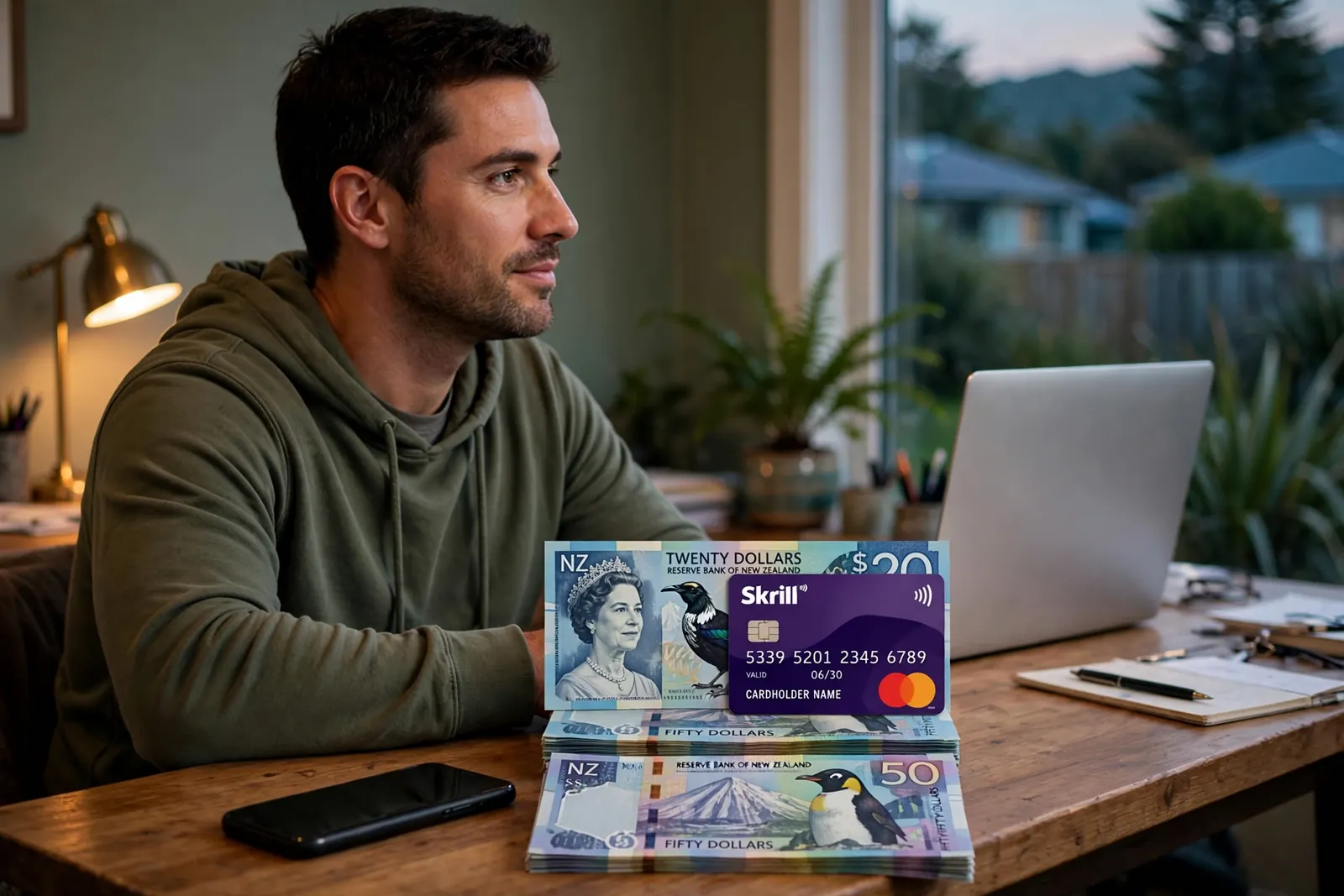
The distinction matters because an option described on an information page may not match the options displayed after account sign-in. A payment logo or a general statement about accepted methods can indicate that a service exists in some circumstances, but does not establish that it is enabled for a particular account. The cashier’s current menu is the more relevant place to inspect, and its wording should be read literally. A deposit option does not, by itself, describe every other way funds can move.
Read the method, not just the logo
A card brand identifies a network, not the complete terms of a casino transaction. A Visa or Mastercard label does not alone establish which card products are supported, whether the issuer will process the payment, or which transaction route the operator uses. The same caution applies to the other listed services: a familiar name is not proof that the option is active for every account.

The menu can also group unlike methods together. A bank-linked service, a digital wallet, a prepaid payment method and a card are not interchangeable simply because they appear in the same cashier. Each may have its own account requirements and transaction direction. The cashier’s labels should make clear which method is being selected; if the description is unclear, an assumption based only on the brand name leaves a material gap.
PaysafeCard requires particular care in how its role is understood. The reported use is for deposits, and the available statement does not make it a destination for casino winnings. Its presence in a cashier should therefore be read as a possible funding option only, not as evidence that the same method handles every part of the payment process. Availability still depends on the eligible New Zealand account and the operator’s displayed terms.
Compare menus without treating them as rankings
A longer payment menu does not automatically make a site more suitable. It may combine methods with different requirements, and a method shown in a broad review may not be selectable in the actual cashier. Nor does a list of card brands establish that every card carrying one of those brands will work. The relevant comparison is between the stated option and the transaction that the account can actually initiate.
- Inspect the signed-in cashier for available methods.
- Verify the transaction direction (deposit vs withdrawal).
- Confirm account-specific availability before funding.
- Rely on general site logos as a guarantee of availability.
- Assume a deposit method also supports payouts.
- Treat a broad list of methods as a ranked recommendation.
For a card deposit, the distinction between the network name and the available payment choice is practical: the cashier may identify a card method, while the issuer and the operator still determine whether that payment proceeds. For a wallet or another service, the corresponding account or service requirements may apply. These are separate checks, not benefits inferred from a logo.
A sound reading of a payment menu separates three things: the method named, the transaction direction stated, and the account-specific availability. A method should not be counted as an available choice merely because it appears in a general review or on a page aimed at a broad audience. Equally, an option absent from one account’s menu should not be assumed to be offered through another route unless the operator states that clearly.
This approach keeps the comparison factual. Visa, Mastercard, Visa Electron, Skrill, Trustly, Neteller, iDebit and Apple Pay have all been reported as options for New Zealand players, while PaysafeCard deposits have been reported at some NZ casino cashiers. Those reports identify possibilities, not a ranked set of sites or a fixed cashier specification. The actual menu and its stated terms define what is available for the account in question.
NZ Casino Deposits and the Licensing Transition
A credit-card option in an online casino cashier describes a payment route, not the operator’s right to keep serving customers in New Zealand. Those are separate questions: the cashier concerns how an account may be funded, while the licensing framework determines whether the provider may continue operating in the market.

The Online Casino Gambling Act 2026 created New Zealand’s first domestic licensing system for online casino gambling. It took effect on 1 May 2026, but the full licensed regime is not expected to be operational until 2027. The transition is therefore not an instant switch from offshore provision to a fully functioning local market.
During the transitional period, only providers that were already offering services to people in New Zealand before the Act took effect may continue, and then only under the Act’s transitional provisions. That permission runs until 1 December 2026. Providers that have not applied for a licence by that date must stop conducting online casino gambling in New Zealand. If an application is declined, the provider must also cease those operations and leave the market. Unlicensed operation is expected to become an offence from around mid-2027.
The Gambling Act 2003 did not permit online casinos to be based in New Zealand. Before the 2026 Act, offshore online casino gambling was not licensed or supervised by a New Zealand regulator, and customers wagering with offshore websites had no domestic government recourse. The new framework changes that regulatory position, but its transition dates matter: a site accepting a casino deposit with a credit card is not, by that fact alone, evidence that it holds a local licence or can operate indefinitely.
Licensing Transition
Providers not applying for a licence by 1 December 2026 must stop conducting online casino gambling in New Zealand.
Responsibility is divided between regulators. The Department of Internal Affairs is New Zealand’s primary gambling regulator and oversees regulation of the online casino licensing framework. The Gambling Commission determines licence applications, issues online casino licences and approves changes to licence conditions. A payment logo cannot perform any of those functions.
This distinction is relevant to any assessment of an online casino with credit-card funding in 2026. Payment availability does not establish the provider’s place in the transition, the status of an application or the outcome of a licensing decision. Nor does the existence of the new framework mean every provider is already licensed: the full regime is still being brought into operation. In financial terms, the card route answers how a deposit may be made; the statutory transition answers whether the provider may continue serving the New Zealand market under the applicable rules.
Why Card Deposits and Withdrawals May Take Different Routes
A card can fund a casino account without being an available destination for a withdrawal. Deposit processing and payout processing are separate functions: a cashier may accept a card for incoming funds, while the card issuer or payment network does not support sending casino withdrawals back to it. The payment method shown at deposit therefore does not establish the route for money leaving the account.
A specialist review describes this distinction and notes that card payouts depend on issuer and network support. Where the deposit method cannot receive a payout, the casino may require a separate route, such as a bank account, digital wallet or cryptocurrency address. The available withdrawal choices should be checked before the deposit is made, since an alternative route can change how funds are received and what account or wallet is involved.

The routes also differ in how they connect to the recipient. A bank transfer goes directly to a New Zealand bank account. Digital wallets and cryptocurrencies may move funds rapidly after the casino releases them, while a card transfer depends on whether the relevant issuer and network support it. “Rapidly” describes the transfer stage, not the entire withdrawal: the casino’s own review occurs first.
A casino must approve a withdrawal before it sends the funds externally. A specialist review identifies verification, bonus conditions and payment checks as factors that can add time before release. Proof of identity is required before a withdrawal can be processed. The external transfer cannot begin until the casino has completed its approval step, so a fast receiving method does not remove that stage.
Bonus conditions can also affect whether a balance is ready to withdraw. If winnings are linked to a bonus, wagering requirements, eligible-game contribution rules, bet restrictions, expiry dates or a maximum cashout condition may apply. These terms can alter the amount available for withdrawal or delay approval while conditions remain unmet.
For a card deposit followed by a cryptocurrency withdrawal, the two legs are not one card transaction: the casino first approves the withdrawal, then sends it through the supported crypto route. A card payout is possible only where the casino offers it and the issuer and network can receive it. The practical comparison is therefore between the full route from casino approval to receipt, not simply the speed or label of the deposit method.
Withdrawal Process
The operator reviews the request, checking identity verification and bonus conditions.
Once approved, funds are sent via the chosen route, such as a bank transfer, digital wallet, or cryptocurrency.
The transfer is completed based on the speed of the method and the support of the card issuer or network.
Using a Credit Card at an Online Casino
A credit card can be used at an online casino only when the casino’s cashier offers card payments for the relevant New Zealand account. The presence of a card logo elsewhere on a site is not enough to establish that the option is available during account funding. Cashier options can depend on the account and may change, so the payment method shown at the point of use is the relevant detail.
This is a question about an online payment interface, not a general rule for every casino setting. A card accepted at a physical venue, for instance, does not establish that it can be used in an online casino cashier. The two transactions are handled through different payment arrangements. Likewise, an online casino’s general list of methods does not guarantee that every method appears for every New Zealand customer.
A specialist review notes that card availability for New Zealand accounts may differ between deposits and withdrawals. That distinction matters even when the card is accepted for adding funds: deposit support alone does not confirm that the same card can receive a payout. The cashier’s options should therefore be read by transaction type, rather than treated as a single, universal statement that the casino “takes” a card.
The practical answer to whether a credit card can be used at a casino is conditional: online use depends on the payment options made available to the New Zealand account. A visible card option indicates a route to check, not a guarantee that it applies to every transaction. The account’s cashier is more informative than a general payment-method banner.

This also prevents a common category error: card branding is not the same as a confirmed payment route. A site may display a familiar card name while the account’s available options, or the direction of payment supported, differ. For a decision about card use, the relevant question is whether the online cashier presents that method for the intended transaction.
Choosing a Card by the Payment Terms, Not the Label
A card is suitable for a casino account only if the cashier makes it available to that New Zealand account and the payment route fits the intended use. The card brand alone does not settle either point. A method shown for deposits may not be offered for withdrawals, and availability can vary by account. A specialist review has reported this distinction, but cashier terms can change; the account’s own displayed options are the relevant check.
For a card intended to receive winnings, issuer and network support matter as much as the casino’s stated withdrawal method. If the card cannot receive the payout, the deposit choice does not create that capability. The alternative may be a bank transfer to a New Zealand account, or a digital wallet or cryptocurrency route, depending on the casino’s available methods. Those routes have different transfer paths; digital wallets and cryptocurrencies may move funds rapidly after casino release, while a bank transfer goes directly to a bank account.
If a card cannot receive a payout, players may need to use alternative routes such as a New Zealand bank account, digital wallet, or cryptocurrency address.
The practical comparison is therefore between the complete routes, not the labels attached to cards. A deposit method that suits the funding transaction may be unsuitable for the return transaction. A specialist review has also noted that card payouts rely on issuer and network support, so a casino’s acceptance of a card for payment should not be treated as confirmation that it can send winnings back to it.
The useful decision record is concise: whether the method appears for the account, whether it is deposit-only or also supports withdrawals, and whether the issuer and network accept that payout route. Without all three, “best” describes a marketing label, not a working payment arrangement.
Cash Advances and the Cost of Funding a Casino Account
A credit-card deposit and a cash advance are not automatically the same transaction. The casino cashier records a funding payment, but that label alone does not establish how the card issuer will classify it. A casino cash advance on a credit card is therefore not a fixed feature of every card deposit; treatment can depend on the issuer and the transaction.
That distinction matters because an issuer may apply different charges or interest to a cash advance than to an ordinary purchase. The casino’s displayed deposit amount cannot confirm which classification will appear on the card account, or what the issuer may charge. No single rule can be inferred for every New Zealand card from the fact that a casino accepts card payments.
The cost calculation should keep the casino-side amount separate from the card-side treatment. The deposit is the amount submitted through the cashier; any issuer charge or interest is a separate cost and may change the effective amount funded. If the issuer treats a transaction as a cash advance, the total cost may differ from a purchase, but the applicable terms are those of that card account.

Casino payment information and card terms answer different questions. The cashier describes its accepted funding method, while the issuer determines how the transaction is handled on the credit account. Without confirmation of that treatment and its charges, the final cost cannot be calculated reliably. A credit-card deposit should not be assumed to be an ordinary purchase—or a cash advance—merely from the payment option’s name.
What a Casino Card Payment Does—and Does Not—Guarantee
A balance shown in NZD is a display choice, not a promise about the currency received. A specialist review notes that a casino may settle a withdrawal in another currency, with the conversion rate or an exchange margin reducing the amount credited. The balance on screen and the final bank or card statement can therefore differ even when the account itself is denominated in NZD.
The settlement terms need to be read separately from the casino credit-card payment terms. The cashier may show one currency while the withdrawal conditions specify another, or leave the conversion method to the payment process. Without a confirmed settlement currency and conversion basis, the displayed balance is not enough to calculate the final amount.
Limits also affect what can be received at once. A specialist review reports that casinos or payment providers may set withdrawal caps per transaction or over daily, weekly or monthly periods. A larger request may be subject to additional review. These controls can change the timing or division of a payout; they do not change the balance shown before withdrawal.
Identity checks are another control: proof of identity is required before a withdrawal can be processed. That is distinct from a payment limit or currency conversion, and it can hold up processing even when the displayed balance appears available.
The usable payout is therefore determined by the settlement currency, any conversion margin, applicable withdrawal limits and completion of required checks—not by the NZD figure alone. A card deposit confirms only that funds entered the account; it does not guarantee an identical amount or currency will return to the card.
Prepared by the Casino Slots Tips NZ editorial staff.